

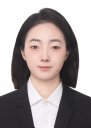
 Ping Deng
· 3 previous affiliations
- Xihua UniversitySince 2022
- Associate Professor · Since 2026
- Lecturer · 2022–2025
- Southwest Jiaotong University2016–2022
- PhD student · 2016–2022
- China West Normal University2012–2016
- Undergrad student · 2012–2016
Research Overview
Ping Deng focuses on unsupervised machine learning, specifically non-negative matrix factorization (NMF), multi-view clustering, and ensemble learning. Early research explored co-clustering and linear discriminant analysis, gradually evolving toward robust, graph-regularized matrix factorization techniques for complex data. Recent work investigates the integration of deep learning architectures with NMF to improve multi-view clustering performance.
Research Trajectory
Ping Deng’s research trajectory demonstrates a consistent focus on improving clustering methodologies, beginning with ensemble techniques and progressively specializing in non-negative matrix factorization (NMF). In 2019, Deng led early work on dimensionality reduction and classification, publishing Linear discriminant analysis guided by unsupervised ensemble learning. This foundational work established an interest in leveraging unsupervised techniques to guide and refine broader machine learning models.
By 2021, Deng’s focus shifted toward co-clustering—a technique that simultaneously clusters both the sample and feature dimensions of a data matrix to extract deeper structural insights. As first author, Deng developed Tri-regularized nonnegative matrix tri-factorization for co-clustering, utilizing matrix tri-factorization to handle complex data representations. During this period, Deng also contributed as a collaborative author to broader clustering frameworks, such as Co-Adjustment Learning for Co-Clustering. This collaborative work introduced a framework designed to extract valuable information from data chunklets, demonstrating applicability across unsupervised, semi-supervised, and supervised learning scenarios.
In 2022 and 2023, Deng’s primary research output concentrated on refining NMF algorithms, specifically addressing the limitations imposed by strict constraints and noise sensitivity. Deng led the development of Biased unconstrained non-negative matrix factorization for clustering, exploring how relaxing traditional constraints could yield more flexible clustering boundaries.
A major methodological contribution during this phase was addressing the vulnerabilities of the standard square loss method used in graph-regularized NMF, which is notoriously sensitive to noise during data reconstruction. In the first-author paper Graph Regularized Sparse Non-Negative Matrix Factorization for Clustering (2023), Deng proposed a novel sparse NMF approach designed to obtain a cleaner data matrix for approximating high-dimensional data, thereby mitigating performance degradation in noisy environments.
Simultaneously, Deng expanded these factorization techniques into the domain of multi-view learning, where complementary information from different data perspectives is synthesized to improve overall accuracy. This direction culminated in the first-author publication Multi-view clustering guided by unconstrained non-negative matrix factorization (2023), which successfully adapted unconstrained NMF principles to multi-view data environments.
Current Directions
The most recent papers in the evidence indicate a strategic pivot toward integrating deep learning mechanisms with traditional matrix factorization. Recent collaborative work investigates the limitations of standard NMF-based multi-view clustering—namely, weak feature extraction, slow convergence speeds, and the lack of a guided learning rate during the matrix update process.
To address these open problems, current research focuses on constructing generalized deep learning clustering algorithms based on NMF. This involves developing nonlinear constrained NMF algorithms that utilize activation functions with non-negative value domains and implement sequential element updates guided by explicit learning rates. By decoupling matrix elements and applying stochastic gradient descent techniques, this emerging direction aims to significantly enhance both the convergence efficiency and the feature-extraction capabilities of multi-view clustering models.
Profile updated
| Title | Venue | Year |
|---|---|---|
| An autoencoder-like deep NMF representation learning algorithm for clustering | Knowledge-Based Systems | 2024 |
| T-Distributed Stochastic Neighbor Embedding for Co-Representation Learning | ACM TIST | 2024 |
| DNSRF: Deep Network-based Semi-NMF Representation Framework | ACM TIST | 2024 |
| A Generalized Deep Learning Clustering Algorithm Based on Non-Negative Matrix Factorization | ACM TKDD | 2023 |
| Graph Regularized Sparse Non-Negative Matrix Factorization for Clustering | IEEE Trans. Comput. Soc. Syst | 2023 |
| A Generalized Deep Learning Algorithm Based on NMF for Multi-View Clustering | IEEE Trans. Big Data | 2023 |
| Multi-view clustering guided by unconstrained non-negative matrix factorization | Knowledge-Based Systems | 2023 |
| A multi-view clustering algorithm based on deep semi-NMF | Information Fusion | 2023 |
| Biased unconstrained non-negative matrix factorization for clustering | Knowledge-Based Systems | 2022 |
| Dual graph-regularized sparse concept factorization for clustering | Information Sciences | 2022 |
Loading new papers…
Loading research neighbors…
See something wrong? Report a mistake