

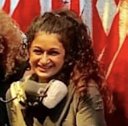
 Pinar Yanardag
· 4 previous affiliations
- Virginia TechSince 2023
- Assistant Professor · Since 2023
- Boğaziçi University2009–2023
- Principal Investigator · 2019–2023
- MS student · 2009–2010
- Postdoc · 2016–2018
- Purdue University West Lafayette2010–2016
- PhD student · 2010–2016
Research Overview
Pinar Yanardag focuses on the development of generative artificial intelligence, latent space manipulation, and cross-modal synthesis. Her early work explored graph representations and affective visual analysis before shifting toward the unsupervised discovery of interpretable controls in generative adversarial networks. Currently, she investigates personalized image editing, multi-agent creative frameworks, and autoregressive video generation.
Research Trajectory
During her doctoral studies, Yanardag's early research focused on structural data representations. She developed Deep Graph Kernels, a framework that adapted advancements in language modeling to learn latent representations of graph sub-structures, significantly improving classification accuracy over traditional graph kernels.
Transitioning toward visual media and the intersection of artificial intelligence with human emotion, she explored the modeling of subjective emotion distributions in visual media. This work included Nightmare Machine: A Large-Scale Study to Induce Fear Using Artificial Intelligence, which investigated how generative synthesis could be used for affective visual analysis.
Her research then concentrated heavily on the internal representations of generative adversarial networks (GANs), specifically advancing the research direction of Interpretable Latent Directions for Controllable Generative Models. In LatentCLR: A Contrastive Learning Approach for Unsupervised Discovery of Interpretable Directions, her group introduced a self-supervised framework to identify fine-grained semantic controls—such as altering facial expressions or architectural details—in pre-trained GANs without relying on manual labels. She expanded on these intuitive control mechanisms with PaintInStyle: One-Shot Discovery of Interpretable Directions by Painting, a method allowing users to find specific manipulation directions within a model's style space using simple sketches.
Addressing the societal implications of generative models, she contributed to the area of Disentangled Control in StyleGAN StyleSpace by developing FairStyle: Debiasing StyleGAN2 with Style Channel Manipulations. This work demonstrated how to directly modify pre-trained models to generate balanced datasets across sensitive attributes, achieving debiasing without the computational cost of training additional models.
Expanding latent manipulation into three dimensions, she investigated the broader area of The Representational Ceiling of Latent Space Manipulation. In Text and Image Guided 3D Avatar Generation and Manipulation, she and her collaborators leveraged Contrastive Language-Image Pre-training (CLIP) to manipulate both the shape and texture of 3D face avatars. This research advanced related fields, including work in Unwrapping 3D Surfaces into 2D Grid Representations and Feed-Forward Acceleration of 3D Generation and Editing.
As diffusion models emerged as the dominant paradigm for visual synthesis, her focus shifted toward video editing and generation. She introduced RAVE: Randomized Noise Shuffling for Fast and Consistent Video Editing with Diffusion Models, a zero-shot method that preserves original motion and semantic structure using pre-trained text-to-image models. She further addressed the challenge of generating varied cinematic outputs from single prompts in Diverse Video Generation with Determinantal Point Process-Guided Policy Optimization, combining diversity-promoting processes with efficient reinforcement learning.
In parallel, she has developed methods to democratize and personalize generative AI. To move beyond generic outputs, she proposed Personalized Image Editing in Text-to-Image Diffusion Models via Collaborative Direct Preference Optimization, a framework that learns individual aesthetic preferences by leveraging insights from users with similar tastes. Her work also tackles complex compositional challenges, such as generating transparent foreground and background elements, in LayerFusion: Harmonized Multi-Layer Text-to-Image Generation with Generative Priors.
Exploring the intersection of generative AI and interactive storytelling, she developed MITHRIL: A Multi-modal and Immersive Generative AI Approach for Roleplaying Tabletop Games to assist in crafting narrative arcs and character designs. She also investigated zero-shot story visualization and disentangled editing in Plot'n Polish: Zero-shot Story Visualization and Disentangled Editing with Text-to-Image Diffusion Models. To enhance the creative capabilities of visual models, she introduced CREA: A Collaborative Multi-Agent Framework for Creative Image Editing and Generation, which orchestrates specialized AI agents to iteratively refine images based on established creativity principles.
Most recently, her research has pushed the temporal boundaries of video synthesis. In Infinity-RoPE: Action-Controllable Infinite Video Generation Emerges From Autoregressive Self-Rollout, she presented a training-free framework that enables autoregressive video diffusion models to generate sequences of virtually infinite length while maintaining fine-grained action control and cinematic transitions.
Current Directions
Recent work investigates the integration of cross-modal capabilities and the extension of generative controls into complex, long-horizon tasks. A primary focus is on overcoming the temporal constraints of video diffusion models. By re-imagining positional embeddings and optimizing inference mechanisms, her group is developing frameworks that enable autoregressive models to generate extended video sequences with precise action control.
Additionally, she is exploring multi-agent collaborative frameworks to enhance the reasoning and creative capabilities of visual models. This involves orchestrating specialized AI agents to iteratively critique and refine generated content, bridging the gap between large language models and visual generative priors. These agentic workflows are being applied to complex narrative generation, story visualization, and immersive role-playing environments.
Finally, her current research addresses the personalization and compositional flexibility of text-to-image models. This includes developing preference optimization techniques that adapt to individual aesthetic tastes without extensive prompt engineering, as well as introducing novel pipelines for harmonized, multi-layer image generation that support transparent foregrounds and backgrounds for professional creative workflows.
Profile updated
Loading new papers…
Other researchers whose papers cluster into the same research directions — a proxy for overlapping technical interests and shared intellectual neighborhoods.
See something wrong? Report a mistake