

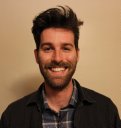
 Peter Schaldenbrand
· 2 previous affiliations
- Robert Bosch (Germany)Since 2026
- Researcher · Since 2026
- Carnegie Mellon University2021–2025
- PhD student · 2021–2025
Research Overview
Peter Schaldenbrand focuses on the intersection of artificial intelligence and creative expression, developing robotic painting systems and controllable generative models for image and video synthesis. His trajectory spans reinforcement learning for human-like brushstroke planning to real-to-sim-to-real frameworks for collaborative robot artists. Recently, his work addresses equitable representation in generative media by mitigating cultural biases in text-to-image models.
Research Trajectory
The early arc of Schaldenbrand's work centers on computationally modeling the physical and cognitive processes of painting. In 2021, he introduced a reinforcement learning approach to robotic art in Content Masked Loss: Human-Like Brush Stroke Planning in a Reinforcement Learning Painting Agent. Recognizing that human artists emphasize abstract features rather than simply reproducing pixels, this work proposed a novel loss function to encourage human-like stroke planning without relying on expensive human demonstration data.
Expanding into broader generative synthesis in 2022, he developed a model-free approach to video generation in Towards Real-Time Text2Video via CLIP-Guided, Pixel-Level Optimization. By optimizing pixels directly using CLIP guidance and refining the results with CycleGAN, the method bypassed heavy generative backbones to achieve near real-time generation speeds. This contribution intersects with the research direction of Image Synthesis through Iterative Feature Optimization and the broader area of Temporal Consistency in Generative Video Synthesis. That same year, he explored the intersection of textual and visual constraints in StyleCLIPDraw: Coupling Content and Style in Text-to-Drawing Translation. Inspired by the artistic theory that style and content are inseparable, this system optimized both simultaneously, allowing users to specify desired artistic styles via sample images alongside their text prompts.
His focus on physical artistic rendering culminated in the 2023 development of FRIDA: A Collaborative Robot Painter with a Differentiable, Real2Sim2Real Planning Environment. This framework enabled a robot to collaborate with humans using language or image inputs, driven by a fully differentiable simulation environment that bridged the gap between digital planning and physical execution. Expanding the modalities of robotic art, he collaborated on Robot Synesthesia: A Sound and Emotion Guided AI Painter, which encoded sound and simulated paintings into a shared latent space to guide the robotic painting process via audio and speech.
Alongside his work in robotic art, Schaldenbrand began addressing systemic biases in generative models. He participated in the development of the Cross-Cultural Understanding Benchmark (CCUB) in Towards Equitable Representation in Text-to-Image Synthesis Models with the Cross-Cultural Understanding Benchmark (CCUB) Dataset, which proposed culturally-aware priming to mitigate harmful stereotypes prevalent in models trained on massive, uncurated datasets. Building on this foundation, he co-developed a method to refine these models further in SCoFT: Self-Contrastive Fine-Tuning for Equitable Image Generation. This 2025 work introduced a self-contrastive fine-tuning approach that leverages a model's known biases to self-improve, preventing overfitting on small, culturally representative datasets while successfully encoding high-level cultural information.
Current Directions
The most recent work in the evidence addresses the ethical and cultural dimensions of generative AI. Specifically, current directions investigate methods for equitable image generation, focusing on how to fine-tune large, web-crawled models to avoid harmful stereotypes and misrepresentations. This involves developing community-driven benchmarks and novel self-contrastive learning techniques that allow generative models to self-correct known biases without losing their general synthesis capabilities.
Profile updated
Loading new papers…
Other researchers whose papers cluster into the same research directions — a proxy for overlapping technical interests and shared intellectual neighborhoods.
See something wrong? Report a mistake