

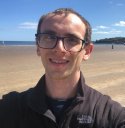
 Peter Macgregor
· 5 previous affiliations
- University of St AndrewsSince 2024
- Lecturer · Since 2024
- University of Edinburgh2011–2024
- Research Associate · 2022–2024
- PhD student · 2019–2022
- Tutor · 2020
- Bachelor of Science (BSc), Artificial Intelligence and Computer Science · 2011–2015
- Visiting Researcher · 2023
- Software Engineer Intern · 2022
- Metaswitch Networks2015–2019
- Software Engineer · 2015–2019
Research Overview
Peter Macgregor focuses on the design of theoretically sound algorithms for data science and machine learning, with particular emphasis on scalable graph analysis and spectral methods. His trajectory spans foundational work in local graph clustering and hypergraph analysis to high-performance implementations for massive datasets. Recently, his research addresses fully dynamic clustering algorithms and dynamic similarity graph construction for evolving data streams.
Research Trajectory
Macgregor’s early work addressed the challenges of extracting structure from complex, higher-order relational data. In 2021, he introduced a novel heat diffusion process to identify bipartite structures in Finding Bipartite Components in Hypergraphs, providing a polynomial-time algorithm with strong theoretical guarantees. Moving to massive graphs, he investigated local graph clustering techniques that avoid the prohibitive computational cost of global analysis. In Local Algorithms for Finding Densely Connected Clusters, he developed methods to find clusters around specific seed vertices, contributing to the broader area of The Resolution Limit in Community Detection.
In 2022, his focus expanded to the theoretical underpinnings of spectral methods. A Tighter Analysis of Spectral Clustering, and Beyond provided a refined theoretical framework that removed the traditional dependency on the number of clusters. This work demonstrated that using fewer eigenvectors can actually yield better clustering results and computational speedups, advancing research in the direction of The Spectral Bias of Balanced Partitions.
Around 2023, Macgregor began addressing the computational bottlenecks of spectral clustering on massive datasets. He introduced a nearly-linear time algorithm in Fast Approximation of Similarity Graphs with Kernel Density Estimation, which cleverly reduces graph construction to a Kernel Density Estimation (KDE) problem. This approach bypassed standard quadratic time and memory bottlenecks, impacting the research direction of Scaling Graph Algorithms via Spectral Sparsification and intersecting with areas such as Overcoming the Dense Graph Assumption in Graph Learning. He further tackled the slow eigenvector computations inherent in these methods in Fast and Simple Spectral Clustering in Theory and Practice.
Alongside his work on clustering, Macgregor has investigated foundational problems in theoretical computer science and operator theory, specifically regarding the Kadison-Singer conjecture. He explored the computational complexity of these questions in Is the Algorithmic Kadison-Singer Problem Hard?. Building on this, he developed deterministic, polynomial-time algorithms for Weaver’s discrepancy problem in the dense regime in Polynomial-Time Algorithms for Weaver's Discrepancy Problem in a Dense Regime, utilizing a novel logarithmic potential function.
In 2024, he formalized his algorithmic contributions into accessible software, co-developing the STAG 2.0 library detailed in Spectral Toolkit of Algorithms for Graphs: Technical Report (2). This toolkit leverages Locality Sensitive Hashing (LSH) to enable high-performance KDE and spectral clustering on high-dimensional datasets. Demonstrating a breadth of mathematical scholarship, he also published a historical perspective piece, Change and variations, a history of differential equations to 1900.
By 2025, Macgregor's research shifted toward fully dynamic algorithms capable of handling evolving data streams. He helped design an efficient dynamic algorithm for KDE in Dynamic Similarity Graph Construction with Kernel Density Estimation, enabling sub-linear time updates to sparse similarity graphs. He also guided the development of a dynamic DBSCAN algorithm in Dynamic DBSCAN with Euler Tour Sequences, which utilizes Euler Tour Trees to process online updates without reprocessing the entire dataset.
Continuing this trajectory into scalable and dynamic clustering, he participated in the development of representative subset techniques in Coreset Spectral Clustering. This line of inquiry culminated in Fully Dynamic Coreset Spectral Clustering (2026), where he and his collaborators introduced "Just-in-Time Sampling Trees." This novel data structure maintains a small representative coreset of a graph, allowing for real-time edge and node updates in logarithmic time and enabling exceptionally fast clustering queries on massive, evolving datasets.
Current Directions
The most recent papers in the evidence focus heavily on fully dynamic algorithms for evolving datasets and continuous data streams. Specifically, Macgregor is investigating dynamic data structures—such as Euler Tour Trees and Just-in-Time Sampling Trees—to maintain accurate density estimates and representative coresets in real time. This methodological shift allows computationally heavy clustering techniques, including DBSCAN and spectral clustering, to be updated in logarithmic or sub-linear time as new data points and edges are added, effectively bypassing the need for expensive batch reprocessing in large-scale applications.
Profile updated
| Title | Venue | Year |
|---|---|---|
| Fully Dynamic Coreset Spectral ClusteringGitHub resource | ICML | 2026 |
| Dynamic DBSCAN with Euler Tour Sequences | AISTATS | 2025 |
| Dynamic Similarity Graph Construction with Kernel Density Estimation | ICML | 2025 |
| Coreset Spectral Clustering | ICLR | 2025 |
| Change and variations, a history of differential equations to 1900 | The Mathematical Gazette | 2024 |
| Spectral Toolkit of Algorithms for Graphs: Technical Report (2) | arXiv | 2024 |
| Polynomial-Time Algorithms for Weaver's Discrepancy Problem in a Dense Regime | arXiv | 2024 |
| A prelude to quantum field theory | The Mathematical Gazette | 2023 |
| Is the Algorithmic Kadison-Singer Problem Hard? | Isaac | 2023 |
| The discrete mathematical charms of Paul Erdős | The Mathematical Gazette | 2023 |
| Paper | Venue | Year |
|---|---|---|
| Fully Dynamic Coreset Spectral ClusteringGitHubBenJourdan/ | ICLR | 2026 |
Loading new papers…
Other researchers whose papers cluster into the same research directions — a proxy for overlapping technical interests and shared intellectual neighborhoods.
See something wrong? Report a mistake