

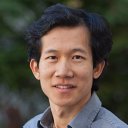
 Percy Liang
· 2 previous affiliations
- Stanford UniversitySince 2012
- Associate Professor · Since 2019
- Assistant Professor · 2012–2019
- PhD student · 2005–2011
Research Overview
Percy Liang focuses on the development and evaluation of foundation models, natural language processing, and the societal impacts of machine learning. His trajectory spans from early work in semantic parsing and weakly supervised reasoning to broad ecosystem-level analyses of algorithmic monoculture. Currently, his research addresses the transparency, copyright implications, and rigorous evaluation of large language models and autonomous agents.
Research Trajectory
Liang’s recent work has increasingly focused on the ecosystem-wide impacts of machine learning and the rigorous evaluation of foundation models. A major theme in his research is the area of Systemic Risks of Algorithmic Monoculture. In Picking on the Same Person: Does Algorithmic Monoculture lead to Outcome Homogenization? (2022), he and his collaborators formalized the risk of outcome homogenization, demonstrating how the widespread deployment of shared models and datasets can institutionalize systemic exclusion by consistently failing the same individuals. This framework was expanded in Ecosystem-level Analysis of Deployed Machine Learning Reveals Homogeneous Outcomes (2023), which shifted the evaluation paradigm from single-model performance to an ecosystem-level view, revealing that subsequent model improvements rarely resolve these systemic failures for marginalized users.
As foundation models became ubiquitous, Liang’s focus expanded to auditing their opaque training datasets and evaluating their reliability. He contributed to The 2024 Foundation Model Transparency Index (2025), which assessed leading AI developers across numerous transparency indicators, highlighting persistent opacity in upstream data and labor practices. Advocating for better evaluation practices, he co-authored Position: Language model developers should report train-test overlap (2025), arguing that the lack of public train-test overlap statistics severely compromises the interpretation of model benchmarks, as third parties cannot verify if a model was trained on its own test data.
His work also addresses systematic biases in large language model evaluators and prompt sensitivity. In SpecEval: Evaluating Model Adherence to Behavior Specifications (2025), he introduced a framework to measure the consistency gaps between a developer's stated guidelines, the model's actual outputs, and the model's self-judgment. Exploring structural reasoning and prompt sensitivity, The Mighty ToRR: A Benchmark for Table Reasoning and Robustness (2025) demonstrated that current models lack a generalized understanding of structured data. By testing models across dozens of prompt configurations, the work showed that performance swings wildly based on minor formatting changes, highlighting the need for semantic perturbation testing. Additionally, he investigated the decoupling of model capacity and uncertainty calibration in On the Entropy Calibration of Language Models (2025).
A critical emerging thread in Liang's trajectory involves the intersection of model scale, memorization, and privacy risks. In Extracting memorized pieces of (copyrighted) books from open-weight language models (2025), he developed methods to quantify the extent to which models memorize copyrighted material, showing that certain large models can reconstruct entire books near-verbatim. To better measure these risks, he subsequently introduced decoding-constrained beam search in Estimating near-verbatim extraction risk in language models with decoding-constrained beam search (2026), providing a more computationally efficient approach to identifying privacy-sensitive data extraction.
Alongside evaluation and privacy, Liang has investigated the capabilities of autonomous agents and the fundamentals of model training. BountyBench: Dollar Impact of AI Agent Attackers and Defenders on Real-World Cybersecurity Systems (2025) provided a framework for evaluating agents in interactive environments, quantifying their economic impact in detecting and patching vulnerabilities. In the domain of autonomous systems, he explored the application of reinforcement learning to language agents in Reinforcement Learning for Machine Learning Engineering Agents (2026). Drawing on themes of verifiable rewards and persistent experiential memory, this work addresses the computational challenges and short-sightedness often encountered when applying discounted reinforcement learning to large reasoning models. Finally, examining the illusion of progress from under-optimized baselines, Fantastic Pretraining Optimizers and Where to Find Them (2026) rigorously benchmarked new pretraining optimizers, revealing that many claimed speedups diminish when compared to properly tuned standard baselines at scale.
Current Directions
Liang's most recent work investigates the complex dynamics of data memorization and extraction in large language models, particularly concerning copyright and privacy risks. He is developing more efficient decoding strategies to quantify how models retain and regurgitate their training data. Concurrently, his research addresses the evaluation of autonomous agents in interactive, real-world environments, such as cybersecurity and machine learning engineering, seeking to quantify their practical utility and economic impact. Finally, he continues to examine the foundational aspects of model training, emphasizing rigorous benchmarking of pretraining optimizers to separate genuine algorithmic advances from artifacts of under-tuned baselines.
Profile updated
Loading new papers…
Other researchers whose papers cluster into the same research directions — a proxy for overlapping technical interests and shared intellectual neighborhoods.
See something wrong? Report a mistake