

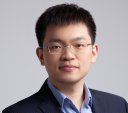
 Pengwei Hu
· 3 previous affiliations
- Full Professor · Since 2022
- MerckCurrent
- Current
- Principal Researcher · 2020–2022
- Hong Kong Polytechnic University2012–2018
- PhD student · 2012–2018
Research Overview
Pengwei Hu focuses on machine learning applications across natural language processing, graph representation learning, and biomedical informatics. His trajectory spans early work in network clustering and dialogue generation to more recent developments in multimodal architectures and knowledge distillation. Currently, his research addresses complex predictive tasks in healthcare, including depression detection and drug-drug interaction modeling.
Research Trajectory
Pengwei Hu’s research trajectory begins with foundational contributions to graph representation learning and natural language processing. In 2017, he introduced a novel approach to graph clustering that integrates node content interactions into the learning process. This work, detailed in Deep Graph Clustering in Social Network, reframed the computation of eigenvectors in spectral clustering as a deep representation task to better capture attribute relevance. The following year, he collaborated on generative models for conversational agents, participating in the design of a generative adversarial network to model multi-turn dialogue by training a latent hierarchical recurrent encoder-decoder alongside a discriminative classifier (Dialogue Generation With GAN).
Moving into the early 2020s, Hu expanded his focus to include automated text analysis and advanced network clustering. His group developed an automated business process discovery service that extracts latent hierarchical structural relationships from textual documentation without requiring extensive human labeling (A-BPS: Automatic Business Process Discovery Service using Ordered Neurons LSTM). Returning to graph analytics in 2021, his research addressed the challenge of clustering contemporary network data where vertices possess features from multiple distinct sources. This resulted in a multi-source propagation-aware framework applicable to social, biological, and document networks (Multi-source propagation aware network clustering).
Subsequent research explored model optimization and complex entity recognition. To mitigate the training complexity of increasingly deep convolutional neural networks, Hu oversaw the design of a knowledge distillation model that leverages binary attention maps to enhance student network performance (B-AT-KD: Binary attention map knowledge distillation). In the domain of natural language processing, he contributed to methods for extracting fine-grained address entities distributed across multiple turns of noisy spoken dialogue, utilizing logic rules applied in a probabilistic manner (Log-FGAER: Logic-Guided Fine-Grained Address Entity Recognition from Multi-Turn Spoken Dialogue). During this period, he also guided a comprehensive review of the rapidly evolving landscape of multimodal architectures (A survey of transformer-based multimodal pre-trained modals).
More recently, Hu has applied his expertise in multimodal learning and graph neural networks to critical problems in healthcare and biomedicine. In 2023, he developed an implicit and explicit multi-modal feature fusion model to detect depression risk by analyzing both texts and images posted by users on social media (Making the Implicit Explicit: Depression Detection in Web across Posted Texts and Images). Concurrently, his research addressed the need for interpretability in computer-aided medical diagnosis. By proposing a model-free lesion generation and learning framework, his team generated visual explanations for diabetic retinopathy diagnosis, utilizing a gated multi-layer saliency map to accurately locate lesion regions (MLGL: Model-free Lesion Generation and Learning for Diabetic Retinopathy Diagnosis). Extending this biomedical focus into pharmacology, he recently collaborated on a dual-channel learning framework designed to predict novel drug-drug interactions. This approach captures both local structures and global indirect connections by integrating biomedical knowledge graphs and drug molecular graphs through a relation-aware heterogeneous graph transformer (Dual-Channel Learning Framework for Drug-Drug Interaction Prediction via Relation-Aware Heterogeneous Graph Transformer).
Current Directions
The most recent papers in the evidence indicate a strong focus on biomedical informatics and healthcare applications, leveraging advanced graph neural networks and multimodal learning. Recent work investigates the prediction of drug-drug interactions by integrating heterogeneous information from biomedical knowledge graphs and molecular structures. Additionally, Hu's current research addresses the interpretability of computer-aided diagnostic systems, specifically generating visual explanations for medical imaging tasks like diabetic retinopathy detection. This intersection of robust representation learning—spanning text, image, and graph modalities—with clinical and pharmacological applications represents the primary trajectory of his ongoing research.
Profile updated
Loading new papers…
Loading research neighbors…
See something wrong? Report a mistake