

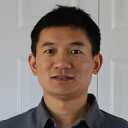
 Pengsheng Ji
· 2 previous affiliations
- University of GeorgiaSince 2012
- Associate Professor · Since 2018
- Assistant Professor · 2012–2018
- Cornell Tech2006–2012
- PhD student · 2006–2012
Research Overview
Pengsheng Ji focuses on network analysis, community detection, and graph representation learning. Early work examined the structural properties of academic citation and coauthorship networks, while more recent research investigates spectral algorithms for heterogeneous networks and graph neural network architectures that co-embed nodes and edges.
Research Trajectory
Based on the available corpus, which provides a sparse but focused view of Ji's work spanning 2014 to 2020, the research trajectory begins with empirical network analysis before shifting toward algorithmic and theoretical developments in graph machine learning.
In 2014, Ji's documented work centered on analyzing the structural properties of academic communities. As the first author of Coauthorship and Citation Networks for Statisticians, Ji constructed and analyzed datasets derived from top statistics journals published between 2003 and 2012. This research explored node centrality, productivity trends, and community structures to identify prolific authors and distinct research groups. This empirical analysis aligns with the broader research direction of Scaling Scientific Discovery through Collaborative Team Structures and touches upon the area of The Extreme Concentration of Scientific Impact.
By 2019, the focus of the work transitioned toward deep learning on graph-structured data. Ji was the second author of CensNet: Convolution with Edge-Node Switching in Graph Neural Networks, which introduced a framework for semi-supervised classification and regression. Rather than treating edges merely as connections, this approach embedded both nodes and edges into a latent feature space. By utilizing the line graph of the original undirected network to switch the roles of nodes and edges, the work contributed to themes such as Dual Role Node Embeddings for Directed Networks.
In 2020, Ji demonstrated senior leadership in the theoretical analysis of network clustering algorithms. As the last author and principal investigator on Spectral Algorithms for Community Detection in Directed Networks, Ji guided the theoretical validation and improvement of the D-SCORE algorithm for the directed degree-corrected block model (Directed-DCBM). This paper directly addressed the mathematical challenges of clustering nodes in networks where connection volumes vary drastically, advancing the research direction of Degree Correction for Community Detection in Heterogeneous Networks and the related area of Community Detection with Degree Heterogeneity. The methodology also contributed to the broader theme of Degree-Agnostic Spectral Clustering for Heterogeneous Networks.
During the same year, Ji also participated as a middle author in Co-embedding of Nodes and Edges with Graph Neural Networks. This collaborative effort further explored how graph convolutional networks can be utilized to transform complex, non-Euclidean data structures into low-dimensional spaces by simultaneously encoding node and edge features.
Current Directions
The most recent papers in the evidence, dating to 2020, indicate a dual focus on the theoretical foundations of community detection and the architectural advancement of graph neural networks. A primary open problem addressed in this recent work is managing degree heterogeneity in directed networks—specifically, ensuring that spectral clustering algorithms can accurately identify underlying community structures without being skewed by highly connected hub nodes. Alongside this theoretical work, recent collaborative efforts investigate the co-embedding of both nodes and edges in deep learning frameworks, seeking more expressive and comprehensive representations for complex network data.
Profile updated
Loading new papers…
Other researchers whose papers cluster into the same research directions — a proxy for overlapping technical interests and shared intellectual neighborhoods.
See something wrong? Report a mistake