

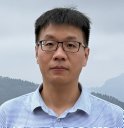
 Pengpeng Liang
· 3 previous affiliations
- Zhengzhou UniversitySince 2017
- Associate Professor · Since 2023
- Assistant Professor · 2017–2022
- Amazon (United States)2016–2017
- Software Development Engineer · 2016–2017
- Temple University2011–2016
- Temple University · 2011–2016
Research Overview
Pengpeng Liang focuses on visual object tracking, wide-area motion imagery analysis, and benchmark development for computer vision systems. Early work emphasized vehicle detection in aerial surveillance, while subsequent research has addressed adaptive target representations and planar object tracking in unconstrained environments. Most recently, this focus has expanded to include 3D single object tracking using sparse point cloud data.
Research Trajectory
Liang’s early research addressed the distinct challenges of wide-area motion imagery (WAMI). In this domain, targets such as vehicles occupy very few pixels, and video feeds often suffer from low frame rates and significant camera motion, making traditional video analysis techniques ineffective. As first author on Vehicle detection in wide area aerial surveillance using Temporal Context (2013), Liang proposed utilizing temporal context to capture road information without relying on prior geographical information systems. By combining background subtraction to generate candidates with Multiple Kernel Learning over Histograms of Oriented Gradients (HOG), this work demonstrated how spatiotemporal context could mitigate the severe ambiguities inherent in aerial surveillance.
By 2015, Liang’s focus shifted toward core problems in visual object tracking, contributing to the broader area of Efficient Architectures for Real-time Visual Tracking. A persistent challenge in this field was the reliance on grayscale imagery, which discards valuable discriminative clues. In Encoding Color Information for Visual Tracking: Algorithms and Benchmark, Liang led a systematic study evaluating ten chromatic models across sixteen state-of-the-art trackers. This work also introduced a comprehensive benchmark of 128 color sequences annotated with specific challenge factors, such as occlusion, establishing a more rigorous foundation for evaluating color-aware tracking algorithms.
During this period, Liang also investigated how to better model the tracking target itself, aligning with the research direction of Overcoming Static Template Drift in Video Tracking and themes such as Discriminative Visual Tracking via Background Awareness. In Adaptive Objectness for Object Tracking (2016), Liang introduced a method to adapt generic "objectness" measures—which distinguish objects from background—to specific tracking sequences. By training an object-adaptive support vector machine based on binarized normed gradients, the tracker could dynamically specialize to the target. This approach is closely related to the area of Specializing Neural Networks to Individual Video Sequences and the area of Optimal Reference Frame Selection for Video Object Segmentation, as it moves away from static, generic models toward sequence-specific optimization.
In 2017 and 2018, Liang addressed the specific challenges of tracking planar objects in unconstrained environments, contributing to the research direction of Normalizing Perspective with Planar Homography. Recognizing that existing benchmarks were largely confined to controlled laboratory settings, Liang served as first author on Planar Object Tracking in the Wild: A Benchmark. This work introduced a dataset of 210 videos capturing planar objects under natural conditions, featuring complex challenge factors like scale change, rotation, perspective distortion, motion blur, and out-of-view movements, thereby pushing the evaluation of vision-based robotic applications into more realistic scenarios.
In recent years, Liang’s research has expanded into 3D computer vision and the robustness of Siamese network architectures. Moving beyond 2D video sequences, Liang contributed as second author to Multi-Correlation Siamese Transformer Network With Dense Connection for 3D Single Object Tracking (2023). This research addresses the difficulties of learning correlations between template and search branches using sparse LiDAR point clouds, a critical task for autonomous driving. By employing a multi-stage Siamese Transformer that applies self-attention to capture non-local features before performing cross-correlation, the work improves tracking accuracy in 3D space. Concurrently, Liang has participated as a middle author in collaborative research examining the adversarial vulnerabilities of Siamese trackers, exploring how universal, video-agnostic perturbations can manipulate tracking trajectories.
Current Directions
The most recent work in the evidence, spanning 2022 to 2023, points to an ongoing focus on the reliability and spatial complexity of modern tracking architectures. A primary theme is the adaptation of visual tracking methodologies to 3D environments, particularly utilizing sparse LiDAR point clouds for autonomous driving applications. This involves designing multi-stage transformer networks capable of robust feature correlation in three dimensions, moving beyond the dense pixel grids of traditional video.
Additionally, recent collaborative efforts investigate the security of these tracking models, specifically analyzing their susceptibility to targeted adversarial attacks. By exploring how translucent perturbations and fake targets can consistently deceive Siamese networks across different video inputs, this line of inquiry highlights a growing interest in the robustness of computer vision systems. Together, these directions reflect a broader transition in Liang's trajectory from foundational 2D tracking benchmarks toward the development and evaluation of secure, spatially complex 3D perception systems.
Profile updated
Loading new papers…
Other researchers whose papers cluster into the same research directions — a proxy for overlapping technical interests and shared intellectual neighborhoods.
See something wrong? Report a mistake