

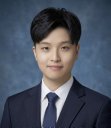
 Pengfei Hu
· 7 previous affiliations
- Stevens Institute of TechnologySince 2023
- PhD student · 2023–2027
- Current
- Graduate Research Intern · 2025
- University of Southern California2021–2023
- MS student · 2021–2023
- Data Analyst Intern · 2021
- Tencent (China)2020
- Product Analyst Intern · 2020
- Didi Chuxing (China)2019–2020
- Risk Data Analyst Intern · 2019–2020
- PwC2019
- Actuarial Analyst Intern · 2019
2 other authors named Pengfei Hu: Pengfei Hu (38 papers), Pengfei Hu (Tencent (China) · 21 papers)
Research Overview
Pengfei Hu focuses on the development of robust machine learning frameworks for domain generalization and adaptation, with a particular emphasis on high-stakes applications in predictive healthcare and environmental modeling. His work addresses the fundamental challenge of model performance degradation when encountering data from unseen distributions, a phenomenon common in clinical settings and complex physical systems. By integrating concept-grounded inference, hierarchical pruning, and domain-conditioned modulation, Hu develops methods that maintain predictive accuracy and transparency across disparate data environments.
Research Trajectory
The available evidence indicates a concentrated focus on the intersection of domain generalization (DG) and domain adaptation (DA) within specialized scientific fields. In 2026, Hu’s research output demonstrated a dual commitment to methodological innovation and domain-specific application, particularly in the areas of Electronic Health Records (EHR) and hydrological forecasting.
In the clinical domain, Hu has addressed the "domain shift" problem, where models trained on data from one medical institution fail to generalize to others due to variations in equipment, coding practices, or patient demographics. His approach to this problem has evolved from standard representation learning toward more transparent, concept-grounded methods. This shift reflects a broader concern in the field for Clinical Chain of Thought for Diagnostic Reasoning, where the interpretability of a model’s internal logic is as critical as its predictive power. By focusing on "concept-grounded orthogonal inference," Hu has sought to decouple domain-invariant features from site-specific noise, ensuring that clinical predictions remain grounded in medically relevant concepts rather than statistical artifacts of a particular hospital's data.
Simultaneously, Hu has extended these principles of generalization to the physical sciences, specifically hydrology. The challenge in this domain is the inherent uniqueness of individual geographical features, such as reservoirs, which exhibit distinct inflow patterns influenced by spatial metadata. Hu’s work in this area suggests a move toward "domain-conditioned modulation," a technique that allows models to adapt to the specific characteristics of a new environment by leveraging indirect metadata. This trajectory indicates an interest in how Automated Knowledge Graph Construction from Unstructured Data and structured metadata can be used to inform deep learning models about the underlying "skeleton" of a physical system.
While the publication record is currently concentrated in 2026, the thematic breadth of Hu's work suggests an alignment with emerging trends in large-scale reasoning models. His focus on hierarchical structures in data—whether in the form of patient cohorts or reservoir networks—parallels developments in Modeling Documents as Multi-Level Heterogeneous Graphs. This suggests a research philosophy that views data not as flat sequences, but as nested hierarchies where logical relationships must be explicitly modeled to achieve true generalization.
Current Directions
Hu’s current research appears to be converging on the concept of General Purpose Reasoning from Specialized Reinforcement Learning. By treating the ability to generalize across domains as a form of "slow" deliberate reasoning, his work moves beyond simple pattern matching. This is particularly evident in his recent efforts to solve the problem of unseen domain discovery in healthcare, where the model must autonomously identify cohort boundaries without explicit labels.
A significant portion of his current focus involves the optimization of these reasoning processes. As models become more complex, the computational cost of internal "chains-of-thought" increases. Hu’s interest in Code Integrated Reasoning for Efficient Inference suggests a direction toward making these robust models more deployable in real-world settings by reducing "drift" and computational overhead. This involves finding ways to ground the model's reasoning in verifiable structures, much like his earlier work grounded clinical predictions in medical concepts.
Furthermore, Hu is exploring the application of Dense Process Rewards for Large Reasoning Models to the problem of domain adaptation. Rather than rewarding a model solely on its final prediction (outcome-based learning), this approach provides feedback on the intermediate steps of the model's reasoning. In a clinical or hydrological context, this ensures that the model is arriving at the correct prediction for the right reasons, further enhancing the transparency and reliability of the system when it is deployed in a new, unseen domain.
Representative Work
Hu’s contributions are characterized by a rigorous approach to the challenges of data distribution shifts. As the first author on several key papers in 2026, he has established a framework for addressing these issues across different scientific disciplines.
In Exploring Accurate and Transparent Domain Adaptation in Predictive Healthcare via Concept-Grounded Orthogonal Inference, Hu addresses the lack of trust in "black-box" algorithms within clinical settings. The paper introduces a method for domain adaptation that prioritizes transparency by grounding model inferences in clinical concepts. This work is significant for its attempt to solve the domain adaptation problem—specifically the failure of models when moved between hospitals—while simultaneously providing a mechanism for clinicians to verify the model's logic.
His work on HydroDCM: Hydrological Domain-Conditioned Modulation for Cross-Reservoir Inflow Prediction applies domain generalization techniques to the field of hydrology. Traditional DG methods often struggle with many-domain systems like reservoir networks, where each node has unique patterns. Hu’s "Hydrological Domain-Conditioned Modulation" (HydroDCM) addresses this by incorporating spatial metadata and other indirect influences into the model’s representation. This allows the system to extract domain-invariant features while remaining sensitive to the unique metadata of specific reservoirs, improving the accuracy of inflow predictions across diverse geographical locations.
In Hierarchy Pruning for Unseen Domain Discovery in Predictive Healthcare, Hu tackles the challenge of domain generalization when domain labels are unavailable. In healthcare, patient populations naturally divide into cohorts based on medical history, but these boundaries are rarely explicitly labeled in EHR data. Hu proposes a "hierarchy pruning" method to discover these latent domains. This approach allows a model to capture both global patterns and cohort-specific nuances, facilitating better generalization to entirely unseen patient populations. This work represents a significant step forward in making predictive healthcare models more flexible and autonomous.
The evidence for Hu's work is currently centered on these three major contributions in 2026. While the temporal range of the provided corpus is narrow, the high-tier venues (ICML, AAAI, ICLR) and the consistent first-author status indicate a focused and leading role in the development of domain-resilient machine learning systems. His research successfully bridges the gap between theoretical domain generalization and the practical, messy realities of clinical and environmental data.
Profile updated
Loading new papers…
Other researchers whose papers cluster into the same research directions — a proxy for overlapping technical interests and shared intellectual neighborhoods.
See something wrong? Report a mistake