

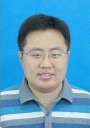
 Pengcheng Zhang
· 1 previous affiliation
- Hohai UniversitySince 2020
- Full Professor · Since 2020
2 other authors named Pengcheng Zhang: Pengcheng Zhang (Singapore Management University · Beihang University · 2 papers), Pengcheng Zhang (Zhejiang University · 1 paper)
Research Overview
Pengcheng Zhang focuses on intelligent software engineering, service computing, and large-scale networking infrastructure for artificial intelligence. His trajectory spans from quality-of-service control in cloud-network environments and blockchain security to high-performance data center networks. Recently, his work emphasizes resilient distributed training systems and fault diagnosis for large language models.
Research Trajectory
Zhang's early research explored collaborative systems, beginning with the Design and Implementation of an Intelligent Cooperative Design System in 2001. Over time, his focus expanded into advanced networking and telemetry, investigating how to monitor and manage network traffic efficiently. This included work on Flow Event Telemetry on Programmable Data Plane (2020), which addressed data plane programmability. He subsequently explored the intersection of cloud infrastructure and high-performance networking, examining the architectural implications of remote direct memory access (RDMA) in When Cloud Storage Meets RDMA (2021).
Building on this networking foundation, Zhang addressed the challenges of quality-of-service (QoS) assurance in converged infrastructures. In 2022, he developed methods for Intent-Driven QoS Control in Cloud-Network Integration Environment, proposing approaches to translate ambiguous user requirements into concrete functional and QoS parameters. To support this, he and his collaborators introduced techniques combining entity recognition and QoS mapping in User Intent Acquisition and Translation in Cloud-Network Integration Environment, enabling systems to accurately capture and orchestrate services dynamically as environments change.
Parallel to his work in cloud networking, Zhang has contributed to distributed consensus and software security, particularly in blockchain environments. He proposed An Improved PBFT Consensus Algorithm for Supply Chain Finance (2023) to optimize transaction reliability in financial applications. His research in this domain also encompasses security surveys, including Blockchain Scam Detection: State-of-the-Art, Challenges, and Future Directions (2023) and A Review of Learning-based Smart Contract Vulnerability Detection: A Perspective on Code Representation (2025), which systematize the use of machine learning for extracting syntactic and semantic features to identify vulnerabilities. Applying deep learning to enterprise systems, he also published a comprehensive analysis in Deep Learning for Predictive Business Process Monitoring: Review and Benchmark (2023).
As artificial intelligence models scaled, Zhang's networking expertise naturally extended into the infrastructure required for massive model training. He contributed to the design of specialized data center networks, detailing these architectures in Alibaba HPN: A Data Center Network for Large Language Model Training (2024) and Alibaba Stellar: A New Generation RDMA Network for Cloud AI (2025). To bridge the gap between theoretical hardware design and real-world performance, he participated in developing SimAI: Unifying Architecture Design and Performance Tuning for Large-Scale Large Language Model Training with Scalability and Precision (2025), a simulator that models computation and communication for large language models.
A major theme in his recent infrastructure research is the broader area of Resilient Distributed Training for Large Scale Machine Learning. Within this direction, Zhang has focused on mitigating hardware failures and network bottlenecks. He contributed to Enhancing Large-Scale AI Training Efficiency: The C4 Solution for Real-Time Anomaly Detection and Communication Optimization (2025), a system designed to reduce downtime and communication costs during LLM training. Similarly, he worked on Evolution of Aegis: Fault Diagnosis for AI Model Training Service in Production (2025), which provides non-intrusive fault detection and localization for production AI environments. Extending his focus on AI robustness to the software engineering level, he co-authored TAEFuzz: Automatic Fuzzing for Image-based Deep Learning Systems via Transferable Adversarial Examples (2026), introducing automated testing techniques to evaluate and enhance the reliability of deep learning components.
Current Directions
Zhang’s most recent work investigates the intersection of large-scale artificial intelligence infrastructure and intelligent software engineering. A primary focus is the optimization and reliability of distributed training environments for large language models. This involves developing real-time anomaly detection systems, advanced RDMA network architectures, and high-precision simulators to manage the immense computational and communication overhead of AI training. Additionally, his research addresses the robustness of the AI models themselves, utilizing automated fuzzing techniques and transferable adversarial examples to systematically test and improve the reliability of deep learning systems. He also continues to explore security and vulnerability detection in decentralized applications, particularly through learning-based analysis of smart contracts.
Profile updated
Loading new papers…
Other researchers whose papers cluster into the same research directions — a proxy for overlapping technical interests and shared intellectual neighborhoods.
See something wrong? Report a mistake