

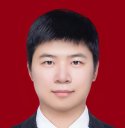
 Peng Tan
· 3 previous affiliations
- Postdoc · Since 2026
- NanJing University2019–2025
- PhD student · 2019–2025
- Undergrad student · 2015–2019
Research Overview
Peng Tan focuses on machine learning and data mining, with a primary specialization in the learnware paradigm and margin distribution learning. His research addresses the challenges of model reuse and adaptation, particularly in scenarios involving heterogeneous feature spaces where models and tasks do not share a common data representation. By developing methods for model specification, identification, and reuse, his work contributes to the realization of a "learnware market" where pre-trained models can be effectively repurposed for new tasks without requiring access to original training data.
Research Trajectory
The trajectory of Tan’s research is characterized by a progression from foundational investigations into margin-based learning to the development of complex systems for model reuse. His early contributions, as evidenced by work in 2005, involved Simplified Graphical Approaches for CDMA Multi-User Detection, Decoding and Power Control, which utilized graphical representations of probability distributions and message-passing schemes like belief propagation to compute approximate marginal distributions. This early interest in marginal distributions and efficient computation established a thematic foundation for his later work in statistical learning theory.
Around 2020, Tan’s focus shifted toward Margin Distribution Optimization. This work challenged the traditional "large margin principle" popularized by Support Vector Machines (SVMs), which focuses solely on maximizing the minimum margin (the distance between the decision boundary and the nearest training samples). Tan and his collaborators argued that The Fragility of Minimum Margin Maximization is more effective, as the entire distribution of margins—specifically the mean and variance—provides a more comprehensive signal for generalization than a single "worst-case" instance. This period saw the development of the multi-label Optimal margin Distribution Machine (mlODM), which extended these principles to multi-label learning environments.
Since 2023, Tan has been a central contributor to the learnware paradigm, a framework proposed to enable the reuse of machine learning models through a "market" or "dock" system. A learnware consists of a trained model and a specification that describes its utility while preserving the privacy of the developer's data. Tan’s work in this area has specifically targeted the problem of heterogeneous feature spaces. In many real-world scenarios, available models in a market may have been trained on different features than those used in a consumer's current task. Tan has developed methods to identify and reuse these heterogeneous models without requiring "bridge data" or auxiliary co-occurrence data to link the different feature spaces. This involves the use of Reduced Kernel Mean Embedding (RKME) specifications to represent data distributions in a way that allows for model recommendation and feature alignment across disparate domains.
His most recent work, extending into 2025 and 2026, continues to refine the learnware paradigm. This includes investigating how tabular learnwares can be repurposed for seemingly irrelevant new tasks and developing tree-based assembly methods for models originating from heterogeneous spaces. Furthermore, he has begun exploring the application of the learnware framework to language models, suggesting that specialized small language models can be organized and reused to perform complex tasks traditionally reserved for larger, monolithic models.
Current Directions
Tan’s current research is focused on the practical implementation and scaling of learnware systems. A significant component of this is the development of the "Beimingwu" system, a learnware dock that accommodates models submitted by developers and generates specifications to facilitate their identification and assembly. This work involves solving optimization problems related to how multiple learnwares can be combined to solve a user's task more effectively than any single model could.
Another active area of investigation is the exploitation of explicit labels in heterogeneous environments. By incorporating model outputs—or pseudo-labels—into unified embedding spaces, Tan is working to improve the accuracy of model identification. This approach moves beyond purely unsupervised distribution matching, allowing the learnware dock to better understand the functional capabilities of models even when their input features are entirely different from the target task.
Representative Work
In Multi-label optimal margin distribution machine, Tan (as second author) and his colleagues introduced the concept of margin distribution to the field of multi-label learning. The paper argues that the traditional Rank-SVM approach, which maximizes the minimum margin of label pairs, does not necessarily guarantee optimal generalization. The authors proposed the mlODM algorithm, which optimizes the margin mean and variance across all label pairs. This work demonstrated that managing the statistical distribution of margins leads to superior performance across various real-world datasets compared to traditional maximum-margin methods.
Tan’s first-author work in Handling Learnwares Developed from Heterogeneous Feature Spaces without Auxiliary Data addressed a critical limitation in early learnware research: the assumption that all models share a homogeneous feature space. The paper proposes a framework that utilizes RKME specifications to identify helpful models even when they were trained on different features. Crucially, the method does not require auxiliary data to "bridge" the feature spaces, making it highly applicable to privacy-sensitive or data-scarce environments where such overlapping data is unavailable.
In Handling Learnwares from Heterogeneous Feature Spaces with Explicit Label Exploitation, Tan (as first author) advanced the heterogeneous learnware framework by incorporating label information. While previous methods relied on matching input distributions, this work demonstrates that matching conditional distributions—by leveraging the outputs of the models themselves—allows for more precise model identification and adaptation. This "learnware dock" approach enables the system to recognize the utility of a model based on its predictive behavior, significantly improving the reuse of models across diverse domains.
The paper Towards enabling learnware to handle heterogeneous feature spaces provides a comprehensive examination of the challenges inherent in building a functional learnware market. As first author, Tan explores the theoretical and practical requirements for specifications that can describe a model's specialty without exposing the underlying training data. The research emphasizes the transition from a homogeneous prototype market to a more robust system capable of handling the diversity of models found in real-world machine learning ecosystems.
Tan also participated in the development of Beimingwu: A Learnware Dock System, where he served as a core member of the research team. This work details the architecture of a system designed to operationalize the learnware paradigm. The paper describes how the system generates specifications, accommodates spontaneous model submissions from developers, and identifies and assembles relevant learnwares for users. This system represents the practical culmination of several years of research into model specification and reuse.
Finally, the early work Simplified Graphical Approaches for CDMA Multi-User Detection, Decoding and Power Control illustrates Tan's long-standing engagement with the computational aspects of probability distributions. By solving the Lagrangian dual problem of minimizing the Bethe free energy, this research sought to overcome convergence issues in belief propagation algorithms. Although focused on communications technology, the underlying mathematical focus on marginal distributions and efficient inference prefigures his later contributions to margin-based machine learning.
Profile updated
Loading new papers…
Other researchers whose papers cluster into the same research directions — a proxy for overlapping technical interests and shared intellectual neighborhoods.
See something wrong? Report a mistake