

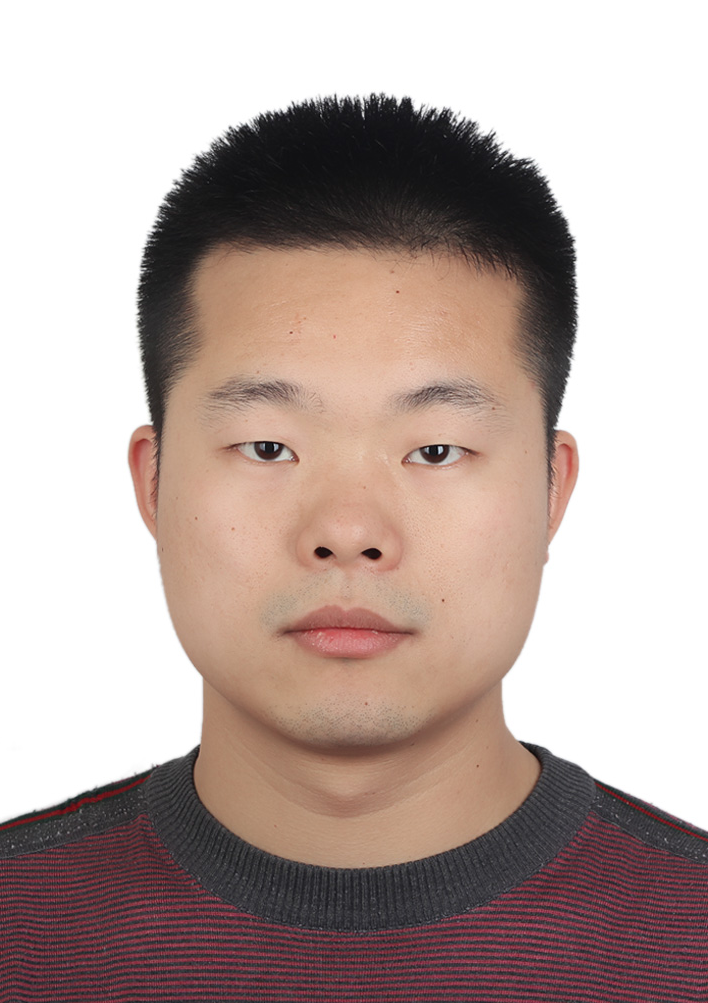
 Peng Hu
· 2 previous affiliations
- Sichuan UniversitySince 2021
- Full Professor · Since 2024
- Associate Professor · 2021–2024
- PhD student · 2016–2019
- MS student · 2013–2016
- Research Scientist · 2019–2020
3 other authors named Peng Hu: Peng Hu (2 papers), Peng Hu (Beihang University · 1 paper), Peng Hu (1 paper)
Research Overview
Peng Hu focuses on multi-view learning, cross-modal retrieval, and robust representation learning. His early work addressed the heterogeneity gap in multimodal data and advanced differentiable clustering techniques for unaligned samples. More recently, his research investigates robust multimodal alignment under noisy correspondence, exploring probabilistic frameworks and interactive learning to mitigate hallucinations and modality imbalance in large-scale vision-language models.
Research Trajectory
Hu's early research established foundational methods for aligning heterogeneous data types. In 2018, he developed Local feature based multi-view discriminant analysis, which sought to extract discriminative features across multiple views. Building on this, he introduced Deep Supervised Cross-Modal Retrieval in 2019. This work addressed the heterogeneity gap between images and text by minimizing discrimination loss in both label and representation spaces while enforcing modality invariance. This contribution advanced the broader area of Bridging the Modality Gap in Multimodal Representation Learning (using the conceptual space of multimodal alignment) and laid the groundwork for subsequent research in the direction of Reasoning and Efficiency in Multimodal Foundation Models.
As his focus expanded to unsupervised and weakly supervised settings, Hu began addressing the practical challenges of unaligned and noisy data. In 2020, he presented Partially View-aligned Clustering, integrating a differentiable surrogate of the Hungarian algorithm to simultaneously match unaligned samples and discover common representations. This work contributed significantly to the research direction of Learning from Incomplete Multi-View Data and the broader field of Differentiable Clustering for End-to-End Representation Learning, alongside related areas like Learning from Incomplete Multi-View Data and Differentiable Permutation Learning with Sinkhorn Relaxations. He further advanced unsupervised learning with Contrastive Clustering (2021), an end-to-end framework optimizing instance-level and cluster-level similarities in an online fashion. This approach pushed forward methods in Joint Representation Learning and Clustering and Semantic Collision and False Negatives in Contrastive Learning, while addressing challenges in Preventing Cluster Collapse in Unsupervised Deep Learning and Entropy Regularization to Prevent Categorical Cluster Collapse, ultimately aiding in the area of Discovering Novel Categories without Predefined Cluster Counts. Concurrently, he tackled the unreliability of crowd-sourced annotations by proposing a general framework in Learning Cross-Modal Retrieval With Noisy Labels.
Between 2022 and 2024, Hu's collaborative work increasingly emphasized robustness against complex, real-world degradations and alignment errors. He participated in the design of All-In-One Image Restoration for Unknown Corruption, a network built to recover images without prior knowledge of corruption types or levels. Shifting focus from label noise to alignment errors, he co-authored Learning with Noisy Correspondence, which formalized the problem of false positive pairs in cross-modal retrieval and introduced methods to rectify them. He extended these principles to multi-view scenarios in Robust Contrastive Multi-view Clustering against Dual Noisy Correspondence. This research utilized global context and spectral denoising to filter false associations, contributing to the direction of Robust Multimodal Alignment under Noisy Correspondence and related areas such as Semantic Collision and False Negatives in Contrastive Learning, Noise Robustness through Contrastive Representation Learning, Learning from Incomplete Multi-View Data, and Reclaiming Latent Information from Noisy Training Data.
In 2025, Hu's research portfolio broadened to encompass advanced generative models, probabilistic frameworks, and interdisciplinary applications. He introduced DUDE: Diffusion-Based Unsupervised Cross-Domain Image Retrieval, which leverages pre-trained diffusion models to separate object semantics from domain-specific styles, advancing the area of Semantic Collision and False Negatives in Contrastive Learning and contributing to broader research in Semantic Collision and False Negatives in Contrastive Learning and Semantic Collision and False Negatives in Contrastive Learning. In a parallel effort to improve retrieval without manual labels, his lab developed Deep Unsupervised Hashing via External Guidance, injecting textual knowledge from WordNet into a bidirectional contrastive framework. This work aligned with research in Semantic Collision and False Negatives in Contrastive Learning and Semantic Collision and False Negatives in Contrastive Learning.
Applying his expertise in representation learning to computational biology, Hu presented MetaQ: fast, scalable and accurate metacell inference via single-cell quantization. This algorithm utilizes vector quantization to compress massive single-cell datasets, contributing to the fields of Scalable Computational Frameworks for Atlas Scale Single Cell Analysis and Multimodal Foundation Models for Single Cell Biology, while innovating in Dynamic Reinitialization for Vector Quantization Codebooks, Preserving Biological Variation during Data Harmonization, and Shared Latent Spaces for Multimodal Data Integration.
Returning to core multimodal challenges, Hu proposed Probabilistic Multimodal Learning with von Mises-Fisher Distributions, modeling data points on a hypersphere to quantify reliability and manage misaligned modalities. This advanced the study of Directional Statistics for Hyperspherical Representation Learning and Robust Alignment and Fusion in Multimodal Transformers. His lab also explored handling conflicting information through Fuzzy Set Theory in Deep Fuzzy Multi-view Learning for Reliable Classification, contributing to Learning from Incomplete Multi-View Data, Learning from Incomplete Multi-View Data, Learning from Incomplete Multi-View Data, and Learning from Incomplete Multi-View Data.
His 2025 work also tackled complex spatial and interactive tasks. With collaborators, he developed Robust Cross-modal Alignment Learning for Cross-Scene Spatial Reasoning and Grounding, which introduced a matching-then-grounding framework for locating objects across diverse 3D environments, advancing Dynamic Spatial Reasoning in 4D Vision Language Models. Additionally, he guided the creation of Interactive Cross-modal Learning for Text-3D Scene Retrieval, transforming retrieval into an interactive dialogue to clarify vague queries, a step forward for Adapting Pre-trained Models to Informal Human Conversation and Bridging the Intent Gap in Information Retrieval.
Most recently, in 2026, Hu's research has addressed the limitations of Multimodal Large Language Models (MLLMs). His work on RLSF-V: Mitigating Hallucinations in MLLMs via Fuzzy Semantic Self-Feedback seeks to correct instances where generated text contradicts visual evidence without relying on off-policy preference data or proprietary models. Furthermore, he addressed modality imbalance with Multimodal Nested Learning for Decoupled and Coordinated Optimization, decoupling individual modality optimization from the fusion process to ensure balanced contributions across sensor inputs, contributing to the area of Balanced Multimodal Learning with Auxiliary Supervision.
Current Directions
The most recent papers in the evidence indicate a strong focus on the reliability and optimization of large-scale multimodal systems. Current work investigates methods to mitigate hallucinations in Multimodal Large Language Models (MLLMs) by developing self-feedback mechanisms that avoid reliance on external proprietary models or human inspection. Additionally, recent research addresses the challenge of modality imbalance during training—where dominant modalities overshadow weaker ones—by designing decoupled optimization strategies and multi-timescale memory layers. Across these efforts, a unifying theme is the development of robust, probabilistic, and fuzzy-logic-based frameworks that can gracefully handle conflicting information, noisy correspondences, and complex spatial reasoning tasks in open-world environments.
Profile updated
Loading new papers…
Other researchers whose papers cluster into the same research directions — a proxy for overlapping technical interests and shared intellectual neighborhoods.
See something wrong? Report a mistake