

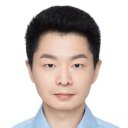
 Peng Gao
· 2 previous affiliations
- Qufu Normal UniversitySince 2020
- Associate Professor · Since 2020
- Undergrad student · 2011–2015
- Harbin Institute of Technology2015–2020
- PhD student · 2015–2020
6 other authors named Peng Gao: Peng Gao (Alibaba Group (China) · 54 papers), Peng Gao (Virginia Tech · 41 papers), Peng Gao (North Carolina State University · 12 papers), Peng Gao (5 papers), Peng Gao (2 papers), and 1 more
Research Overview
Peng Gao focuses on computer vision and natural language processing, with specific contributions to real-time visual tracking systems and knowledge base question answering. Early collaborative work addressed the algorithmic efficiency and hardware acceleration of correlation filter-based trackers. More recently, this focus has shifted toward complex graph reasoning and query generation for structured knowledge bases.
Research Trajectory
The available evidence outlines a research trajectory that begins in computer vision, specifically focusing on the optimization and hardware acceleration of visual tracking algorithms, before moving into natural language processing and structured data retrieval. Across the provided corpus, Gao appears as a collaborating middle author, indicating participation in broader research teams rather than serving as the primary investigator. Because the publication record in the evidence is sparse, the trajectory highlights selected collaborative participations rather than a continuous independent research program.
In 2018, Gao contributed to efforts aimed at improving the real-time performance of correlation filter (CF) based tracking algorithms. A central challenge in this domain is balancing the computational complexity of advanced optimization methods with the need for high-speed processing in real-world applications. Gao was a co-author on Efficient Multi-level Correlating for Visual Tracking, which proposed a multi-level CF-based approach utilizing a two-stage cascaded detection scheme. By separating the process into primal detection and oriented re-detection, the research sought to prevent model drift while accelerating overall tracking speed.
During the same period, this interest in tracking efficiency extended to hardware-level optimizations. Gao participated in the development of an FPGA-based Acceleration System for Visual Tracking. Recognizing that PC-based implementations often struggle to maintain real-time performance in practical scenarios, the research team implemented a hardware system on a Xilinx FPGA platform. This work adapted the Discriminative Scale Space Tracking (DSST) approach for hardware, utilizing batch processing techniques to reduce resource occupation and achieving processing speeds exceeding 150 frames per second.
Following a gap in the provided publication record, the trajectory shifts significantly in 2024 toward natural language processing and knowledge representation. Gao was a contributing author to Self-supervised BGP-graph reasoning enhanced complex KBQA via SPARQL generation. This work addresses Knowledge Base Question Answering (KBQA), a field concerned with translating natural language queries into executable database commands to retrieve precise answers from structured knowledge graphs. The research focused on enhancing complex query generation through self-supervised reasoning over Basic Graph Patterns (BGPs).
Current Directions
Based on the most recent paper in the evidence from 2024, current collaborative efforts are directed toward the intersection of natural language processing and knowledge graph reasoning. The primary focus involves improving the accuracy and reasoning capabilities of Knowledge Base Question Answering (KBQA) systems. This includes exploring self-supervised methods for graph reasoning and refining the generation of structured queries (such as SPARQL) from complex natural language inputs. The shift from early hardware-accelerated computer vision to contemporary graph-based NLP suggests a broadening technical scope, though the sparse nature of the evidence limits a more detailed assessment of ongoing independent research agendas.
Profile updated
| Title | Venue | Year |
|---|---|---|
| Self-supervised BGP-graph reasoning enhanced complex KBQA via SPARQL generation | Information Processing & Management | 2024 |
| FPGA-based Acceleration System for Visual Tracking | arXiv | 2018 |
| Efficient Multi-level Correlating for Visual Tracking | Accv | 2018 |
Loading new papers…
Other researchers whose papers cluster into the same research directions — a proxy for overlapping technical interests and shared intellectual neighborhoods.
See something wrong? Report a mistake