

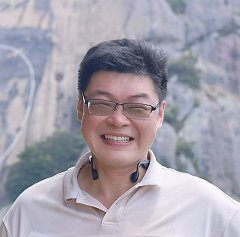
 Peng Di
· 3 previous affiliations
- UNSW SydneySince 2008
- Associate Professor · Since 2018
- Lecturer · 2013–2018
- PhD student · 2008–2014
- Ant Group (China)Since 2020
- Principal Researcher · Since 2020
- Huawei Technologies (China)2018–2020
- Principal Researcher · 2018–2020
Research Overview
Peng Di focuses on static program analysis, compiler optimization, and neural code intelligence. His early work addressed parallelization and memory hierarchy optimizations for high-performance computing architectures. More recently, his research investigates the integration of large language models with structural program representations to enhance repository-level software engineering and automated code analysis.
Research Trajectory
Peng Di’s early research concentrated on compiler optimizations and parallelization strategies for high-performance computing architectures. In Toward Harnessing DOACROSS Parallelism for Multi-GPGPUs, he investigated the algorithmic restructuring of DOACR loops to better exploit fine-grained thread concurrency on general-purpose GPUs. Building on this foundation, he developed a compiler framework using the polyhedral model to automate the extraction of intra- and inter-SM parallelism, detailed in Automatic Parallelization of Tiled Loop Nests with Enhanced Fine-Grained Parallelism on GPUs.
Transitioning toward program analysis and memory optimization, his work addressed the scalability challenges of analyzing complex software. He contributed to the development of FSAM, a system designed to scale flow-sensitive pointer analysis for large multithreaded C programs by leveraging thread interference analysis, as presented in Sparse flow-sensitive pointer analysis for multithreaded programs. Returning to compiler transformations, he collaborated on Optimizing the Memory Hierarchy by Compositing Automatic Transformations on Computations and Data, which introduced a novel approach to loop tiling and fusion that applies rectangular and parallelogram tiling to live-out computation spaces before computing memory footprints. His focus on static analysis precision continued with participation in Hybrid Inlining: A Framework for Compositional and Context-Sensitive Static Analysis, a framework that selectively inlines critical statements to balance context-sensitivity with compositional scalability.
As large language models emerged, his research expanded to integrate machine learning with traditional software engineering tools. He directed the design of the Intelligent Code Analysis Agent framework in Static Code Analysis in the AI Era: An In-depth Exploration of the Concept, Function, and Potential of Intelligent Code Analysis Agents, embedding LLMs within multi-agent systems to reduce false-positive rates in bug detection. This intersection of AI and formal methods is further reflected in Scaling Abstraction Refinement for Program Analyses in Datalog using Graph Neural Networks, where graph neural networks were applied to score abstraction parameters, improving the scalability of counterexample-guided abstraction refinement. Concurrently, he investigated dynamic language security vulnerabilities, identifying how duck typing can exacerbate deserialization attacks in GrayDuck: The Sword of Damocles for Duck Typing in Dynamic Language Deserialization.
His recent work heavily emphasizes large-scale code intelligence and system reliability. He introduced a multi-lingual code model supporting over 40 programming languages in CodeFuse-13B: A Pretrained Multi-lingual Code Large Language Model. To address the demands of massive codebases, he guided the development of CodeFuse-Query: A Data-Centric Static Code Analysis System for Large-Scale Organizations, which reimagines static analysis as a data computation task, optimizing resource utilization and incremental code extraction. This system contributes to the broader research direction of Balancing Precision and Scalability in Static Program Analysis. In the domain of distributed systems, he proposed MicroFuzz: An Efficient Fuzzing Framework for Microservices, tackling the specific communication and consistency challenges inherent in fuzzing microservice architectures through techniques like mocking-assisted seed execution and distributed tracing.
A major theme in his latest trajectory is the incorporation of graph-based semantic information into neural models, advancing the research area of Structural Awareness in Neural Code Intelligence. He participated in the design of GALLa: Graph Aligned Large Language Models for Improved Source Code Understanding, which uses cross-modal alignment to inject data flow and structural graphs into LLMs. He subsequently oversaw the creation of the Code Graph Model (CGM): A Graph-Integrated Large Language Model for Repository-Level Software Engineering Tasks, integrating repository structural dependencies directly into the attention mechanism to resolve complex, repository-level coding issues. Most recently, his research has broadened into multimodal machine learning with SOLAR: Self-supervised Joint Learning for Symmetric Multimodal Retrieval, a self-supervised framework that disentangles shared and unique information for efficient, symmetric retrieval across different modalities.
Current Directions
The most recent papers in the evidence indicate a strong focus on enhancing large language models with structural and repository-level awareness for software engineering tasks. This involves moving beyond treating source code merely as text tokens by directly integrating graph-based semantic information—such as data flow and structural dependencies—into the attention mechanisms of neural models. Additionally, recent work investigates self-supervised learning techniques for multimodal retrieval, exploring how to efficiently disentangle shared and specific representations across different data modalities without relying on manual annotations.
Profile updated
Loading new papers…
Other researchers whose papers cluster into the same research directions — a proxy for overlapping technical interests and shared intellectual neighborhoods.
See something wrong? Report a mistake