

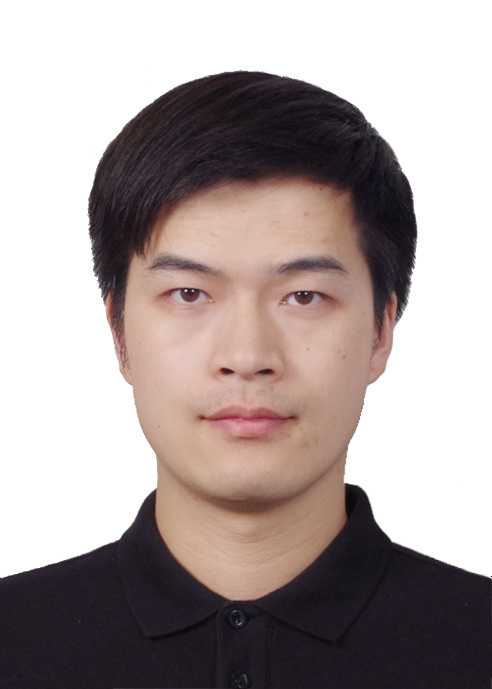
 Peng Cheng
· 3 previous affiliations
- Tongji UniversitySince 2025
- Researcher · Since 2025
- East China Normal University2019–2024
- Associate Professor · 2019–2024
- Postdoc · 2017–2019
- PhD student · 2014–2017
9 other authors named Peng Cheng: Peng Cheng (Zhejiang University · Hangzhou High-Tech Zone (Binjiang) Institute of Blockchain and Data Security · 65 papers), Peng Cheng (Zhejiang University · 47 papers), Peng Cheng (14 papers), Peng Cheng (Microsoft (United States) · 12 papers), Peng Cheng (La Trobe University · 1 paper), and 4 more
Research Overview
Peng Cheng focuses on spatial crowdsourcing, task assignment algorithms, and privacy-preserving data analysis. Early work established foundational frameworks for reliable and multi-skill spatial crowdsourcing, optimizing for both latency and worker diversity. More recently, this research has expanded to integrate differential privacy into spatial data collection and explore utility maximization in decentralized systems.
Research Trajectory
Beginning in the mid-2010s, Cheng’s research heavily emphasized the optimization of spatial crowdsourcing platforms, where location-based requests are dynamically routed to mobile workers. This work aligns with the broader research direction of Future-Aware Dispatching for Dynamic Spatial Matching, focusing on how to efficiently allocate human resources in real-time geographic environments. As first author, Cheng introduced early formalizations of these challenges in Reliable Diversity-Based Spatial Crowdsourcing by Moving Workers (2014). This paper addressed the problem of assigning moving workers to time-constrained spatial tasks—such as verifying parking availability or capturing localized media—while explicitly optimizing for the reliability and spatial diversity of the workforce.
As crowdsourcing platforms matured, the complexity of the tasks they supported increased. Cheng expanded on initial assignment models by incorporating heterogeneous worker capabilities and financial constraints. In Task Assignment on Multi-Skill Oriented Spatial Crowdsourcing (2016), Cheng led the development of a framework where tasks require specific combinations of skills and operate under strict budgets. This research provided algorithmic solutions to ensure that multi-skill tasks could be completed efficiently without exceeding cost limitations. Continuing this focus on platform efficiency, Cheng later addressed the persistent trade-off between task accuracy and completion time. The 2019 paper FROG: A Fast and Reliable Crowdsourcing Framework proposed a system designed to mitigate the latency often caused by unreliable workers or difficult tasks, ensuring that crowdsourced answers are both accurate and delivered promptly.
In the early 2020s, Cheng’s focus broadened from traditional crowdsourcing to encompass broader resource allocation and utility problems in mobile and decentralized environments, touching upon themes such as Parameterized Social Welfare for Tunable Fairness and Efficiency. In Maximizing the Utility in Location-Based Mobile Advertising (2022), Cheng investigated the maximum utility advertisement assignment problem. This work modeled the complex bipartite matching between mobile users and vendors, optimizing the overall utility of delivered ads while respecting constraints like customer capacity, geographic distance, and vendor budgets.
Simultaneously, Cheng began exploring cryptographic and privacy-preserving mechanisms, marking a significant evolution in the research trajectory. This shift was initially evident in blockchain privacy research. In Mixing Transactions with Arbitrary Values on Blockchains (2022), Cheng co-authored work addressing the deanonymization vulnerabilities inherent in transparent public ledgers. The research proposed methods for decomposing and mixing transactions of arbitrary values to obscure the linkages between senders and receivers, preventing adversaries from using transaction amounts as quasi-identifiers.
This growing interest in privacy naturally intersected with Cheng’s foundational expertise in spatial data. Recognizing that spatial crowdsourcing inherently requires users to share sensitive location information, Cheng began integrating formal privacy guarantees into task assignment protocols. In Dynamic Private Task Assignment under Differential Privacy (2023), Cheng and collaborators designed a scheme that allows workers to dynamically manage their utility and distance privacy leakage. By applying differential privacy mechanisms to spatial crowdsourcing, this work provided a pathway for platforms to collect necessary operational data while offering mathematical guarantees regarding individual worker privacy.
Current Directions
Recent work investigates the intersection of differential privacy and spatial data analysis, alongside continued collaborative participation in crowdsourcing and decentralized finance. The most recent papers in the evidence address the challenge of publishing accurate spatial distributions without compromising individual user trajectories. This includes developing numerical estimation techniques for spatial data under differential privacy, ensuring that aggregate metrics—such as urban traffic flow—can be safely released for road planning and transport applications.
Additionally, Cheng contributes to ongoing advancements in worker selection methodologies, participating in research that models cross-domain worker performance to improve crowdsourced annotation tasks when historical data is sparse. Beyond spatial and crowdsourced systems, recent collaborative efforts also explore optimization within decentralized finance (DeFi), specifically focusing on algorithmic strategies to maximize liquidity mining yields across various cryptocurrency liquidity pools while managing exchange constraints and costs.
Profile updated
Loading new papers…
Other researchers whose papers cluster into the same research directions — a proxy for overlapping technical interests and shared intellectual neighborhoods.
See something wrong? Report a mistake