

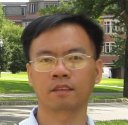
 Pei Yang
· 2 previous affiliations
- South China University of TechnologySince 2010
- Associate Professor · Since 2010
- Arizona State University2014–2016
- Postdoc · 2014–2016
1 other author named Pei Yang: Pei Yang (National University of Singapore · 18 papers)
Research Overview
Pei Yang focuses on statistical machine learning and data mining, with a primary emphasis on multi-task learning, transfer learning, and the modeling of heterogeneous data sources. His work investigates how knowledge can be effectively shared across different tasks, views, and domains to improve model performance in data-scarce or complex environments. Currently, his research explores Partial Optimal Transport for Mismatched Distribution Alignment and its applications in healthcare, computer vision, and intelligent transportation systems.
Research Trajectory
The evolution of Yang’s research reflects a transition from applied domain-specific modeling to the development of generalized machine learning frameworks. In the early 2000s, his work was situated in applied engineering and bioinformatics, addressing problems such as route guidance in traffic networks and the genomic sequencing of pathogens. By 2008, his focus shifted toward the theoretical foundations of machine learning, specifically addressing the limitations of transfer learning in non-linear contexts. This period established his interest in Bayesian frameworks and hierarchical modeling as tools for capturing the relatedness between distinct but similar computational tasks.
During the mid-2010s, Yang’s research program matured into a concentrated study of heterogeneity. He addressed the "triple heterogeneity" problem—where data exhibits variations across tasks, views, and labels simultaneously. This work moved beyond simple domain adaptation to consider how multiple latent spaces could be integrated to leverage task relatedness and view consistency. This era also saw an expansion into functional data analysis, treating data as continuous functions rather than discrete vectors, which allowed for more sophisticated modeling of time-series and sensor data.
In recent years, Yang has integrated graph representation learning and geometric frameworks into his work. This includes exploring how semantic relationships can enhance visual networks for zero-shot learning and developing robust methods for distribution alignment. His most recent contributions involve the theory of Elastic Optimal Transport, which provides a more flexible framework for comparing probability distributions by allowing for adaptive mass transfer. Throughout this trajectory, Yang has maintained a strong applied focus in healthcare, utilizing deep learning and automated analysis to improve diagnostic processes in traditional medicine and sleep studies.
Current Directions
Yang’s current research is characterized by three major themes: the refinement of optimal transport theories, the integration of structural relationships in learning, and the application of deep learning to complex healthcare data.
A significant portion of his recent work focuses on the "perfectionist" problem in classical Optimal Transport (OT). Traditional OT requires strict mass conservation, which is often impractical when dealing with noisy real-world data or mismatched distributions. Yang’s work in elastic and partial optimal transport addresses these constraints by allowing the model to automatically determine the optimal amount of mass to transfer based on the data's intrinsic geometry. This direction is critical for improving the robustness of domain adaptation and generative modeling.
Additionally, Yang continues to explore Modeling Label Dependencies in Multi-Label Learning. By moving away from "flat" classification models, his research incorporates the hierarchical and semantic relationships between categories. This is particularly evident in his work on zero-shot learning, where knowledge graphs are used to help models recognize unseen objects by understanding how different attributes interact and co-occur.
In the domain of healthcare, Yang is applying these advanced machine learning techniques to automate and objectify medical analysis. This includes the use of deep learning for polysomnography analysis in insomnia trials and the development of knowledge representation techniques for Traditional Chinese Medicine (TCM). These projects aim to bridge the gap between abstract medical philosophies and objective, data-driven diagnostic tools.
Representative Work
Bayesian Task-Level Transfer Learning for Non-linear Regression In this 2008 first-author paper, Yang addressed a critical gap in multi-task learning, which had previously focused largely on linear regression. He proposed HiRBF, a hierarchical Bayesian framework that combines multiple tasks within a single Radial Basis Function (RBF) network. By sharing input-to-hidden weights across tasks while allowing hidden-to-output weights to vary according to a prior distribution, the model achieved more efficient knowledge sharing. This work demonstrated that transfer-aware approaches could significantly outperform traditional methods in non-linear regression scenarios.
Knowledge transfer across different domain data with multiple views Serving as the senior author, Yang introduced the DV2S framework in 2014 to tackle the dual challenge of distribution divergence and multi-view data. The model integrates domain distance and view consistency into a support vector machine (SVM) framework. By finding an optimal feature mapping that maintains classification margins while minimizing the distance between domains, the research provided a method for leveraging multi-view information to enhance knowledge transfer, a common requirement in complex data mining applications.
Model Multiple Heterogeneity via Hierarchical Multi-Latent Space Learning In this 2015 first-author paper, Yang proposed the Hierarchical Multi-Latent Space (HiMLS) approach to address triple heterogeneity: task, view, and label heterogeneity. The framework was designed for complex applications like satellite image analysis and gene function prediction. By learning a hierarchical space that simultaneously accounts for task relatedness, view consistency, and label correlations, the model provided a unified solution for data collected from diverse and heterogeneous sources.
Multi-task Function-on-function Regression with Co-grouping Structured Sparsity This 2017 first-author work shifted the focus toward functional data analysis. Yang proposed a regression approach that treats infinite-dimensional data as continuous functions. The model uses co-grouping structured sparsity to encourage similar tasks to behave consistently while modeling the correlations among basis functions. This approach is particularly effective for handling the inherent heterogeneity of functional data derived from varied sources, allowing for more precise modeling of functionality and relatedness.
Acupuncture combined with cognitive–behavioural therapy for insomnia (CBT-I) in patients with insomnia: study protocol for a randomised controlled trial In this 2022 collaboration, Yang contributed as the second author, focusing on the integration of deep learning (DL) into clinical trial protocols. The study leverages DL to automate the analysis of polysomnography (PSG) data, moving toward a more objective understanding of sleep architecture. This work represents Yang's commitment to applying machine learning to healthcare, specifically in creating automated tools that can support large-scale randomized controlled trials.
Elastic Optimal Transport: Theory, Application, and Empirical Evaluation In this 2026 first-author paper, Yang introduced Elastic Optimal Transport (ELOT), a theoretical advancement in distribution alignment. ELOT utilizes mixed-sign ground costs and marginal inequality constraints to allow for adaptive mass transport. Unlike traditional OT methods that require rigid mass preservation, ELOT automatically determines the optimal mass transfer based on the data's geometry. This makes the framework highly robust to noise and outliers, representing a significant step forward in the practical application of geometric distribution comparison.
Yang's broader body of work also includes contributions to Leveraging Complementary Error Patterns through Architectural Diversity, where he has participated in research exploring how diverse neural architectures can be orchestrated to improve overall system performance. His involvement in cross-corpus speech emotion recognition further demonstrates his interest in extracting domain-invariant features and modeling relationships between individual samples to improve sentiment analysis across different languages and speakers.
Profile updated
| Paper | Venue | Year |
|---|---|---|
| Unsupervised Domain Adaptation via Deep Hierarchical Optimal TransportGitHubInnse/ | arXiv | 2022 |
Loading new papers…
Other researchers whose papers cluster into the same research directions — a proxy for overlapping technical interests and shared intellectual neighborhoods.
See something wrong? Report a mistake