

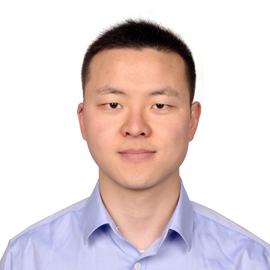
 Pei Chen
· 3 previous affiliations
- Amazon (United States)Since 2024
- Researcher · Since 2024
- Texas A&M UniversityCurrent
- Current
- PhD student · 2019–2024
- Chinese Academy of Sciences2018–2019
- Researcher · 2018–2019
3 other authors named Pei Chen: Pei Chen (Zhejiang University · 18 papers), Pei Chen (Fudan University · 4 papers), Pei Chen (1 paper)
Research Overview
Pei Chen focuses on natural language processing, information extraction, and the reasoning capabilities of large language models. His early work addressed complex event extraction and domain-specific named entity recognition using graph-based neural architectures. Recently, his research has shifted toward optimizing large language models through multi-agent collaboration, instruction tuning, and efficient personalization techniques.
Research Trajectory
Chen's early research concentrated on extracting structured information from text, particularly through the application of graph-based neural architectures. In 2020, he contributed to the area of Mitigating Cascading Errors in Sequential Processing Pipelines with the development of Reconstructing Event Regions for Event Extraction via Graph Attention Networks. This work utilized graph attention networks to better identify and reconstruct event boundaries in text. Building on this theme of complex extraction, he introduced the FinReason dataset in Probing into the Root: A Dataset for Reason Extraction of Structural Events from Financial Documents. This project sought to move beyond basic causality detection by extracting the underlying textual reasons for overlapping financial events, highlighting the performance gaps in standard models like BERT when dealing with implicit reasoning in document-level contexts.
Continuing his focus on structured extraction, Chen explored the research directions of Domain Adaptation for Specialized Named Entity Recognition and Shortest Dependency Path Filtering for Relation Extraction. In Explicitly Capturing Relations between Entity Mentions via Graph Neural Networks for Domain-specific Named Entity Recognition, he presented the EnRel-G framework. By explicitly modeling both global coreference (repeated mentions of the same entity) and local syntactic dependencies as graphs, this approach improved entity recognition in specialized domains where labeled training data is scarce.
In 2022, Chen expanded his focus to broader knowledge representation and fine-grained classification tasks. He developed ZeroKBC: A Comprehensive Benchmark for Zero-Shot Knowledge Base Completion, providing a standardized evaluation for models attempting to infer missing knowledge base facts without task-specific training data. That same year, he also introduced Crossroads, Buildings and Neighborhoods: A Dataset for Fine-grained Location Recognition, addressing the challenges of identifying highly specific location entities in natural language.
Transitioning toward structured data representation, Chen's work in 2023 addressed the area of Permutation Invariant Transformers for Tabular Data. He proposed HyTrel: Hypergraph-enhanced Tabular Data Representation Learning, a tabular language model that conceptualizes tables as hypergraphs. By treating cells as nodes and rows or columns as hyperedges, HyTrel explicitly encodes the structural invariance of tables—ensuring that row reordering does not alter the model's interpretation—and achieves strong performance with reduced pretraining requirements.
By 2024, following his doctoral studies at Texas A&M University and his transition to an Applied Scientist role at Amazon, Chen's research shifted heavily toward the reasoning capabilities of large language models (LLMs). He investigated the broader area of Hierarchical Synthesis for Multi-Agent LLM Systems in CoMM: Collaborative Multi-Agent, Multi-Reasoning-Path Prompting for Complex Problem Solving. This framework prompts LLMs to adopt distinct roles within a problem-solving team, demonstrating that assigning different reasoning paths to different agents enhances the model's ability to solve complex scientific problems. Concurrently, he collaborated on ItD: Large Language Models Can Teach Themselves Induction through Deduction, which introduced a framework featuring a Deductive Data Generation module to help LLMs bootstrap their own inductive reasoning skills, addressing inherent limitations in standard post-processing paradigms.
Current Directions
Recent work investigates the efficiency, adaptability, and advanced reasoning constraints of large language models. A primary focus is overcoming challenges associated with the research direction of The Inductive Bottleneck in Large Language Models and moving beyond basic instruction following. In Beyond Instruction Following: Evaluating Inferential Rule Following of Large Language Models, Chen introduces the RuleBench benchmark to assess how well models adhere to complex, abstract inferential rules, alongside a fine-tuning method (IRFT) utilizing synthetic data to improve this capability.
Additionally, his most recent papers address the scalable deployment and training of LLMs. He explores training-free data augmentation in Mosaic-IT: Cost-Free Compositional Data Synthesis for Instruction Tuning, which concatenates existing instruction data to efficiently synthesize diverse, compositional training examples without relying on human intervention or teacher models. In parallel, he investigates rapid model personalization with Instant Personalized Large Language Model Adaptation via Hypernetwork. This Profile-to-PEFT (P2P) framework uses a centralized hypernetwork to map user profiles directly to personalized low-rank adaptation parameters, significantly reducing the computational overhead of deploying individualized models while maintaining high performance.
Profile updated
| Paper | Venue | Year |
|---|---|---|
| Instant Personalized Large Language Model Adaptation via HypernetworkGitHubTamSiuhin/ | arXiv | 2025 |
Loading new papers…
Other researchers whose papers cluster into the same research directions — a proxy for overlapping technical interests and shared intellectual neighborhoods.
See something wrong? Report a mistake