

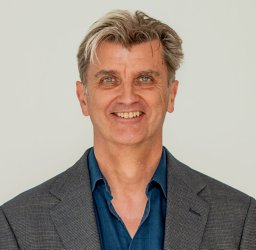
 Paul Beardsley
· 9 previous affiliations
- TwoLeaves AISince 2020
- Research Scientist · Since 2020
- Weta DigitalSince 2021
- Research Scientist · Since 2021
- AdHawk AISince 2025
- AI Scientist · Since 2025
- Unity - Weta2021–2024
- Principal Research Scientist · 2021–2024
- Computer Vision and Robotics2019–2020
- Freelance Technologist · 2019–2020
- Walt Disney (United States)2008–2018
- Principal Research Scientist · 2008–2018
- Walt Disney (Switzerland)2008–2018
- Research Scientist · 2008–2018
- Senior Research Scientist · 1996–2008
- DPhil (PhD)
Research Overview
Paul Beardsley focuses on computer vision, 3D reconstruction, and mobile robotics. His early research established foundational methods in uncalibrated structure from motion and projective geometry for visual navigation. Over time, his work has evolved to encompass projector-camera systems, multi-modal sensor fusion, and the application of depth sensing to autonomous robotic platforms in complex environments.
Research Trajectory
Beardsley’s early research in the 1990s centered on geometric computer vision, specifically the challenge of recovering three-dimensional structure and camera motion from image sequences without relying on prior camera calibration. As a first author, he contributed to the development of uncalibrated vision techniques that moved away from computationally expensive batch processing. In Navigation using Affine Structure from Motion, he described a sequential updating algorithm capable of recovering structure and camera position modulo an affine transformation. This work demonstrated how an affine coordinate frame could be periodically updated to prevent drift over time, utilizing image corners that were automatically detected and matched. He subsequently extended these principles to more complex geometric modeling in 3D Model Acquisition from Extended Image Sequences. This research introduced a robust estimator for the trifocal tensor, enabling the reliable matching of both corners and line segments across image triplets to recursively update 3D structure over time.
In the early 2000s, Beardsley’s focus shifted toward interactive display technologies and the geometric calibration of projector-camera systems. He co-authored A Self-Correcting Projector, which detailed a technique for calibrating a rigidly attached projector and camera pair using simple planar surfaces. This system allowed for the efficient pre-warping of images so they would render correctly on a screen despite keystoned positioning. Building on the concept of flexible, unconstrained displays, he later led research into mobile projection. In Handheld Projectors for Mixing Physical and Digital Textures, Beardsley and his collaborators explored handheld projectors as a novel display modality. The work investigated cursor tracking across projections and examined how handheld devices could augment physical surfaces with digital textures, freeing users from the constraints of fixed screens.
By the 2010s, Beardsley’s research trajectory integrated his background in 3D vision with emerging depth-sensing technologies and mobile robotics. Acting as a senior researcher and principal investigator, he guided projects that adapted commercial sensors for challenging physical environments. In Underwater 3D capture using a low-cost commercial depth camera, his team addressed the specific optical challenges of underwater scanning. The research introduced a calibration method to correct depth maps for refraction effects and demonstrated that, despite the heavy attenuation of infrared light in water, commercial depth cameras could successfully capture dense, high-quality 3D data at close ranges.
Most recently, Beardsley has applied computer vision and 3D modeling directly to physical robotic tasks. As the senior author of Mobile Robotic Painting of Texture, he investigated how mobile robots could move beyond painting uniform colors to applying complex textured images onto physical surfaces. This work tackled the translation of desired visual inputs into precise mechanical paint commands, highlighting a broader interest in deploying autonomous systems for functional tasks in architecture and themed environments.
Current Directions
The most recent papers in the evidence indicate a focus on the intersection of dense 3D reconstruction, sensor fusion, and mobile robotics. Recent work investigates how autonomous platforms—ranging from quadrotor UAVs to mobile painting robots—can perceive and interact with complex physical environments. This includes participation in the development of real-time, memory-efficient SLAM systems that fuse photometric, inertial, and depth data for large-scale indoor mapping. Broadly, the current trajectory emphasizes closing the loop between advanced visual perception and precise physical execution in unconstrained, real-world settings.
Profile updated
Loading new papers…
Loading research neighbors…
See something wrong? Report a mistake