

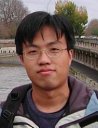
 Patrick P. C. Lee
· 1 previous affiliation
- Chinese University of Hong KongSince 2009
- Full Professor · Since 2009
Research Overview
Patrick P. C. Lee focuses on large-scale network measurement, cloud infrastructure reliability, and time series representation learning. His early work investigated cellular network anomalies and distributed storage systems before shifting toward machine-learning-driven failure prediction for cloud data centers. Most recently, he develops foundation models and frequency-domain architectures for robust time series forecasting.
Research Trajectory
Lee’s early research centered on the measurement, diagnosis, and optimization of large-scale network and storage systems. He led a comprehensive measurement study of commercial 3G networks in A Panoramic View of 3G Data/Control-Plane Traffic: Mobile Device Perspective (2012). This work revealed a stark contrast in how different devices tax cellular infrastructure; while a small minority of datacard users consumed nearly half of all data traffic, smartphones generated a disproportionate "signaling storm" in the control plane due to frequent connection setups and internal heartbeat mechanisms. Following this, he explored practical implementations of advanced storage techniques in Experiences building network-coding-based distributed storage systems (2014).
As cellular networks grew in complexity, Lee’s focus expanded to include data-driven diagnostic tools. He participated in the development of An Intelligent Customer Care Assistant System for Large-Scale Cellular Network Diagnosis (2017), a distributed fault classification system designed to process massive amounts of network data to accurately identify the root causes of subscriber complaints. This diagnostic approach was further refined in CellPAD: Detecting Performance Anomalies in Cellular Networks via Regression Analysis (2018), which applied regression techniques to automatically detect performance degradation in cellular infrastructure.
By 2019, Lee’s research trajectory shifted toward the reliability of cloud production environments, specifically focusing on predictive maintenance and automated healing for large-scale data centers. He collaborated on the design of the RODMAN pipeline, detailed in Robust Data Preprocessing for Machine-Learning-Based Disk Failure Prediction in Cloud Production Environments (2019). This system bridged the gap between clean academic models and messy production data by intelligently filtering failure types, filling data gaps with cubic splines, and automatically determining pre-failure windows. This work contributed significantly to the broader area of Multimodal Telemetry Fusion for Holistic System Observability.
Continuing his investigation into storage reliability, Lee analyzed failure patterns in modern hardware in An In-Depth Study of Correlated Failures in Production SSD-Based Data Centers (2021) and optimized predictive models in General Feature Selection for Failure Prediction in Large-scale SSD Deployment (2021). Concurrently, he explored broader mitigation strategies for infrastructure faults in Automated Intelligent Healing in Cloud-Scale Data Centers (2021). Recognizing the dynamic and non-stationary nature of production environments, he later addressed adaptive modeling in StreamDFP: A General Stream Mining Framework for Adaptive Disk Failure Prediction (2023), utilizing stream mining techniques to continuously update failure prediction models over time.
Most recently, Lee has pivoted toward advanced machine learning architectures for sequential data, focusing on time series foundation models and frequency-domain analysis. He collaborated on the FIRE framework, presented in A Unified Frequency Domain Decomposition Framework for Interpretable and Robust Time Series Forecasting (2025). FIRE tackles the black-box nature and non-stationarity of deep learning forecasting by independently modeling amplitude and phase components using causal attention, explicitly handling concept drift and frequency basis evolution. This research advances several distinct research directions, including Periodic Decomposition for Time Series Forecasting, Adaptive Spectral Filtering with Frequency Domain Attention, and Disentangling Trend and Seasonality in Time Series Networks, while also touching upon the area of Efficiency and Inductive Bias in Time Series Foundation Models.
Building on these insights, Lee directed the development of a unified foundation model in GTM: A General Time-series Model for Enhanced Representation Learning of Time-Series data (2026). GTM achieves strong zero-shot capabilities across diverse tasks—such as forecasting, imputation, and anomaly detection—using a single, task-agnostic architecture. By combining a novel Fourier attention mechanism that captures frequency patterns across different time granularities with a hybrid pre-training strategy, the model demonstrates clear scaling behavior. Both the FIRE and GTM architectures represent major contributions to the research direction of Dual-Domain Fusion for Robust Time Series Modeling.
Current Directions
Lee’s most recent work investigates the design and scaling of foundation models for general time series analysis. The latest papers in the evidence address the fundamental challenges of applying deep learning to sequential data, particularly the issues of non-stationarity, concept drift, and the need for mathematical interpretability. His current technical focus involves dual-domain fusion—specifically leveraging frequency-domain decomposition and Fourier attention mechanisms—to capture complex temporal patterns across varying granularities. By developing hybrid pre-training strategies and task-agnostic architectures, his recent research aims to create robust, scalable models capable of performing zero-shot forecasting, imputation, and anomaly detection across diverse domains.
Profile updated
Loading new papers…
Other researchers whose papers cluster into the same research directions — a proxy for overlapping technical interests and shared intellectual neighborhoods.
See something wrong? Report a mistake