

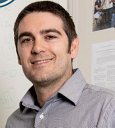
 Patrick J. Coles
· 3 previous affiliations
- Normal ComputingCurrent
- Current
- PhD student · 2002–2008
- University of Cambridge2001–2002
- MS student · 2001–2002
Research Overview
Patrick J. Coles focuses on the development of thermodynamic computing architectures and physics-inspired algorithms designed to accelerate machine learning and probabilistic inference. His work explores the transition from traditional digital hardware to systems that leverage physical stochasticity and analog dynamics to overcome the computational bottlenecks associated with large-scale artificial intelligence. By utilizing "stochastic units" and mapping Langevin equations to the behavior of noisy physical systems, his research aims to provide more energy-efficient and scalable alternatives for tasks such as linear algebra, natural gradient descent, and Bayesian posterior sampling.
Research Trajectory
The trajectory of Coles’ research is defined by a shift from foundational hardware proposals toward the integration of these physical systems into high-level machine learning optimization and inference frameworks. In 2023, his work established the conceptual basis for Thermodynamic AI and Thermodynamic Linear Algebra, where he introduced the "stochastic unit" (s-unit) as a fundamental building block. This period focused on the theoretical and architectural requirements for a new form of computing that uses natural stochastic trajectories to perform calculations, specifically targeting the limitations of digital hardware in executing algorithms inspired by physics, such as generative diffusion models.
By 2024 and 2025, the research moved into the application of these thermodynamic principles to specific algorithmic challenges in neural network training and statistical inference. This phase is characterized by the development of hybrid digital-analog systems. A significant focus was placed on Thermodynamic Natural Gradient Descent, which sought to make second-order optimization methods—traditionally too computationally expensive for digital processors—feasible by exploiting the inherent properties of thermodynamic hardware. During this time, Coles also participated in research extending these concepts to Thermodynamic Bayesian Inference, exploring how the intractability of sampling Bayesian posteriors could be mitigated by mapping the required dynamics onto noisy physical systems.
In 2026, the work expanded to address the robustness of stochastic algorithms, particularly in the context of discretization and gradient noise. This recent phase involves collaborative efforts to refine Markov Chain Monte Carlo (MCMC) methods. By investigating lattice-based discretizations, the research addresses the sensitivity of traditional stochastic gradient methods to minibatch size and noise, moving toward more stable and asymptotically correct sampling techniques for Bayesian regression and classification.
Current Directions
Current research efforts are concentrated on Probabilistic Computing with Physical Stochasticity, treating high-quality randomness not as a source of error but as a primary computational resource. This is particularly relevant for generative models and reinforcement learning agents that require constant streams of entropy. By moving away from pseudo-random number generation on digital chips and toward physical stochasticity, the goal is to achieve higher efficiency in uncertainty estimation.
A parallel focus involves Overcoming Data Conversion Bottlenecks in Analog Computing. While analog and thermodynamic systems offer theoretical advantages in energy efficiency, they often face significant overhead from the peripheral circuitry required to interface with digital systems. Research in this area investigates how to perform calculations directly within memory or through physical laws—such as Ohm’s Law or Langevin dynamics—to bypass the "memory wall" that limits modern GPU performance.
Furthermore, Coles’ work continues to address Efficient Bayesian Inference for Real-Time Uncertainty Estimation. This direction seeks to improve the "predictive transparency" of deep neural networks, which are often overconfident in their predictions. By developing hardware-accelerated Bayesian methods, the research aims to enable safety-critical systems, such as autonomous vehicles, to better quantify their own uncertainty in real-time environments. This is closely linked to the development of Robust Deep Learning on Noisy Analog Memory Crossbars, where non-volatile memory devices are used to perform massive vector-matrix multiplications with inherent resilience to the noise typical of analog hardware.
Representative Work
In the foundational paper Thermodynamic AI and Thermodynamic Linear Algebra, Coles (as first author) proposes a novel computing paradigm based on stochastic units (s-units). The work argues that because many modern AI algorithms—such as diffusion models and Monte Carlo inference—are inherently stochastic, they are fundamentally mismatched with deterministic digital hardware. The paper details how thermodynamic hardware can naturally evolve over time via stochastic trajectories to accelerate linear algebra operations, which serve as the backbone for most machine learning architectures.
As the senior author on Thermodynamic Natural Gradient Descent, Coles presents a hybrid digital-analog algorithm designed to overcome the hardware limitations of digital computers when performing second-order optimization. Natural Gradient Descent (NGD) typically requires solving complex linear systems that are prohibitively costly at scale. This work demonstrates that by exploiting the thermodynamic properties of an analog system, NGD can achieve a computational complexity per iteration comparable to first-order methods, potentially enabling more widespread use of sophisticated training techniques for large-scale neural networks.
Coles also contributed to the development of Thermodynamic Bayesian Inference, which addresses the intractability of sampling Bayesian posteriors in high-dimensional models. The research maps Langevin equations—stochastic differential equations used to describe the evolution of physical systems—directly onto thermodynamic hardware. This mapping allows the hardware to serve as a natural sampler for Bayesian methods, providing a path toward rigorous uncertainty quantification in deep learning models that are otherwise too complex for standard digital sampling techniques.
In more recent collaborative work, Coles participated in the development of Robust Stochastic Gradient Posterior Sampling with Lattice Based Discretisation (also documented in Robust Stochastic Gradient Posterior Sampling with Lattice Based Discretisation). This research introduces Stochastic Gradient Lattice Random Walk (SGLRW), a method that improves upon traditional Stochastic Gradient Langevin Dynamics (SGLD). By utilizing a lattice-based discretization, the algorithm limits the impact of gradient noise and prevents the "catastrophic jumps" often seen in standard MCMC methods when using small minibatches. This work highlights a continued interest in the algorithmic stability of probabilistic systems, ensuring that as hardware evolves, the underlying mathematical methods remain robust and accurate.
Profile updated
Loading new papers…
Other researchers whose papers cluster into the same research directions — a proxy for overlapping technical interests and shared intellectual neighborhoods.
See something wrong? Report a mistake