

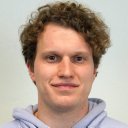
 Pascal Klink
· 2 previous affiliations
- Amazon (Germany)Since 2023
- Applied Scientist · Since 2024
- Postdoc · 2023–2024
- Technische Universität Darmstadt2019–2023
- PhD student · 2019–2023
Research Overview
Pascal Klink focuses on the intersection of reinforcement learning, Bayesian inference, and robotics, with a particular emphasis on the development of automated curriculum learning strategies. His work addresses the fundamental challenge of Sample Efficiency in Deep Reinforcement Learning, specifically how agents can acquire complex skills in environments characterized by sparse rewards and high-dimensional state spaces. By leveraging probabilistic modeling and optimization theory, Klink develops frameworks that allow agents to autonomously structure their own learning process, progressing from simple auxiliary tasks to complex target objectives.
Research Trajectory
Klink’s early research contributions focused on Bayesian approaches to regression and dynamics learning in robotic systems. In 2020 and 2021, he participated in research regarding neural linear models and nonparametric Bayesian methods. This work, such as the development of A Variational Infinite Mixture for Probabilistic Inverse Dynamics Learning, explored how Dirichlet Process Mixtures and local linear models could be used to learn robot dynamics online without catastrophic forgetting. These early projects established a foundation in probabilistic modeling and variational inference that would later inform his approach to Hyperparameter Sensitivity in Curriculum Learning Schedules.
Starting in 2021, Klink shifted his primary focus toward Target-Anchored Curriculum Learning. He introduced the concept of self-paced contextual reinforcement learning, which provides a principled mechanism for an agent to control its intermediate task distribution. This period marked a transition from general probabilistic modeling to the specific problem of Adaptive Scaffolding for Reinforcement Learning Exploration. By interpreting curriculum generation as a sequence of optimization problems, Klink sought to move beyond heuristic-based curriculum design toward mathematically grounded frameworks.
In 2022 and 2023, Klink’s work became increasingly analytical, focusing on the theoretical underpinnings of Performance-Contingent Curriculum Learning. He investigated the Statistical and Computational Advantages of Curriculum Learning, specifically how different metrics and task distribution interpolations affect the stability and speed of convergence. During this time, he also expanded the application of these methods to complex physical control tasks, such as the stabilization of spherical pendulums, demonstrating the utility of curriculum learning for robust sim-to-real transfer.
Most recently, in 2024, Klink has extended his research into domain randomization and function-space regularization. This work explores how curriculum-like progressions can be applied not just to task difficulty, but to the diversity of simulated environments. By maximizing the entropy of physics parameters while maintaining performance bounds, this research aims to eliminate the need for manual tuning in robotic simulation, further bridging the gap between computational models and real-world deployment.
Current Directions
Klink’s current research is centered on refining the mechanisms of automated curriculum generation and improving the robustness of deep Bayesian models. A significant portion of his recent work involves function-space regularization, where he explores placing priors directly on model outputs rather than weights to improve uncertainty quantification and adversarial robustness. Additionally, he continues to investigate the use of representation learning, such as Proto-Value Functions, to measure task similarity and guide curriculum generation in goal-conditioned reinforcement learning. These directions suggest a move toward more generalizable and theoretically sound methods for training autonomous agents in increasingly unpredictable environments.
Representative Work
Self-Paced Contextual Reinforcement Learning In this work, Klink introduces a relative entropy reinforcement learning algorithm that enables an agent to control its intermediate task distribution. The core contribution is a framework that allows for a gradual progression toward a target context distribution, addressing the limitations of uninformed sampling in contextual RL. The empirical evaluation demonstrates that this structured approach to task selection significantly improves the learning of behaviors across related tasks compared to standard baselines.
A Probabilistic Interpretation of Self-Paced Learning with Applications to Reinforcement Learning Published in the Journal of Machine Learning Research, this paper provides a theoretical investigation into automated curriculum generation. Klink develops a probabilistic interpretation of self-paced learning, framing it as a tool to avoid local optima in the exploration-exploitation trade-off. By establishing this theoretical link, the work offers a deeper understanding of why and how curricula improve reinforcement learning performance, moving the field away from purely empirical justifications.
Boosted Curriculum Reinforcement Learning Klink proposes the concept of "boosting" for curriculum value-based reinforcement learning. In this approach, the action-value function is approximated as a sum of residuals trained on a sequence of tasks of increasing difficulty. This method, termed BCRL, naturally increases the representativeness of the functional space as new tasks are introduced. The work addresses the challenge of re-using action-values across different stages of a curriculum, providing a more flexible alternative to standard value-function initialization.
Metrics Matter: A Closer Look on Self-Paced Reinforcement Learning This research critiques the parametric restrictions often found in curriculum reinforcement learning, specifically the reliance on Gaussian distributions for task interpolation. Klink demonstrates that these restrictions can be insufficient for complex task landscapes. He proposes a more general framework for self-paced learning that allows for a broader range of task distributions and metrics, showing that the choice of metric is critical for the success of the curriculum.
Tracking Control for a Spherical Pendulum via Curriculum Reinforcement Learning Applying curriculum methods to a challenging robotics problem, Klink develops an automated framework for a robotic arm to balance and track 3D trajectories with a spherical pendulum. The work focuses on improving task similarity measures and sampling in high-dimensional spaces. The results show that curriculum-trained policies can match the performance of classical optimal control methods while maintaining robustness under partial observability and facilitating successful sim-to-real transfer.
Domain Randomization via Entropy Maximization As a second author, Klink contributed to the development of DORAEMON, a method for automated domain randomization. The approach progressively increases the diversity of simulated physics parameters (entropy maximization) while ensuring the agent's success rate remains above a threshold. This curriculum-style approach to domain randomization enables the training of highly adaptable policies that can transfer to real-world robots without requiring real-world data for simulator tuning.
Profile updated
Loading new papers…
Other researchers whose papers cluster into the same research directions — a proxy for overlapping technical interests and shared intellectual neighborhoods.
See something wrong? Report a mistake