

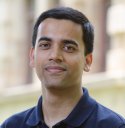
 Partha Talukdar
· 3 previous affiliations
- Google (United States)Since 2020
- Principal Research Scientist · Since 2025
- Senior Staff Research Scientist · 2022–2025
- Staff Research Scientist · 2020–2022
- Current
- Associate Professor · 2019–2025
- Assistant Professor · 2014–2019
Research Overview
Partha Talukdar focuses on multilingual and multimodal learning, particularly in the context of large language models (LLMs) and low-resource settings. His work spans natural language processing (NLP), machine learning, and knowledge graphs, with a current emphasis on ensuring AI systems effectively serve diverse linguistic and cultural populations. As a Principal Research Scientist and Director at Google DeepMind, he leads efforts in Gemini multilinguality and the development of foundational models and datasets for underrepresented languages. His research trajectory has evolved from graph-based semi-supervised learning and knowledge base inference toward the challenges of scaling LLMs to the "long tail" of global languages and cultures.
Research Trajectory
The early stages of Talukdar’s research were characterized by a focus on semi-supervised learning (SSL) and the use of graph-based methods to mitigate the scarcity of labeled data in NLP. During this period, he explored how unlabeled linguistic data could be structured into graphs to improve performance in tasks like dependency parsing and sentiment analysis. This work established a foundation for using Relational Message Passing for Heterogeneous Graphs to represent complex linguistic relationships.
By the mid-2010s, Talukdar’s focus shifted toward the construction and completion of large-scale knowledge bases (KBs). He addressed the inherent incompleteness of KBs like Freebase and YAGO by developing methods for random walk inference that integrated surface text from large corpora with structured relational data. This period also saw significant contributions to the problem of canonicalization in Open Information Extraction (OpenIE). He developed techniques to resolve redundant and ambiguous noun and relation phrases in Open KBs, moving away from manual feature engineering toward learned embeddings and side information.
In the late 2010s, Talukdar extended his graph-based research into the domain of Graph Convolutional Networks (GCNs). He specifically addressed the limitations of standard GCNs in modeling non-pairwise relationships, leading to the development of hypergraph-based learning methods. These methods allowed for more flexible modeling of complex real-world networks, such as co-authorship and co-citation graphs, where relationships often involve more than two entities.
In recent years, Talukdar’s work has pivoted toward the development and evaluation of LLMs, with a specific focus on multilinguality and Cross-Lingual Transfer via Linguistic Proximity. His current research addresses the "evaluation gap" in massively multilingual models, where performance is often verified only on high-resource languages. He has advocated for Scaling Evaluation for the Long Tail of Languages and the creation of Culturally Grounded Benchmarks for Multilingual Evaluation to ensure that models understand the cultural contexts of the languages they process. This includes addressing issues such as Language Steering for Consistent Multilingual Generation and Bridging the Generative Evaluation Gap in Multilingual NLP, where models may succeed at discriminative tasks but fail in consistent generative output across different languages.
Current Directions
Talukdar currently leads the Languages Group at Google DeepMind India, where his work directly impacts the Gemini model series. His research group focuses on all aspects of LLM development, including pre-training, post-training, and evaluation, specifically for multilingual applications. A primary goal of this work is to ensure that language and cultural differences do not act as barriers to AI accessibility.
His recent projects include the development of MuRIL (Multilingual Representations for Indian Languages) and the Vaani dataset, a collaborative effort with the Indian Institute of Science (IISc) to capture the linguistic diversity of India. He is also investigating model-driven data reweighting strategies to improve the efficiency and quality of LLM pre-training. Furthermore, his work explores the statistical nature of cross-lingual gaps, questioning why models often show a drop in accuracy when queried in a target language compared to the source language in which the knowledge was originally acquired.
Representative Work
Graph-based Semi-Supervised Learning Algorithms for NLP In this work, Talukdar and his co-author examine the utility of graph-based SSL in the context of increasing volumes of unlabeled linguistic data. The paper demonstrates how representing data as graphs allows SSL algorithms to outperform state-of-the-art methods in various speech and NLP applications by effectively propagating labels from a small set of annotated examples across a larger graph of unlabeled instances.
Incorporating Vector Space Similarity in Random Walk Inference over Knowledge Bases Addressing the incompleteness of large knowledge bases, this research proposes two primary improvements to random walk inference. First, it introduces a compact graph representation that combines KB relations with surface text. Second, it incorporates vector space similarity into the inference process, allowing the model to leverage semantic similarities between entities and relations that are not explicitly linked in the KB.
CESI: Canonicalizing Open Knowledge Bases using Embeddings and Side Information This paper addresses the problem of redundancy and ambiguity in Open Information Extraction. Talukdar and his colleagues propose CESI, a method that performs canonicalization over learned embeddings rather than manually defined feature spaces. By integrating side information such as WordNet and entity links, the approach effectively clusters synonymous noun and relation phrases in Open KBs.
HyperGCN: A New Method For Training Graph Convolutional Networks on Hypergraphs Recognizing that many real-world relationships are complex and go beyond pairwise interactions, this work introduces HyperGCN. This model extends Graph Convolutional Networks to hypergraphs, providing a principled way to perform semi-supervised learning on data where edges can connect any number of vertices. The method is demonstrated to be effective for classification tasks in co-authorship and co-citation networks.
Self-Influence Guided Data Reweighting for Language Model Pre-training This research addresses the common practice of treating all data samples as equally important during LLM pre-training. Talukdar proposes PRESENCE, a method for model-driven data reweighting. By using self-influence signals, the method identifies and prioritizes high-quality and relevant data samples during the pre-training phase, leading to more efficient and effective model development.
Rethinking Cross-Lingual Gaps From A Statistical Viewpoint In this recent work, Talukdar investigates the performance drop observed when LLMs are queried in a target language versus a source language. While prior research attributed this gap to divergences in latent representations, this paper proposes a statistical view, hypothesizing that the variance of responses in the target language is a significant factor. This perspective offers new insights into how knowledge is transferred and accessed across linguistic boundaries in large models.
Profile updated
Loading new papers…
Other researchers whose papers cluster into the same research directions — a proxy for overlapping technical interests and shared intellectual neighborhoods.
See something wrong? Report a mistake