

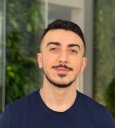
 Parsa Esmati
· 1 previous affiliation
- University of BristolCurrent
- Current
- PhD student · 2022–2026
Research Overview
Parsa Esmati focuses on physics-informed machine learning, fluid dynamics simulation, and computer vision. His research trajectory spans the development of neural surrogate models for complex physical systems and computational tools for thermal fluid dynamics. Most recently, his work addresses source-free domain adaptation for video understanding, leveraging foundation models to improve model robustness in new environments.
Research Trajectory
Esmati's published work centers on the intersection of deep learning, physical simulation, and computer vision. His early trajectory demonstrates a strong focus on the area of Neural Surrogate Models for Fast Physical Simulation, where he has sought to improve the accuracy of machine learning models applied to complex physical systems. In 2024, he introduced SEA: State-Exchange Attention for High-Fidelity Physics Based Transformers, a novel architecture designed to enhance fluid dynamics simulations. Traditional autoregressive models in this domain often suffer from error accumulation over time. By explicitly modeling the communication between different physical variables—such as velocity and pressure—through a State-Exchange Attention module, this approach significantly reduces rollout errors compared to prior baselines. This work contributes to the broader research direction of Modeling Physical Couplings with Variable Specific Attention and addresses key challenges in the field of Mitigating Compounding Errors in Autoregressive Physical Simulators.
During the same period, Esmati participated in the development of computational tools for materials and thermal engineering. He contributed to Version 2.0 - LaserbeamFoam: Laser ray-tracing and thermally induced state transition simulation toolkit, a software package designed to model laser interactions and the resulting thermal state transitions within physical materials.
In 2025, his research expanded into video understanding, specifically focusing on the research direction of Source-Free Unsupervised Domain Adaptation. He developed Co-STAR: Collaborative Curriculum Self-Training with Adaptive Regularization for Source-Free Video Domain Adaptation. This framework adapts video recognition models to new environments without requiring access to the original training data, a common constraint in privacy-sensitive or resource-limited settings. By integrating a teacher-student architecture with the zero-shot capabilities of foundation models like CLIP, the approach utilizes a curriculum that prioritizes reliable data while penalizing overconfident predictions. This methodology advances techniques in the area of Agreement Filtering for Robust Pseudo-Labeling and supports broader efforts in the field of Temporal Alignment and Querying for Video Understanding.
Current Directions
The most recent papers in the evidence indicate a focus on robust computer vision and video understanding under constrained data conditions. Current work investigates how to adapt complex video recognition models to novel domains when source data is unavailable. This involves leveraging the semantic anchoring of large foundation models and designing adaptive regularization strategies to guide self-training. By combining curriculum learning with multi-view consensus techniques, these recent efforts aim to improve the stability and accuracy of temporal predictions in dynamic, unseen environments.
Profile updated
Loading new papers…
Other researchers whose papers cluster into the same research directions — a proxy for overlapping technical interests and shared intellectual neighborhoods.
See something wrong? Report a mistake