

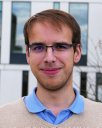
 Ondrej Bohdal
· 3 previous affiliations
- Samsung (South Korea)Since 2024
- Researcher · Since 2024
- Current
- University of Edinburgh2015–2024
- Postdoc · 2023–2024
- PhD student · 2019–2024
- MS student · 2018–2019
- Undergrad student · 2015–2018
Research Overview
Ondrej Bohdal focuses on parameter-efficient fine-tuning, generative artificial intelligence, and meta-learning for resource-constrained environments. His trajectory spans early work in efficient hyperparameter optimization and uncertainty calibration to recent advancements in on-device large language models and diffusion models. Currently, he investigates adapter merging techniques and methods to mitigate memorization in generative systems.
Research Trajectory
Bohdal’s early research concentrated on improving the efficiency and adaptability of machine learning models, particularly through meta-learning and domain adaptation. In 2021, he introduced EvoGrad: Efficient Gradient-Based Meta-Learning and Hyperparameter Optimization, a method that leverages evolutionary techniques to estimate hypergradients without the computational burden of calculating second-order derivatives or storing extensive computational graphs. This focus on efficiency extended to edge computing environments the following year with Feed-Forward Source-Free Latent Domain Adaptation via Cross-Attention (2022), which enabled models to adapt to new data dynamically without requiring original training datasets or backpropagation.
By 2023, his work expanded to address the reliability and resource demands of neural networks. He developed Meta-Calibration: Learning of Model Calibration Using Differentiable Expected Calibration Error, proposing a differentiable surrogate that allows calibration quality to be directly optimized. This contribution advanced the area of Differentiable Calibration for Gradient Based Uncertainty Optimization and the broader field of Differentiable Calibration for Reliable Neural Networks. Concurrently, he addressed the high costs of tuning models on large datasets with PASHA: Efficient HPO and NAS with Progressive Resource Allocation, an approach that dynamically allocates computational resources during hyperparameter optimization and neural architecture search.
In 2024, Bohdal continued to explore model reliability while increasingly focusing on generative AI and fairness. He conducted a systematic cross-domain study in Navigating Noise: A Study of How Noise Influences Generalisation and Calibration of Neural Networks, demonstrating that optimizing for accuracy through noise injection techniques often harms model calibration, a finding situated within work on Balancing Predictive Accuracy and Confidence Calibration. With collaborators, he also applied parameter-efficient fine-tuning to medical imaging in FairTune: Optimizing Parameter Efficient Fine Tuning for Fairness in Medical Image Analysis, addressing the area of Minimax Optimization for Worst Case Group Fairness by optimizing for fairness on validation data to bridge the fairness generalization gap.
Transitioning into generative models, Bohdal tackled the computational demands of personalized image creation. He developed LoRA.rar: Learning to Merge LoRAs via Hypernetworks for Subject-Style Conditioned Image Generation (2024), which pre-trains a hypernetwork to efficiently merge low-rank adaptation parameters, achieving massive speedups suitable for resource-constrained devices. Around the same time, he began investigating privacy and copyright risks in generative AI, identifying how large-scale text-to-image models replicate training data in Memorized Images in Diffusion Models share a Subspace that can be Located and Deleted. This initiated his involvement in the research direction of Understanding Training Data Memorization in Generative Models.
In 2025, Bohdal’s research heavily emphasized deploying large language models (LLMs) and complex reasoning systems on edge devices through sophisticated adapter merging. He introduced HydraOpt: Navigating the Efficiency-Performance Trade-off of Adapter Merging, a technique that reduces storage requirements by exploiting similarities in input matrices across tasks. Expanding the area of Data-Free Model Merging for Multi-Task Systems, he also developed K-Merge: Online Continual Merging of Adapters for On-device Large Language Models, a framework that intelligently merges incoming adapters into fixed slots based on weight similarity, allowing small models to support dozens of tasks within strict memory budgets.
This focus on on-device capabilities led to several specialized frameworks. MemLoRA: Distilling Expert Adapters for On-Device Memory Systems (2025) demonstrated how the reasoning capabilities of massive models could be distilled into task-specific adapters for small language models. He also contributed to On-device System of Compositional Multi-tasking in Large Language Models (2025), which utilized a lightweight projection merge technique to enable mobile-sized LLMs to perform complex, multi-step tasks in a single inference pass. To further enhance reasoning on edge devices, he proposed CG-TTRL: Context-Guided Test-Time Reinforcement Learning for On-Device Large Language Models (2025), utilizing lightweight retrieval mechanisms to dynamically adapt models during inference.
Alongside his work on LLMs, Bohdal continued to refine diffusion models. He built upon his previous memorization research with MemControl: Mitigating Memorization in Diffusion Models via Automated Parameter Selection (2025), a framework that identifies the minimal subset of parameters to fine-tune to prevent the recreation of training images. Most recently, his collaborative work in Diffusion Alignment Beyond KL: Variance Minimisation as Effective Policy Optimiser (2026) introduced a novel approach to aligning diffusion models with reward signals by minimizing the variance of importance weights rather than relying on traditional KL divergence objectives.
Current Directions
Recent work investigates the deployment of large language models on resource-constrained edge devices and the safety alignment of generative AI. A major theme in the most recent papers is parameter-efficient fine-tuning, specifically through advanced adapter merging techniques. This research focuses on developing data-free and continual merging frameworks that allow mobile-sized models to handle multiple complex tasks simultaneously without exceeding strict memory and storage budgets.
Additionally, ongoing research addresses the privacy and stability of generative systems. This includes automated parameter selection methods designed to prevent diffusion models from memorizing sensitive training data, as well as exploring variance minimization strategies for more stable and flexible policy optimization when aligning diffusion models with human preferences or reward signals.
Profile updated
Loading new papers…
Other researchers whose papers cluster into the same research directions — a proxy for overlapping technical interests and shared intellectual neighborhoods.
See something wrong? Report a mistake