

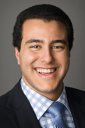
 Omar Abudayyeh
· 6 previous affiliations
- Sherlock BiosciencesSince 2018
- Co-Founder · Since 2018
- Tome BiosciencesSince 2021
- Co-Founder · Since 2021
- Brigham and Women's HospitalSince 2023
- Assistant Professor · Since 2023
- Harvard Medical SchoolSince 2023
- Assistant Professor · Since 2023
- Doctor of Philosophy - PhD, Medical Engineering and Medical Physics · 2014–2018
- Mass General BrighamSince 2023
- Director of Gene Editing and Investigator · Since 2023
- Principal Researcher · 2018–2023
- PhD student · 2014–2018
- Undergrad student · 2008–2012
Research Overview
Omar Abudayyeh focuses on programmable nucleic acid technologies, molecular diagnostics, and the application of generative machine learning to biological design. His early trajectory established foundational CRISPR-based tools for RNA targeting and rapid pathogen detection. Recently, his focus has expanded to computational protein engineering and transcriptomic modeling using advanced language models and generative frameworks.
Research Trajectory
Initial work in the early 2010s explored diagnostic technologies, beginning with the development of Nanoparticle-chaperoned urinary 'synthetic biomarkers' for profiling proteases in cancer. This early interest in molecular detection soon evolved into a major research phase centered on the characterization and application of novel CRISPR-Cas systems.
A central breakthrough occurred with the identification and characterization of Cas13 (formerly C2c2). He contributed to demonstrating its RNA-guided ribonuclease function in C2c2 is a single-component programmable RNA-guided RNA-targeting CRISPR effector. This discovery established the foundation for the research direction of Programmable Collateral Cleavage for Diagnostics and RNA Targeting. Building on the promiscuous collateral cleavage activity of Cas13, he helped develop the SHERLOCK platform in Nucleic acid detection with CRISPR-Cas13a/C2c2, combining the effector with isothermal amplification to enable highly sensitive, attomolar detection of DNA and RNA with single-base mismatch specificity. Concurrently, he adapted Cas13 for therapeutic applications, engineering the REPAIR system to direct ADAR2 for targeted adenosine-to-inosine transcript modifications in mammalian cells, detailed in RNA editing with CRISPR-Cas13.
His work also addressed the specificity and delivery constraints of DNA-targeting CRISPR systems. He participated in large-scale profiling of Staphylococcus aureus Cas9 to identify spacer lengths that minimize off-target effects, contributing to the broader area of Overcoming Genetic Payload Limitations of Viral Vectors in Pairwise library screen systematically interrogates Staphylococcus aureus Cas9 specificity in human cells. Subsequently, he led structural investigations into Corynebacterium diphtheriae Cas9, revealing its unique hydrophobic patch and promiscuous protospacer adjacent motif (PAM) recognition. This research, presented in Structural basis for the promiscuous PAM recognition by Corynebacterium diphtheriae Cas9, advanced the field of Overcoming the PAM Sequence Bottleneck.
During the COVID-19 pandemic, his diagnostic research pivoted toward rapid viral detection. He collaborated on streamlined protocols to bypass RNA extraction bottlenecks, contributing to the area of Extraction-Free Molecular Diagnostics for Point of Care with A 5-min RNA preparation method for COVID-19 detection with RT-qPCR. He also adapted the SHERLOCK system into a simplified format in Detection of SARS-CoV-2 with SHERLOCK One-Pot Testing, supporting efforts in Constant Temperature Nucleic Acid Amplification with Visual Readouts and Accessible Point-of-Care Diagnostics for Resource-Limited Settings.
Returning to effector discovery and genome engineering, he characterized Cas7-11, a single-protein CRISPR effector for RNA targeting, in Programmable RNA targeting with the single-protein CRISPR effector Cas7-11. He also explored methods for large-scale genomic modifications, developing CRISPR-directed integrases for double-strand break-free insertions in Drag-and-drop genome insertion of large sequences without double-strand DNA cleavage using CRISPR-directed integrases. Expanding the search for programmable nucleases beyond prokaryotes, he investigated Fanzors—eukaryotic homologs of TnpB proteins—demonstrating their function as RNA-guided DNA endonucleases in Programmable RNA-guided DNA endonucleases are widespread in eukaryotes and their viruses.
In recent years, his trajectory has increasingly integrated machine learning and generative modeling with biological design. He oversaw the development of Generative Distribution Embeddings (GDE) in Generative Distribution Embeddings: Lifting autoencoders to the space of distributions for multiscale representation learning, a framework utilizing optimal transport metrics for representation learning. He also directed the creation of EVOLVEpro, a few-shot active learning framework leveraging protein language models for in silico directed evolution, detailed in Rapid in silico directed evolution by a protein language model with EVOLVEpro. Continuing this computational focus, he guided the development of Count Bridges, a generative model using stochastic birth-death processes for deconvolving integer-valued transcriptomic data, in Count Bridges enable Modeling and Deconvolving Transcriptomic Data. He further applied transcriptomic modeling to aging research, overseeing the HallmarkAge framework in HallmarkAge: Binarized Hallmark-Aware Transcriptomic Clocks to Discover Aging Mechanisms. Additionally, he participated in the development of MutaGen, a discrete flow-matching method for protein engineering, in MutaGen: Implicitly Guided Protein Evolution from Ranked Feedback via Pair-Based Discrete Flow Matching.
Current Directions
The most recent papers in the evidence indicate a strong focus on the intersection of generative machine learning and computational biology. Recent work investigates in silico directed evolution, utilizing protein language models and discrete flow-matching techniques to optimize protein fitness landscapes without relying on extensive experimental screening. Additionally, current research addresses the modeling of complex biological distributions, including the development of generative frameworks for deconvolving single-cell transcriptomic data and the creation of hallmark-aware transcriptomic clocks to study aging mechanisms.
Profile updated
Loading new papers…
Other researchers whose papers cluster into the same research directions — a proxy for overlapping technical interests and shared intellectual neighborhoods.
See something wrong? Report a mistake