

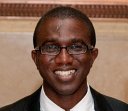
 Olatunji Ruwase
· 4 previous affiliations
- Snowflake Inc. (United States)Since 2025
- Principal Researcher · Since 2025
- Microsoft (United States)2013–2025
- Principal Researcher · 2017–2025
- Researcher · 2013–2017
- Carnegie Mellon University2006–2013
- PhD student · 2006–2013
- Stanford University2001–2003
- MS student · 2001–2003
Research Overview
Olatunji Ruwase focuses on high-performance artificial intelligence infrastructure, distributed systems, and compiler optimizations for large-scale deep learning. His trajectory spans early work in dynamic binary analysis and operating system reliability to core contributions in memory optimization and distributed training frameworks. Currently, he investigates scalable sequence parallelism and compiler-driven approaches to accelerate the training of massive language models.
Research Trajectory
His early research explored dynamic binary analysis and software reliability, with a particular focus on operating systems and device drivers. He investigated memory safety and information flow, co-authoring A Practical Dynamic Buffer Overflow Detector and Parallelizing dynamic information flow tracking. To reduce the overhead of these runtime checks, he developed techniques to separate correctness checking from main program execution, as detailed in Decoupled lifeguards: enabling path optimizations for dynamic correctness checking tools. This decoupled approach was subsequently applied to operating system extensions, culminating in Improving Device Driver Reliability through Decoupled Dynamic Binary Analyses and Guardrail: a high fidelity approach to protecting hardware devices from buggy drivers, which demonstrated how to protect system components from driver faults without compromising performance.
Transitioning into artificial intelligence infrastructure, he became a co-founder and lead of the DeepSpeed project at Microsoft, shifting his focus to overcoming the memory and compute bottlenecks associated with training massive neural networks. He was a key contributor to DeepSpeed: System Optimizations Enable Training Deep Learning Models with Over 100 Billion Parameters. A central breakthrough during this period was the Zero Redundancy Optimizer (ZeRO), which drastically reduces per-device memory usage by eliminating the redundant storage of model states. Introduced in ZeRO: memory optimizations toward training trillion parameter models, this work significantly advanced the research direction of Zero Redundancy Sharding for Large Scale Training. The ZeRO family of optimizations was later expanded to leverage heterogeneous memory hierarchies; he participated in developing ZeRO-infinity: breaking the GPU memory wall for extreme scale deep learning and ZeRO-Offload: Democratizing Billion-Scale Model Training, which democratized large-model training by offloading states to CPU memory and NVMe storage.
As models grew more complex, his work addressed the scaling limits of specialized architectures like Mixture-of-Experts (MoE). He developed DeepSpeed-TED, a 3D hybrid strategy combining data, tensor, and expert parallelism to train significantly larger base models. This system was detailed in A Hybrid Tensor-Expert-Data Parallelism Approach to Optimize Mixture-of-Experts Training and A Novel Tensor-Expert Hybrid Parallelism Approach to Scale Mixture-of-Experts Training, contributing to the broader area of Multi-Dimensional Parallelism for Large Scale Model Training and intersecting with work in Low-Rank Gradient Projection for Memory-Efficient LLM Training. To handle the massive I/O overhead of saving these giant models, he also introduced FastPersist: Accelerating Model Checkpointing in Deep Learning, an acceleration framework utilizing asynchronous NVMe optimizations and compute-I/O pipelining.
Most recently, his trajectory has incorporated compiler-driven optimizations and long-context scaling. He collaborated on Training Ultra Long Context Language Model with Fully Pipelined Distributed Transformer to improve hardware efficiency for extended sequences. Building on his systems background, he guided DeepCompile: A Compiler-Driven Approach to Optimizing Distributed Deep Learning Training, which treats communication and memory management as graph transformation passes. This compiler-centric approach was further extended in AutoSP: Unlocking Long-Context LLM Training Via Compiler-Based Sequence Parallelism, automating sequence parallelism directly within the PyTorch stack to support massive context lengths with minimal code changes.
Current Directions
The most recent papers in the evidence address the intersection of compiler technologies and distributed training for large language models. Recent work investigates automated sequence parallelism and fully pipelined distributed transformers to efficiently train models on ultra-long contexts, reaching millions of tokens. Additionally, he is exploring compiler-driven frameworks that model communication and memory management as graph transformations, enabling adaptive offloading and precise scheduling to maximize hardware utilization during massive-scale AI training.
Profile updated
Loading new papers…
Other researchers whose papers cluster into the same research directions — a proxy for overlapping technical interests and shared intellectual neighborhoods.
See something wrong? Report a mistake