

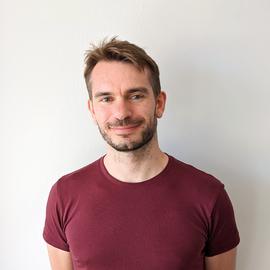
 Oier Mees
· 5 previous affiliations
- Microsoft (United States)Since 2025
- Researcher · Since 2025
- ETH ZurichSince 2026
- Lecturer · Since 2026
- University of California, Berkeley2023–2025
- Postdoctoral Researcher at Berkeley AI Research · 2023–2025
- University of Freiburg2017–2023
- Doctoral Research Assistant · 2017–2023
- Nvidia (United States)2022–2023
- Research Intern · 2022–2023
Research Overview
Oier Mees focuses on robot learning, vision-language-action models, and cross-embodiment control. His early work explored hierarchical offline reinforcement learning and latent skill acquisition for long-horizon tasks. Recently, he has concentrated on developing open-source generalist robot policies and leveraging large vision-language models to enable robust, multi-modal reasoning across diverse robotic platforms.
Research Trajectory
The early trajectory of this work involved evaluating the scalability and architecture of deep learning systems in robotics. This included participating in broader discussions on whether disjoint learning models for specific robotic tasks could effectively scale to real-world environments, as detailed in Perspectives on Deep Multimodel Robot Learning. Building on the need for more robust control in complex environments, subsequent research addressed the challenge of long-horizon tasks in offline robot control. By combining imitation learning for latent skill acquisition with offline reinforcement learning, he developed hierarchical approaches to learn task-agnostic policies from high-dimensional camera observations in Latent Plans for Task-Agnostic Offline Reinforcement Learning.
As the field moved toward large-scale data consolidation, he participated in the collaborative effort Open X-Embodiment: Robotic Learning Datasets and RT-X Models. This project demonstrated that training high-capacity models on massive, multi-robot datasets yields significant positive transfer, improving generalization compared to single-robot training. This scaling effort laid the groundwork for his development of Octo: An Open-Source Generalist Robot Policy. Designed to handle diverse sensors and action spaces across various robotic platforms, this transformer-based policy advanced several key research areas. Specifically, it contributed to the area of Action Generation as Iterative Denoising, the research area of Plug and Play Attention Modules for Deep Networks, and the broader field of Modeling Multi-modal Action Distributions for Robotic Control. The work also drove progress in the research direction of Action Chunking for Robust Robotic Control, as well as areas such as Training Agents to Recover from Execution Errors and Resolving Ambiguity in Natural Language Instructions for Robotic Agents. To further refine these large-scale generalist models, he explored methods to curate and guide their behavior using value guidance in Steering Your Generalists: Improving Robotic Foundation Models via Value Guidance, addressing the mixed quality of human-collected demonstration datasets.
Expanding the scope of generalist policies beyond manipulation, he contributed to Scaling Cross-Embodied Learning: One Policy for Manipulation, Navigation, Locomotion and Aviation. This work introduced CrossFormer, a unified policy capable of controlling highly diverse morphologies—including quadrupeds, wheeled robots, and drones—without requiring the manual alignment of observation and action spaces.
Another major theme in his recent trajectory is the integration of vision-language models (VLMs) to provide semantic reasoning for robotic control. He investigated using pre-trained VLMs as promptable representations to initialize reinforcement learning policies in Vision-Language Models Provide Promptable Representations for Reinforcement Learning. He also participated in developing methods for vision-language-action models to ground their reasoning in visual observations, enabling more interpretable behavior in Robotic Control via Embodied Chain-of-Thought Reasoning. To address the persistent challenge of few-shot adaptation, he collaborated on Policy Adaptation via Language Optimization: Decomposing Tasks for Few-Shot Imitation, utilizing VLMs to break down complex tasks into simpler subtasks that robots can learn from minimal demonstrations.
Finally, his research extends to navigation and hierarchical planning using generative models. He contributed to LeLaN: Learning A Language-Conditioned Navigation Policy from In-the-Wild Video, which leverages large vision-language models to automatically label unconstrained video data for zero-shot object navigation. In parallel, he explored the use of Internet-scale generative models as high-level planners in GHIL-Glue: Hierarchical Control with Filtered Subgoal Images, addressing the interface bottleneck between photorealistic generative predictions and the physical constraints of low-level goal-conditioned policies.
Current Directions
The most recent papers in the evidence indicate a strong focus on scaling generalist robot policies and integrating large vision-language models into embodied control pipelines. Current work investigates how to bridge the embodiment gap, allowing single transformer-based architectures to control highly diverse morphologies—ranging from manipulators to quadrupeds and drones—without manual alignment of state spaces. Additionally, recent research addresses the integration of semantic reasoning into robotic control, utilizing embodied chain-of-thought processes and language-driven task decomposition to improve few-shot imitation, zero-shot navigation, and the physical feasibility of generative high-level planning.
Profile updated
| Paper | Venue | Year |
|---|---|---|
| Latent Plans for Task-Agnostic Offline Reinforcement LearningGitHubErickRosete/ | CoRL | 2022 |
Loading new papers…
Other researchers whose papers cluster into the same research directions — a proxy for overlapping technical interests and shared intellectual neighborhoods.
See something wrong? Report a mistake