

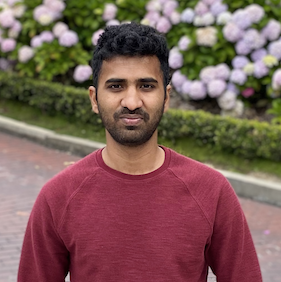
 Nithin Rao Koluguri
· 2 previous affiliations
- Nvidia (United States)Since 2020
- Researcher · Since 2020
- University of Southern California2018–2020
- MS student · 2018–2020
Research Overview
Nithin Rao Koluguri focuses on speech signal processing, automatic speech recognition, and speaker diarization. His trajectory spans from early work in clinical speech biomarkers to the development of highly scalable neural architectures for speaker representation and long-form audio transcription. Currently, his research addresses multilingual speech recognition, discrete audio tokenization, and multi-talker speech systems.
Research Trajectory
His early work centered on signal processing and its applications in bioacoustics and clinical diagnostics. He introduced an unsupervised algorithm for monitoring environments in Spectrogram Enhancement Using Multiple Window Savitzky-Golay (MWSG) Filter for Robust Bird Sound Detection, addressing environmental noise through a multiple window Savitzky-Golay filter to reduce variance in spectrogram estimates. Moving into clinical applications, he participated in research within the area of Robust Audio Classification Across Diverse Recording Hardware, contributing to Comparison of Speech Tasks and Recording Devices for Voice Based Automatic Classification of Healthy Subjects and Patients with Amyotrophic Lateral Sclerosis. This study demonstrated that rapid, repetitive speech tasks and standard smartphone microphones could effectively identify ALS, highlighting the viability of consumer devices for diagnostic assessments.
By 2020, his focus shifted toward speaker diarization and representation learning. He developed a meta-learning approach using prototypical networks to optimize child-adult speaker classification in clinical dyadic conversations, detailed in Meta-Learning for Robust Child-Adult Classification from Speech. Building on the need for robust speaker embeddings, he introduced TitaNet: Neural Model for Speaker Representation with 1D Depth-Wise Separable Convolutions and Global Context. This scalable architecture maps variable-length utterances to fixed-length embeddings using squeeze-and-excitation layers, significantly improving verification and diarization accuracy. This foundational work supported broader open-source efforts, including his contributions to the NeMo Open Source Speaker Diarization System, an interactive toolkit advancing the broader field of Serialized Output Training for Overlapped Speech Recognition.
A major subsequent theme in his research became the scaling of automatic speech recognition (ASR) architectures for long-form audio. He helped design an optimized architecture to accelerate training and inference in Fast Conformer With Linearly Scalable Attention For Efficient Speech Recognition, contributing to the research direction of Hybrid Architectures for Efficient Long Context Modeling. He further evaluated various end-to-end models on extended benchmarks in Investigating End-to-End ASR Architectures for Long Form Audio Transcription, identifying self-attention models with local and global tokens as particularly effective. To improve transcription quality, he proposed a punctuated long-sequence training method in Longer is (Not Necessarily) Stronger: Punctuated Long-Sequence Training for Enhanced Speech Recognition and Translation. This work demonstrated that training sequence-to-sequence models on complete sentences with proper punctuation and capitalization enhances performance, though accuracy eventually plateaus at extreme sequence lengths.
Concurrently, he explored alternatives to traditional acoustic features, advancing the area of The Discretization Bottleneck in Neural Audio Modeling. He investigated the viability of neural codec tokens in Discrete Audio Representation as an Alternative to Mel-Spectrograms for Speaker and Speech Recognition, showing that discrete representations offer significant compression and robustness to narrowband telephony data while maintaining high accuracy. This paradigm was expanded upon in Codec-ASR: Training Performant Automatic Speech Recognition Systems with Discrete Speech Representations, which further validated the use of discrete tokens for performant ASR systems.
Most recently, his work has scaled to multilingual and multi-talker domains. He led the compilation of Granary: Speech Recognition and Translation Dataset in 25 European Languages, utilizing a pseudo-labeling and hallucination-filtering pipeline to address data scarcity in low-resource languages. He also introduced highly efficient speech models in Canary-1B-v2 & Parakeet-TDT-0.6B-v3: Efficient and High-Performance Models for Multilingual ASR and AST, utilizing a FastConformer backbone and multi-stage training to handle data imbalance. To standardize evaluation across these expanding models, he participated in establishing the Open ASR Leaderboard: Towards Reproducible and Transparent Multilingual and Long-Form Speech Recognition Evaluation. Finally, addressing the speaker permutation problem in multi-speaker environments, he contributed to Sortformer: A Novel Approach for Permutation-Resolved Speaker Supervision in Speech-to-Text Systems. This work integrates a chronological sorting objective to advance the field of Chronological Labeling for Multi-Talker Speech Recognition, improving joint diarization and transcription with minimal computational overhead.
Current Directions
Recent work investigates the scaling and evaluation of multilingual automatic speech recognition and translation systems. A primary focus is addressing data scarcity in low-resource languages through large-scale pseudo-labeling pipelines and multi-stage training strategies, enabling highly efficient models that maintain performance across diverse linguistic datasets. Concurrently, research continues into multi-talker speech environments, specifically developing permutation-resolved supervision techniques that order speakers chronologically to improve joint diarization and transcription. Finally, there is an ongoing effort to establish reproducible, transparent evaluation frameworks to standardize the assessment of accuracy and computational efficiency across modern long-form and multilingual speech models.
Profile updated
Loading new papers…
Other researchers whose papers cluster into the same research directions — a proxy for overlapping technical interests and shared intellectual neighborhoods.
See something wrong? Report a mistake