

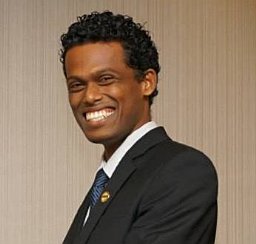
 Nisansa de Silva
· 4 previous affiliations
- University of MoratuwaSince 2007
- Senior Lecturer · Since 2020
- Lecturer · 2012–2020
- Temporary Instructor · 2011–2012
- Undergrad student · 2007–2011
- LIRNEasia2020–2021
- Researcher · 2020–2021
- University of Oregon2014–2020
- Graduate Teaching Fellow · 2014–2020
- MS student · 2014–2016
- Researcher · 2018
Research Overview
Nisansa de Silva focuses on ontology-based information extraction, semantic oppositeness modeling, and knowledge graph integration for natural language processing. Early work utilized domain-specific ontologies to detect semantic inconsistencies in biomedical literature. More recently, this trajectory has expanded to include deep contextual modeling for rumor detection and the evaluation of large-scale multilingual datasets.
Research Trajectory
The early phase of de Silva’s research centered on leveraging domain-specific ontologies to extract information and identify errors in specialized text. In 2017, de Silva led research on Discovering Inconsistencies in PubMed Abstracts through Ontology-Based Information Extraction, proposing a method to extract relational triples from biomedical abstracts using the Ontology for MIcroRNA Targets (OMIT). A key contribution of this work was the introduction of an algorithm to calculate the "oppositeness" of candidate relationships, allowing the system to flag contradictions in established medical knowledge.
By 2019, the concept of oppositeness had evolved into a distinct theoretical focus. De Silva first-authored Semantic Oppositeness Embedding Using an Autoencoder-Based Learning Model, which formalized semantic oppositeness as a complementary metric to semantic similarity. This work argued that oppositeness is frequently conflated with simple antonymy or inverse similarity, and proposed an autoencoder-based approach to accurately model the degree to which two concepts oppose one another. During this period, de Silva also contributed to the broader area of Geometric Embeddings for Formal Ontologies. As a co-author on Logic Rules Powered Knowledge Graph Embedding (2019), de Silva participated in research integrating declarative logic rules into translation-based knowledge graph models to better capture rich background knowledge.
Moving into 2020, the research trajectory increasingly bridged formal knowledge bases with deep learning architectures. De Silva co-authored An Overview of Utilizing Knowledge Bases in Neural Networks for Question Answering, which surveyed methods for embedding human-generated schematic representations of world knowledge into neural systems to improve closed-world question answering.
This synthesis of semantic modeling and deep learning was subsequently applied to social media integrity. In 2021, de Silva led Semantic Oppositeness Assisted Deep Contextual Modeling for Automatic Rumor Detection in Social Networks. This research utilized the previously developed theories of semantic oppositeness to analyze the relationships between main social media posts and their reply contexts, demonstrating that oppositeness metrics can significantly improve the automatic detection of rumors and suspicious news in highly connected networks.
Current Directions
The most recent papers in the evidence indicate a dual focus on applying deep contextual models to social media challenges and evaluating the foundational resources used in modern natural language processing. Recent work investigates how nuanced semantic relationships—specifically oppositeness and contextual disagreement—can be operationalized to identify misinformation and rumors at scale.
Additionally, recent collaborative efforts address the quality of the data pipelines that power large-scale multilingual modeling. This includes participating in extensive audits of web-crawled text corpora to identify systematic failures, mislabeling, and quality degradation, particularly in lower-resource languages. Together, these directions reflect an ongoing interest in ensuring that both the structural knowledge (ontologies and semantic models) and the underlying datasets used in NLP are robust, accurate, and reliable.
Profile updated
Loading new papers…
Other researchers whose papers cluster into the same research directions — a proxy for overlapping technical interests and shared intellectual neighborhoods.
See something wrong? Report a mistake