

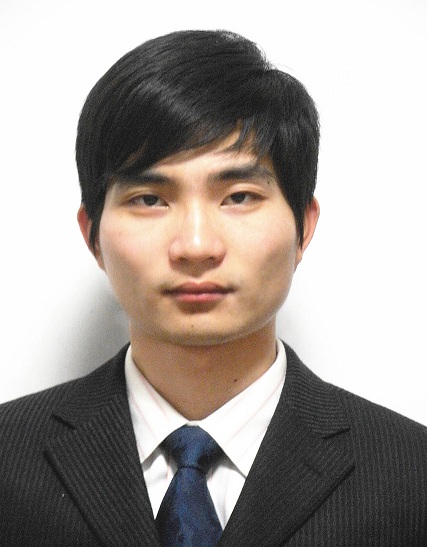
 Ning Xu
· 1 previous affiliation
- Southeast UniversitySince 2020
- Associate Professor · Since 2024
- Assistant Professor · 2020–2023
5 other authors named Ning Xu: Ning Xu (Tianjin University · 169 papers), Ning Xu (10 papers), Ning Xu (Adeia Inc. · 8 papers), Ning Xu (Adobe Systems (United States) · 5 papers), Ning Xu (Nanjing University of Science and Technology · Chinese Academy of Sciences · Institute of Automation · 4 papers)
Research Overview
Ning Xu focuses on machine learning under label ambiguity, weakly supervised learning, and the alignment of large language models. His trajectory traces a progression from foundational work in label distribution learning and partial label disambiguation to advanced techniques for handling instance-dependent noise. Most recently, his research addresses safe, controllable systems and preference optimization for generative foundation models.
Research Trajectory
Ning Xu's early research established foundational methods for managing label ambiguity, particularly through the concept of label enhancement. In 2018, he introduced Label Enhancement for Label Distribution Learning, addressing the challenge that many training datasets provide only simple logical labels rather than expressive label distributions. By leveraging the topological information of the feature space, this work provided a mechanism to recover underlying label distributions. He subsequently extended these principles to partial label learning in Partial Label Learning via Label Enhancement., proposing a strategy to disambiguate candidate label sets by incorporating generalized label distributions. Continuing this trajectory, he developed Variational Label Enhancement, which formalized label ambiguity through a variational approach. This work contributed significantly to the broader research areas of Enhancing Binary Labels into Probabilistic Distributions and Label Enhancement for Nuanced Multi-Label Learning.
Moving beyond the assumption that incorrect candidate labels are uniformly random, Xu's research shifted toward more realistic, instance-dependent noise models. He presented Instance-Dependent Partial Label Learning, which posited that each example is associated with a latent label distribution where incorrect labels with higher degrees of feature similarity are more likely to appear as candidates. This advanced the specific direction of Learning with Instance Dependent Label Noise and built upon his prior efforts in the area of Recovering Semantic Nuance through Label Enhancement. He also tackled the high annotation costs of multi-label learning with One Positive Label is Sufficient: Single-Positive Multi-Label Learning with Label Enhancement, deriving an unbiased risk estimator to train multi-label classifiers using only a single positive annotation per instance.
By 2024, Xu's work increasingly focused on refining pseudo-label generation and unifying weakly supervised learning paradigms. To mitigate the risk of models overfitting to incorrect candidate labels, he proposed Reduction-based Pseudo-label Generation for Instance-dependent Partial Label Learning. He further explored the utility of probabilistic distributions in capturing nuanced feature variations with Aligned Objective for Soft-Pseudo-Label Generation in Supervised Learning, a contribution to the broader field of Disambiguation in Partial Label Learning. Recognizing that real-world datasets often contain a mixture of redundant partial labels and insufficient unlabeled data, his lab developed Learning with Partial-Label and Unlabeled Data: A Uniform Treatment for Supervision Redundancy and Insufficiency. This mutual information-based framework dynamically adjusted candidate labels across all instances, providing a unified alternative to composite algorithms.
Concurrently, Xu began applying his expertise in label enhancement to the alignment and adaptation of large-scale models. He introduced Progressively Selective Label Enhancement for Language Model Alignment, a framework that coupled data generation with model training using a dynamic threshold to optimize human preference alignment. In the domain of test-time adaptation, his team developed Selective Label Enhancement Learning for Test-Time Adaptation, which replaced rigid pseudo-labels with progressively refined candidate sets to handle domain shifts. He also explored model compression, detailing a margin-based intra-class contrastive loss to maintain feature diversity during teacher training in Enriching Knowledge Distillation with Intra-Class Contrastive Learning. Returning to language models, he addressed conflicting human preferences with Preference Orchestrator: Prompt-Aware Multi-Objective Alignment for Large Language Models, designing a lightweight adapter to dynamically predict preference weights for specific prompts.
In his most recent work, Xu has tackled increasingly complex data environments and multimodal challenges. His group addressed long-tailed, incorrectly labeled datasets with Class-Prior Perturbation-Robust Regularization for Imbalanced Unreliable Partial Label Learning. By employing bi-level optimization and adversarial Dirichlet sampling, this framework improved robustness to prior uncertainty, advancing the research direction of Robust Partial Label Learning with Missing Ground Truth. He also participated in collaborative research on vision-language alignment, contributing to LoGoSeg: Integrating Local and Global Features for Open-Vocabulary Semantic Segmentation, a single-stage framework that integrates object existence priors and region-aware alignment. Finally, he co-developed Alignment through Meta-Weighted Online Sampling: Bridging the Gap between Data Generation and Preference Optimization, utilizing a meta-learner to selectively generate alignment data and reduce online annotation costs.
Current Directions
Recent work investigates the alignment of large language models and the robustness of learning algorithms under severe data imperfections. In the domain of generative foundation models, the most recent papers in the evidence address preference optimization, focusing on dynamic, prompt-aware alignment strategies and meta-weighted online sampling to bridge the gap between static datasets and active model training. Concurrently, ongoing research in weakly supervised learning tackles imbalanced and unreliable partial label learning. By integrating bi-level optimization and adversarial sampling techniques, these efforts aim to stabilize model performance in environments characterized by long-tailed distributions, missing ground truths, and instance-dependent noise.
Profile updated
Loading new papers…
Other researchers whose papers cluster into the same research directions — a proxy for overlapping technical interests and shared intellectual neighborhoods.
See something wrong? Report a mistake