

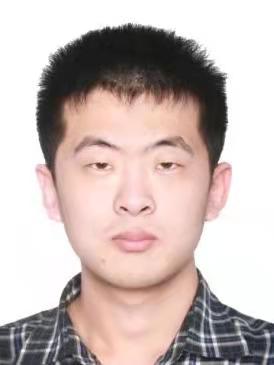
 Ning Liu
· 2 previous affiliations
- Shandong UniversitySince 2021
- Assistant Professor · Since 2021
- Undergrad student · 2012–2016
- Tsinghua UniversityCurrent
- Current
- PhD student · 2016–2021
7 other authors named Ning Liu: Ning Liu (Beijing Innovation Center of Humanoid Robotics · 66 papers), Ning Liu (Shanghai Jiao Tong University · 28 papers), Ning Liu (15 papers), Ning Liu (Amazon (United States) · University of Michigan · 11 papers), Ning Liu (9 papers), and 2 more
Research Overview
Ning Liu focuses on medical data mining, interpretable machine learning, and knowledge-enhanced applications. His trajectory spans from early work on clinical diagnosis inference and health risk prediction using unstructured medical notes to recent advancements in robust federated learning and large language model security. Currently, his research emphasizes multi-view representation learning for drug recommendation and data-centric approaches to federated model fine-tuning.
Research Trajectory
His early research addressed the complexities of extracting actionable insights from unstructured medical texts. He introduced Knowledge-Aware Deep Dual Networks for Text-Based Mortality Prediction (2019), moving beyond traditional hand-crafted features and statistical topic modeling to better capture complicated patient information for inferring clinical outcomes. Building on this foundation in healthcare data, he subsequently developed Coupled Graph Convolutional Neural Networks for Text-Oriented Clinical Diagnosis Inference (2020), applying graph-based neural architectures to improve clinical diagnosis.
A significant theme in his trajectory is the pursuit of interpretable machine learning, particularly in domains where transparent decision-making is critical. He contributed to Scalable Rule-Based Representation Learning for Interpretable Classification (2021), helping to design a classifier that automatically learns non-fuzzy rules to balance scalability on large datasets with structural transparency. Returning to electronic health records, his lab developed Feature-Guided Logical Perception Network for Health Risk Prediction (2022), a model that extracts logical rules directly from patient data to quantify the importance of specific features in predictive healthcare tasks.
Concurrently, he explored knowledge-enhanced applications and structured data grounding. He participated in research on knowledge base completion with Effective Few-Shot Named Entity Linking by Meta-Learning (2022), addressing scenarios with insufficient labeled data. This work connects to the broader research direction of Cross-lingual Entity Grounding for Multilingual Transfer. He also guided work on Logic Event Graph Enhanced Narrative Generation (2023), utilizing dynamic event graphs to inject logical reasoning into language model outputs, overcoming the limitations of static knowledge graphs in reflecting real-world event development.
As large models and distributed systems became more prevalent, his focus expanded to include model security, robustness, and complex network scheduling. He co-developed RobFL: Robust Federated Learning via Feature Center Separation and Malicious Center Detection (2024), a framework designed to protect privacy-preserving federated systems from adversarial attacks during both training and testing phases. In the domain of foundational models, he contributed to An LLM can Fool Itself: A Prompt-Based Adversarial Attack (2024), a study that aligns with research areas such as Multi-Granular Textual Perturbations for Model Robustness and The Inverse Scaling of Model Capability and Security. During this period, he also applied knowledge-driven deep learning to network performance evaluation in Performance Evaluation of Self-Similar GPS Scheduling: A Knowledge-Driven Dual-Task Deep Learning Approach (2024), and began investigating multi-view approaches for pharmacology with LAMRec: Label-aware Multi-view Drug Recommendation (2024).
His most recent work synthesizes these threads into advanced representation learning and distributed model optimization. In medical imaging, he collaborated on AdaHet-MKD: An Adaptive Heterogeneous Multi-teacher Knowledge Distillation for Medical Image Analysis (2025). He also contributed to text embedding optimization in Negative Matters: Multi-Granularity Hard-Negative Synthesis and Anchor-Token-Aware Pooling for Enhanced Text Embeddings (2025), leveraging large language models to generate diverse negative samples for contrastive learning, touching upon the area of The Reality Gap in Synthetic Language Data. Building on his earlier pharmacological research, he introduced Incomplete Multi-View Drug Recommendation via Multi-Level Representation Learning and Curriculum Learning (2025). Finally, addressing the challenges of heterogeneous data in distributed LLMs, he participated in the development of FedSDR: Federated Self-Distillation with Rectification (2026), which uses a dual-stream architecture to mitigate client drift without introducing factual hallucinations. Extending federated learning techniques to spatial-temporal streaming scenarios, Liu also contributed to Sofed: A Swift Online Federated Graph Learning Framework for Traffic Streaming Data Prediction (2026), enabling efficient distributed graph learning on traffic data streams.
Current Directions
The most recent papers in the evidence indicate a dual focus on advanced representation learning for specialized domains and the robust optimization of large language models in distributed settings. In the healthcare and pharmacological domains, recent work investigates multi-view representation learning and curriculum learning to handle incomplete data for drug recommendation, alongside adaptive knowledge distillation techniques for medical image analysis. Simultaneously, in the realm of foundational models, current efforts address the challenges of federated LLM fine-tuning. This includes developing data-centric paradigms and dual-stream architectures to mitigate client drift across heterogeneous data distributions, as well as utilizing LLMs for multi-granularity hard-negative synthesis to enhance text embeddings via contrastive learning.
Profile updated
Loading new papers…
Other researchers whose papers cluster into the same research directions — a proxy for overlapping technical interests and shared intellectual neighborhoods.
See something wrong? Report a mistake