

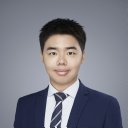
 Ning Gao
· 1 previous affiliation
- Beihang UniversitySince 2024
- MS student · 2024–2027
3 other authors named Ning Gao: Ning Gao (14 papers), Ning Gao (Google (United States) · 4 papers), Ning Gao (Shanghai Artificial Intelligence Laboratory · 3 papers)
Research Overview
Ning Gao focuses on efficient image restoration architectures and automated reward design for reinforcement learning. His early work leverages frequency-domain transformations to reduce the computational overhead of vision models, while his recent research explores the integration of large language models to guide sequential decision-making. Currently, he investigates resource-constrained dialogue agents and scalable reward synthesis.
Research Trajectory
Gao’s published research initially addresses the computational inefficiencies of self-attention mechanisms in vision models, particularly for dense prediction and image restoration tasks. In 2024, he and his collaborators explored alternative architectures that leverage frequency-domain transformations to capture global image context without the quadratic scaling costs of standard transformers. This approach is exemplified by When Fast Fourier Transform Meets Transformer for Image Restoration, which introduced the Spatial-Frequency Hybrid former (SFHformer). By integrating the Fast Fourier Transform into a transformer-like structure, the model achieves global dependency modeling with $O(N \log N)$ complexity, demonstrating strong performance across tasks like dehazing and deblurring. This work advanced the broader area of Dynamic Frequency Filtering for Adaptive Representation Learning and contributed to techniques in the research direction of Frequency Decomposition for Real World Image Restoration. Building on these spectral methods, Gao developed the FADformer architecture in Efficient Frequency-Domain Image Deraining with Contrastive Regularization. This framework explicitly models frequency domain features via a Fused Fourier Convolution block and utilizes contrastive regularization to better separate rain streak patterns from clean background signals in single images.
In 2025, Gao expanded his work on efficient vision architectures through multi-domain representations. He introduced SWFormer in Image Restoration via Multi-domain Learning, a framework that replaces standard self-attention with a "tri-branch" mixer. By processing images simultaneously across spatial, wavelet, and Fourier domains, the model captures local, regional, and global features efficiently, reducing computational costs while maintaining high fidelity. Alongside these 2D imaging advancements, he also investigated complex physical environments, contributing to Spatiotemporal Degradation-Aware 3D Gaussian Splatting for Realistic Underwater Scene Reconstruction. This research proposed MarineSTD-GS, a framework that explicitly models spatial attenuation, backscatter, and temporal flickering to achieve accurate 3D scene representations in challenging underwater conditions.
Concurrently in 2025, Gao’s research trajectory expanded into reinforcement learning (RL), with a particular focus on reward formulation and offline policy optimization. A central challenge in RL is learning complex behaviors from sparse feedback, such as a binary success or failure signal at the end of an episode. To address this, Gao explored the integration of large language models to guide agent learning. He contributed to Progress Reward Model for Reinforcement Learning via Large Language Models, which developed a framework for generating dense progress signals from sparse outcomes, advancing the research direction of Policy Invariant Reward Shaping. He further automated this process in RF-Agent: Automated Reward Function Design via Language Agent Tree Search. By framing reward design as a sequential decision-making task and combining language models with Monte Carlo Tree Search, this work systematically explores the space of potential reward functions, contributing significantly to the area of Automated Reward Design for Reinforcement Learning.
Beyond reward design, Gao has investigated the stability of offline reinforcement learning. In Value-aligned Behavior Cloning for Offline Reinforcement Learning via Bi-level Optimization, he and his co-authors framed policy learning as a nested optimization problem. The resulting VACO framework extracts high-performing policies from sub-optimal datasets while mitigating the instability typical of offline methods, aligning with broader efforts in First-Order Approximations for Efficient Meta-Learning.
Current Directions
The most recent papers in the evidence indicate that Gao continues to advance both efficient vision architectures and applied reinforcement learning. In the domain of computer vision, recent work investigates lightweight baselines for real-time applications. For example, Global Modeling Matters: A Fast, Lightweight, and Effective Baseline for Efficient Image Restoration introduces PW-FNet, which combines wavelet and Fourier transforms to achieve high-quality image restoration with minimal model complexity.
In parallel, Gao is applying reinforcement learning to complex, interactive systems. His recent research addresses the deployment of AI service agents in environments with strict operational constraints. Reinforcing Real-world Service Agents: Balancing Utility and Cost in Task-oriented Dialogue presents a multi-granularity reinforcement learning approach that trains dialogue agents to optimize user satisfaction while explicitly managing the costs associated with real-world task execution.
Profile updated
Loading new papers…
Other researchers whose papers cluster into the same research directions — a proxy for overlapping technical interests and shared intellectual neighborhoods.
See something wrong? Report a mistake