

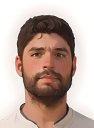
 Nikolaos Nakis
· 4 previous affiliations
- Yale UniversitySince 2023
- Postdoctoral Researcher · Since 2024
- Visiting Researcher @ Human Nature Lab · 2023
- École Polytechnique2023–2024
- Postdoctoral Researcher · 2023–2024
- Technical University of Denmark2018–2023
- Researcher PhD Student · 2020–2023
- Master of Science - MS, Mathematical Modelling and Computation - Machine Learning and Signal Processing · 2018–2020
- Umeå University2021–2022
- Visiting PhD Student · 2021–2022
Research Overview
Nikolaos Nakis focuses on graph representation learning, statistical learning, and the analysis of complex networks. His early work developed scalable latent distance models and continuous-time representations for dynamic graphs. More recently, his research emphasizes self-explainable models, signed network embeddings, and the application of these techniques to social polarization and biological interaction networks.
Research Trajectory
The early trajectory of Nakis’s research centered on advancing Latent Space Models (LSM) and Latent Distance Models (LDM) for complex networks. In 2022, he introduced HM-LDM: A Hybrid-Membership Latent Distance Model to reconcile traditional latent space embeddings with latent community detection. A major historical limitation of LDMs had been their computational bottleneck; to address this, he developed Scalable Hierarchical Embeddings of Complex Networks, which scales network embedding to $O(N \log N)$ complexity using a multiscale hierarchical estimate of the full likelihood. Concurrently, he collaborated on the area of Continuous Time Representation Learning for Dynamic Graphs, contributing to the Piecewise-Velocity Model for Learning Continuous-Time Dynamic Node Representations to better capture the evolving interactions of entities over time.
Moving beyond simple binary or unsigned interactions, his research expanded in 2023 to signed networks, which capture both positive and negative ties. He introduced Characterizing Polarization in Social Networks using the Signed Relational Latent Distance Model. This work embeds networks into low-dimensional spaces to study the emergence of "us-versus-them" dynamics and filter bubbles, contributing to the broader area of Modeling Structural Sparsity in Relational Data. In 2024, he applied dynamic embedding techniques to the science of science, developing Time to Cite: Modeling Citation Networks using the Dynamic Impact Single-Event Embedding Model to assess how scientific disciplines evolve and how research impact can be quantified. He also continued his work on temporal graphs, participating in the development of Continuous-Time Graph Representation with Sequential Survival Process, which utilizes survival functions to model the specific durations and absences of links over time rather than treating them as instantaneous events.
In 2025, Nakis extended his signed network modeling to bioinformatics. He developed The Signed Two-Space Proximity Model for Learning Representations in Protein-Protein Interaction Networks, which explicitly incorporates both activating and inhibitory interactions to accurately represent complex cellular functions. This work advances several research directions, including Overcoming the Gene Independence Assumption in Genomic Models, Dynamic Inference for Temporal Biological Networks, and Signed Attention for Modeling Inhibitory Relationships. Expanding his focus to multi-layered social structures, he introduced Modeling roles and trade-offs in multiplex networks to analyze how individuals navigate interdependent social ties versus direct-exchange economic ties. During this period, he also investigated the fundamental limits of embedding spaces in How Low Can You Go? Searching for the Intrinsic Dimensionality of Complex Networks using Metric Node Embeddings.
A major recent theme in his work is the interpretability and mathematical rigor of graph neural networks (GNNs). He proposed the Signed Graph Autoencoder for Explainable and Polarization-Aware Network Embeddings, which extracts node-level representations based on extreme profiles or archetypes, advancing the area of Dual Channel Representation Learning for Signed Networks. In 2026, he furthered this explainable approach with Archetypal Graph Generative Models: Explainable and Identifiable Communities via Anchor-Dominant Convex Hulls, utilizing a hierarchical convex hull structure to create identifiable community embeddings. He also introduced Aitchison Embeddings for Learning Compositional Graph Representations, grounding graph learning in Aitchison geometry to treat nodes as interpretable mixtures of archetypal roles rather than arbitrary vectors. Finally, overseeing research on structural expressivity, he guided the development of InvGNN: Learning Invertible Node Representations on Graphs, an architecture that replaces standard aggregators with a matrix exponential operator to enable exact density estimation and extreme memory efficiency.
Current Directions
The most recent papers in the evidence indicate a strong focus on the interpretability, structural expressivity, and mathematical foundations of graph neural networks. Recent work investigates how to construct self-explainable generative models using archetypal analysis and compositional geometry. By leveraging tools like Aitchison geometry and hierarchical convex hulls, this research ensures that node embeddings represent interpretable mixtures of roles rather than opaque, arbitrary vectors. Additionally, ongoing research addresses the fundamental capabilities of GNNs through invertible architectures that facilitate exact density estimation and generative modeling without sacrificing performance. These methodological advances continue to be applied to highly complex relational data, including signed networks that capture polarization in social systems and inhibitory relationships in biological pathways.
Profile updated
Loading new papers…
Other researchers whose papers cluster into the same research directions — a proxy for overlapping technical interests and shared intellectual neighborhoods.
See something wrong? Report a mistake