

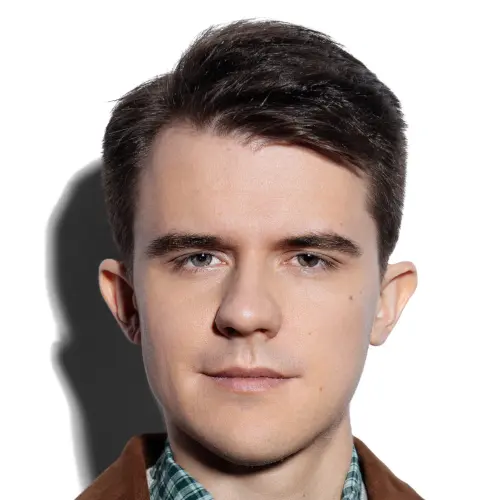
 Nikita Kazeev
· 8 previous affiliations
- Constructor GroupSince 2021
- Applied Mathematics, Machine Learning and Data Science Consulting · Since 2021
- Constructor UniversitySince 2021
- ML consultant · Since 2021
- National University of SingaporeSince 2022
- Postdoc · Since 2022
- Current
- PerfomaxSince 2026
- AI advisor · Since 2026
- Associated member of the personnel · 2015–2024
- Research Fellow · 2016–2022
- Doctor of Philosophy - PhD, Computer Science · 2016–2020
- Doctor of Philosophy - PhD, Physics · 2020
- MS student · 2014–2016
- Undergrad student · 2010–2014
Research Overview
Nikita Kazeev focuses on machine learning for scientific discovery, generative modeling for materials science, and the reliable deployment of artificial intelligence. His trajectory spans from accelerating high-energy physics simulations and developing core gradient boosting algorithms to designing generative architectures for novel crystal structures. Most recently, his work addresses uncertainty quantification in language model agents and the alignment of AI systems for complex physical reasoning.
Research Trajectory
Kazeev’s early work addressed large-scale data challenges in high-energy physics. He participated in building Event Index - a LHCb Event Search System, an Apache Lucene-based architecture optimized for managing and querying massive collision datasets distributed across independent shards. Concurrently, in the broader machine learning domain, he introduced foundational algorithmic improvements to gradient boosting. In CatBoost: unbiased boosting with categorical features, he developed ordered boosting techniques and innovative categorical feature processing to mitigate prediction shift and target leakage, advancing the methodology of unbiased gradient estimation.
Returning to physics applications, Kazeev focused on accelerating simulation and inference pipelines. He explored the area of Generative Surrogate Models for Fast Detector Simulation by developing GAN-based approaches in Cherenkov Detectors Fast Simulation Using Neural Networks. This work bypassed computationally expensive photon tracking to predict high-level observables directly, achieving significant computational acceleration while maintaining baseline precision. He also addressed statistical unfolding in high-energy physics, contributing to the direction of Bounded Loss Functions for Outlier Robust Optimization with Machine Learning on data with sPlot background subtraction. Expanding into aerospace applications, he applied reinforcement learning to satellite collision avoidance in Space Navigator: a Tool for the Optimization of Collision Avoidance Maneuvers, contributing to the broader field of Hybrid Strategies for Accelerated Optimization and Inference. His work on real-time physics systems culminated in Machine learning for particle identification in the LHCb detector and participation in Allen: A High-Level Trigger on GPUs for LHCb, a project advancing the research direction of Scalable Particle Tracking for High Luminosity Colliders through end-to-end GPU pipeline acceleration.
Kazeev’s focus subsequently shifted toward materials science and the generative design of novel structures. He proposed a rapid estimation method for 2D materials in Sparse representation for machine learning the properties of defects in 2D materials, utilizing anisotropic message passing for directional graph learning to navigate highly complex structural search spaces without relying solely on prohibitively expensive ab-initio computations. He then introduced WyckoffTransformer: Generation of Symmetric Crystals, a generative model that leverages the inherent symmetry of crystals via Wyckoff positions to synthesize stable inorganic materials. Continuing in the area of Navigating the Stability Novelty Frontier in Generative Chemistry, he co-developed MiAD: Mirage Atom Diffusion for De Novo Crystal Generation, which utilizes a "mirage infusion" technique to dynamically add or remove atoms during the diffusion process.
Broadening his scope to the intersection of artificial intelligence and the scientific method, Kazeev led the formulation of the AI4X Roadmap: Artificial Intelligence for the advancement of scientific pursuit and its future directions. This work outlines a transition from pattern matching to physics-aware, closed-loop iterative scientific discovery using language models and autonomous robotics. He further explored the computational bottlenecks of quantum mechanics and system scaling in Machine Learning Multiscale Processes, focusing on cross-domain approaches to intractable physical simulations.
In his most recent work, Kazeev investigates the reliability, alignment, and evaluation of advanced AI systems. He introduced Foresight-Phys: A Benchmark for Forecasting the Results of Physical Experiments to test whether frontier models can predict outcomes from unpublished preprints, revealing vulnerabilities to positivity bias in scientific literature. To address the safe deployment of autonomous systems, he developed a black-box uncertainty signal in Uncertainty Quantification for LLM Agents via Semantic Abstraction Trajectories. This method utilizes a Plackett–Luce ranking model to recover per-chunk abstraction scores, forming a structured time series that serves as a selective-prediction signal. Additionally, he contributed to AI alignment discourse with Position: Align AI to Our Aspirations, Not Our Flaws, advocating for objective alignment goals—such as competence, accuracy, and lawfulness—over aggregated human preferences.
Current Directions
The most recent work in the evidence focuses on the evaluation, alignment, and reliability of large language models and autonomous agents, particularly in scientific contexts. Current directions investigate how to quantify uncertainty in agentic reasoning without requiring access to model internals, utilizing structured probabilistic inference over semantic abstraction trajectories. Additionally, this research addresses the alignment of AI systems, arguing for foundational objectives like accuracy and lawfulness over aggregated human preferences. Another active area involves benchmarking the physical intuition of frontier models, specifically testing their capacity to forecast the results of novel physical experiments while mitigating inherent biases learned from scientific literature.
Profile updated
Loading new papers…
Other researchers whose papers cluster into the same research directions — a proxy for overlapping technical interests and shared intellectual neighborhoods.
See something wrong? Report a mistake