

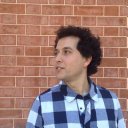
 Nicolas Farrugia
· 4 previous affiliations
- IMT AtlantiqueSince 2016
- Full Professor · Since 2024
- Associate Professor · 2016–2024
- University of London2013–2015
- Postdoc · 2013–2015
- Goldsmiths University of London2013–2015
- Postdoc · 2013–2015
- Postdoc · 2011–2013
Research Overview
Nicolas Farrugia focuses on computational neuroscience, graph signal processing, and bioacoustics, developing machine learning methods to analyze complex biological and environmental data. His trajectory spans from modeling brain structure-function relationships and building foundation models for electroencephalography to advancing self-supervised learning for ecological sound monitoring. Currently, he investigates how altered states of consciousness reconfigure cortical dynamics and neural connectivity.
Research Trajectory
Early in his career, Farrugia focused on hardware optimization for computer vision, introducing a parallel architecture for real-time face detection in embedded contexts with Fast and Robust Face Detection on a Parallel Optimized Architecture Implemented on FPGA. His focus subsequently shifted toward computational neuroscience and the application of graph signal processing (GSP) to brain activity. He explored how the physical wiring of the brain dictates its functional states, proposing that connectivity gradients can serve as a graph Fourier basis to provide a unified analysis of brain signals in Gradients of connectivity as graph Fourier bases of brain activity. Continuing this theme, he investigated how anatomical networks shape cognition in Deep learning models of cognitive processes constrained by human brain connectomes. To address the practical challenges of working with heterogeneous brain-computer interface (BCI) data, he participated in developing techniques to homogenize datasets across different electrode setups in Spatial Graph Signal Interpolation with an Application for Merging BCI Datasets with Various Dimensionalities.
In parallel with his neuroimaging research, Farrugia has developed extensive methodologies for environmental audio analysis, particularly contributing to the research area of Scaling Passive Acoustic Monitoring with Automated Analysis. He led large-scale passive acoustic monitoring efforts to track urban ecological changes during the COVID-19 lockdowns in Silent•Cities : monitoring large scale changes in urban ecoacoustics during the covid lockdown using deep learning and passive acoustic monitoring. Recognizing the scarcity of labeled data in biodiversity monitoring, he demonstrated that self-supervised learning models pretrained on general audio could be effectively adapted to identify new species from minimal examples in Self-Supervised Learning for Few-Shot Bird Sound Classification. To further bridge the domain gap between clean focal recordings and noisy real-world soundscapes, his group developed ProtoCLR, a computationally efficient contrastive learning approach detailed in Domain-Invariant Representation Learning of Bird Sounds. He also advanced the broader direction of Precise Temporal Grounding for Sound Event Detection by introducing techniques to prevent representation collapse in deep learning models, allowing them to detect novel animal species from as few as five examples in Regularized Contrastive Pre-Training for Few-Shot Bioacoustic Sound Detection.
Returning to clinical and cognitive neuroimaging, Farrugia has continued to refine tools for brain data processing and representation. He oversaw the creation of a specialized preprocessing pipeline for clinical datasets in fMRIStroke: A preprocessing pipeline for fMRI Data from Stroke patients. Building on his earlier GSP work, he quantified how the brain's physical structure couples with its electrical activity during naturalistic tasks, finding that sensory areas remain tightly coupled to structure while higher-order areas exhibit more flexibility in Structure–function coupling and decoupling during movie watching and resting state: Novel insights bridging EEG and structural imaging.
His recent work also addresses the scaling of neural models for biological signals. He contributed to work in the emerging area of Universal Neural Decoders for Heterogeneous Electrode Configurations through the development of REVE, a massive foundation model pretrained on 60,000 hours of EEG data that utilizes a novel 4D positional encoding scheme to adapt to any electrode setup in REVE: A Foundation Model for EEG - Adapting to Any Setup with Large-Scale Pretraining on 25,000 Subjects. Furthermore, addressing challenges in Learning from Limited Data in Specialized Medical Domains, his lab demonstrated that aligning artificial auditory networks with individual fMRI brain activity significantly improves the models' ability to predict brain responses to novel sounds in Alignment of auditory artificial networks with massive individual fMRI brain data leads to generalisable improvements in brain encoding and downstream tasks.
Current Directions
Most recently, Farrugia's research investigates the electrophysiological mechanisms underlying altered states of consciousness, specifically focusing on how psychedelics reshape cortical dynamics. Using source-resolved magnetoencephalography (MEG), his latest work examines the effects of LSD on the brain's structure-function relationship. In LSD Relaxes Structural Constraints on Brain Dynamics and Default Mode Decoupling Tracks Ego Dissolution, he maps MEG data onto connectome harmonics to show that LSD induces a robust decoupling of low-frequency activity from anatomical constraints. Complementing this, LSD Reconfigures Cortical Dynamics Through Faster Brain Rhythms and Increased Fractal Dimension utilizes spectral parameterization and temporal complexity metrics to demonstrate that the widespread cortical desynchronization characteristic of psychedelic states is driven by faster brain rhythms and increased fractal dimension. This ongoing work aims to provide a rigorous, mechanistic understanding of how profound shifts in conscious experience are grounded in measurable changes to neural oscillations and brain network organization.
Profile updated
Loading new papers…
Other researchers whose papers cluster into the same research directions — a proxy for overlapping technical interests and shared intellectual neighborhoods.
See something wrong? Report a mistake