

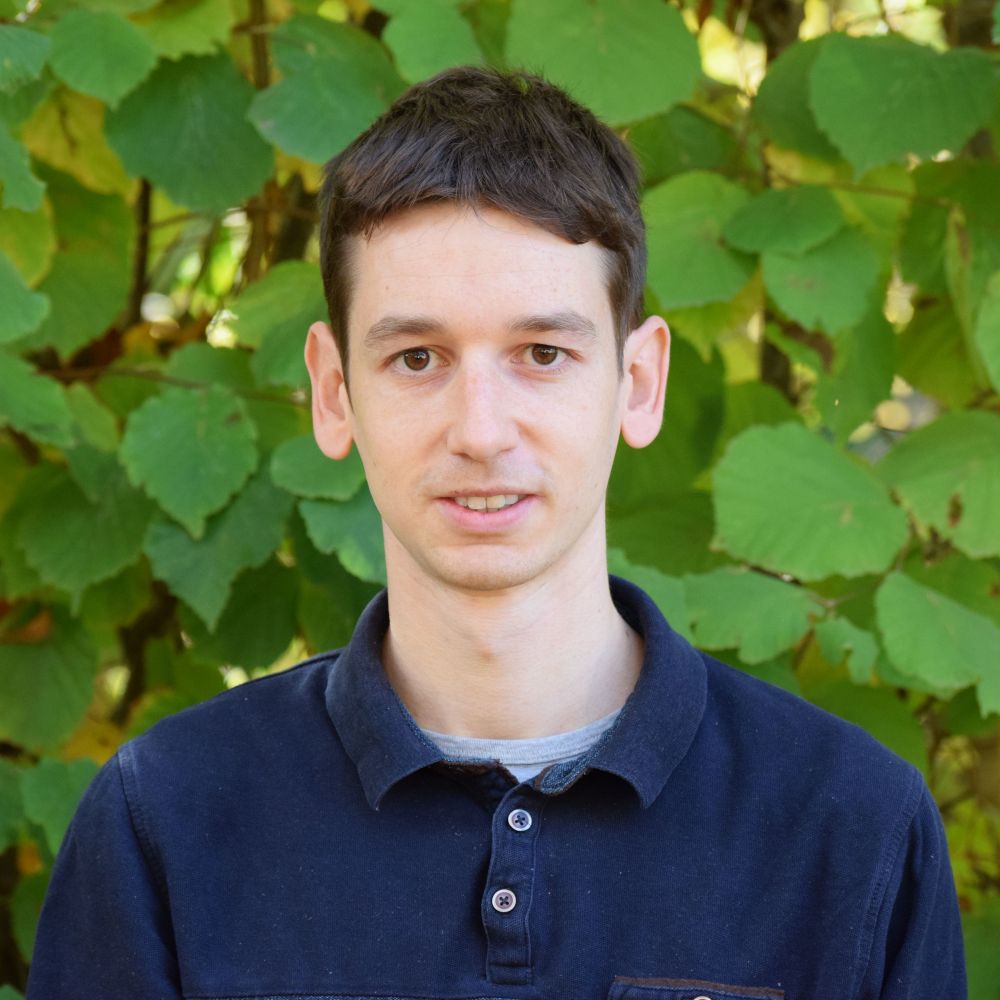
 Nicolas Boullé
· 6 previous affiliations
- Imperial College LondonSince 2024
- Assistant Professor · Since 2024
- University of Cambridge2022–2024
- Postdoc · 2022–2024
- University of Oxford2018–2022
- PhD student · 2018–2022
- Cornell University2017–2018
- Visiting Research Student · 2017–2018
- Cornell Tech2017–2018
- Researcher · 2017–2018
- École Normale Supérieure de Rennes2015–2017
- Bachelor of Science - BS, Mathematics · 2015–2017
Research Overview
Nicolas Boullé focuses on the mathematical foundations of deep learning, the discovery of partial differential equations from data, and the development of theoretically justified numerical techniques. His trajectory bridges classical numerical analysis with modern machine learning, advancing methods for operator learning and bifurcation control. Recently, his work investigates the capacity of large language models to zero-shot extrapolate complex physical dynamics.
Research Trajectory
Boullé’s early research established foundational numerical techniques and explored the mathematical properties of neural network architectures. In 2020, he developed algorithms for numerically computing with smooth functions on the unit ball in Computing with Functions in the Ball, designing efficient vector calculus operations within the Chebfun software environment. Concurrently, he investigated the theoretical advantages of alternative network structures in Rational neural networks. By establishing optimal bounds for network complexity, this work demonstrated that rational activation functions can approximate smooth functions more efficiently than standard ReLU networks, contributing to the broader research direction of Rational Activation Functions for Neural Networks. He later expanded on the mathematical theory of rational approximations in Multivariate Rational Approximation of Functions with Curves of Singularities.
Moving into the control of complex physical systems, Boullé developed numerical techniques to manipulate the stability of nonlinear partial differential equations. In Control of Bifurcation Structures using Shape Optimization, he introduced an algorithm to delay or advance branch points to target parameter values by varying the domain shape. He extended this approach in Optimization of Hopf Bifurcation Points, formulating Hopf bifurcation detection as a constrained optimization problem to precisely tune oscillatory phenomena. This research advanced the area of Bifurcation Engineering for Nonlinear System Control.
A major theme in Boullé’s trajectory is the rigorous integration of machine learning with physical modeling, particularly through operator learning. He provided theoretical guarantees for recovering unknown physical systems from experimental data in Elliptic PDE learning is provably data-efficient, utilizing randomized numerical linear algebra to derive data-efficient algorithms for three-dimensional uniformly elliptic PDEs. This theoretical framework was further solidified in Learning Elliptic Partial Differential Equations with Randomized Linear Algebra, which shifted the focus to Green’s functions and established provable learning rates within the area of Randomized Low Rank Approximation for Differential Operators. To handle irregular geometries and exactly enforce boundary conditions, he subsequently introduced Structure-Preserving Operator Networks (SPONs) in Structure-Preserving Operator Learning, marrying the mathematical rigor of finite element methods with the flexibility of deep learning.
Alongside operator learning, Boullé has made significant contributions to spectral methods and matrix approximations for dynamical systems. In Randomized Nyström approximation of non-negative self-adjoint operators, he extended highly efficient low-rank matrix decomposition techniques to the infinite-dimensional realm using Gaussian processes. His work on Dynamic Mode Decomposition (DMD) includes providing the first proof of convergence for spectral properties computed by Hermitian DMD in On the convergence of Hermitian Dynamic Mode Decomposition, and further developing these techniques in Multiplicative Dynamic Mode Decomposition. Addressing the challenges of spectral analysis in reproducing kernel Hilbert spaces, he introduced provably convergent, data-driven algorithms in Convergent Methods for Koopman Operators on Reproducing Kernel Hilbert Spaces, contributing to the broader field of Eliminating Spectral Pollution in Data Driven Operator Learning.
Most recently, Boullé has explored the intersection of large language models (LLMs) and physical reasoning. He demonstrated that LLMs can zero-shot learn the underlying physical principles of complex dynamical systems from time-series data in LLMs learn governing principles of dynamical systems, revealing an in-context neural scaling law. With collaborators, he also investigated the internal reasoning mechanisms of these models in Lines of Thought in Large Language Models. Building on this foundation, his subsequent collaborative work, Text-Trained LLMs Can Zero-Shot Extrapolate PDE Dynamics, Revealing a Three-Stage In-Context Learning Mechanism, revealed how text-trained models can accurately predict the future behavior of systems described by PDEs without fine-tuning.
In system identification, Boullé established theoretical foundations for recovering linearly parameterized analytic systems from a single input-solution pair in One-shot identification of analytic systems. The work established a zero-one law proving that the set of degenerate inputs failing recovery is either total or negligible, characterizing deterministic input choices guaranteeing recovery across matrices, dynamical systems, and differential operators.
Current Directions
The most recent papers in the evidence point to two primary research directions. First, Boullé continues to advance provably convergent, data-driven algorithms for dynamical systems, focusing on the spectral properties of Koopman operators and Dynamic Mode Decomposition to bypass the limitations of traditional methods. Second, he is actively investigating the capacity of large language models to understand and extrapolate complex physical dynamics. This includes uncovering in-context learning scaling laws and analyzing the multi-stage mechanisms by which text-trained models can zero-shot predict the behavior of partial differential equations and stochastic processes.
Profile updated
Loading new papers…
Other researchers whose papers cluster into the same research directions — a proxy for overlapping technical interests and shared intellectual neighborhoods.
See something wrong? Report a mistake