

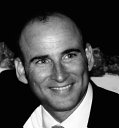
 Nicola Bombieri
· 1 previous affiliation
- University of VeronaCurrent
- Current
- Full Professor · 2018–2023
Research Overview
Nicola Bombieri focuses on parallel computing architectures, GPU acceleration, and embedded systems optimization. His early work emphasized optimizing memory management and algorithmic frameworks like belief propagation and bucket elimination for general-purpose GPUs. More recently, his research has shifted toward deploying real-time computer vision and simultaneous localization and mapping algorithms on low-power embedded boards for autonomous robotics.
Research Trajectory
Nicola Bombieri's research trajectory demonstrates a sustained focus on accelerating complex computational tasks through hardware-aware algorithmic design, particularly leveraging Graphics Processing Units (GPUs).
In his early work, Bombieri led efforts to optimize probabilistic inference algorithms for parallel architectures. As the senior author on Optimising memory management for Belief Propagation in Junction Trees using GPGPUs (2014), he proposed novel memory layout strategies for Bayesian Network tables to maximize computational speedup and minimize host-to-device data transfers. This focus on memory optimization for constraint optimization and inference continued in subsequent collaborative work. He co-authored CUBE: A CUDA Approach for Bucket Elimination on GPUs (2016), which introduced a highly parallel GPU implementation for the computationally intensive join sum and maximization operations of the Bucket Elimination framework. This approach was further refined in An Efficient Approach for Accelerating Bucket Elimination on GPUs (2017), which expanded the architecture to handle incomplete tables efficiently, improving scalability for complex constraint optimization problems.
Alongside his core work in parallel computing, Bombieri has applied his expertise in software architecture to domain-specific scientific tools. He served as the principal investigator on SyQUAL: a platform for qualitative modelling and simulation of biological systems (2016), developing a web-based framework that enables researchers to import standard Systems Biology Markup Language (SBML) models and simulate biological networks in scenarios where quantitative data is unavailable.
By 2017, Bombieri's focus expanded to include embedded systems and autonomous robotics, applying parallelization and optimization techniques to low-power hardware. He contributed to Fast and Power-Efficient Embedded Software Implementation of Digital Image Stabilization for Low-Cost Autonomous Boats (2017), participating in the adaptation of visual collision avoidance algorithms for the NVIDIA Jetson TX1 platform. This trajectory toward embedded robotics culminated in Data Flow ORB-SLAM for Real-time Performance on Embedded GPU Boards (2019), where he co-authored a customized, data-flow-driven implementation of the ORB-SLAM2 algorithm. By optimizing the CPU and GPU load distribution, this work achieved real-time processing speeds on the Jetson TX2, facilitating robust navigation for autonomous vehicle applications.
Current Directions
The most recent papers in the evidence address the intersection of embedded systems, computer vision, and autonomous robotics. Specifically, this research direction investigates how to port and customize computationally demanding algorithms—such as simultaneous localization and mapping (SLAM)—for low-cost, resource-constrained hardware. By adopting data flow paradigms and optimizing CPU/GPU load distributions, these efforts aim to achieve real-time performance on embedded boards without sacrificing the accuracy required for the safe navigation of unmanned aerial and surface vehicles. This represents a practical evolution of earlier parallel computing research, shifting from desktop-class GPU acceleration to power-efficient edge computing.
Profile updated
Loading new papers…
Loading research neighbors…
See something wrong? Report a mistake