

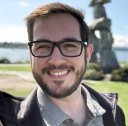
 Nick Dexter
· 3 previous affiliations
- Florida State UniversitySince 2022
- Assistant Professor · Since 2022
- Simon Fraser University2018–2022
- Postdoc · 2018–2022
- University of Tennessee at Knoxville2012–2018
- PhD student · 2012–2018
Research Overview
Nick Dexter focuses on the mathematical foundations of high-dimensional function approximation, with a particular emphasis on bridging the gap between theoretical guarantees and practical algorithms in scientific machine learning. His research integrates techniques from compressed sensing, sparse polynomial approximation, and deep learning to address challenges in uncertainty quantification and the solution of parameterized partial differential equations (PDEs). By developing rigorous sampling strategies and approximation frameworks, he seeks to improve the efficiency and reliability of data-driven models in scientific computing contexts where data acquisition is computationally expensive.
Research Trajectory
The evolution of Dexter’s work reflects a consistent focus on the computational complexity and stability of approximating functions in high-dimensional spaces. His early research, conducted during his doctoral studies and tenure at Oak Ridge National Laboratory, centered on the stochastic Galerkin finite element method (SGFEM). This work addressed the challenges of solving parameterized elliptic PDEs with random coefficients, specifically focusing on the sparsity of the resulting systems and the overall computational cost of fully discrete solutions. During this period, he established rigorous cost bounds for these approximations, laying the groundwork for his subsequent interest in sparse recovery and high-dimensional scaling.
Following his transition to postdoctoral research at Simon Fraser University, Dexter’s focus expanded to include compressed sensing and its applications in imaging and function approximation. He investigated total variation (TV) minimization for compressive imaging, deriving uniform recovery guarantees and theoretically optimal sampling strategies for Fourier and structured binary imaging. This phase of his career marked a shift toward understanding how random sampling and sparse reconstruction could be optimized for specific physical modalities, moving beyond traditional Galerkin projections toward more flexible, data-driven recovery methods.
In recent years, Dexter has increasingly focused on the intersection of deep learning and numerical analysis. This work is characterized by a critical examination of the "gap" between the theoretical existence of deep neural network (DNN) approximations and their practical performance when trained on limited scientific data. He has contributed to the development of "practical existence theory," which identifies specific architectures and training strategies—such as those involving Landscape Smoothing through Overparameterization—that allow DNNs to achieve near-optimal accuracy in data-starved regimes. His current research at Florida State University continues this trajectory, focusing on adaptive sampling techniques and unified frameworks that connect compressed sensing with modern generative models and Neural Operators for Resolution Independent Scientific Computing.
Current Directions
Dexter’s current research program is centered on enhancing the sample efficiency of deep learning models for scientific applications. A primary focus is the development of adaptive sampling strategies, such as Christoffel Adaptive Sampling, which utilize the properties of the model and the domain to select the most informative data points. This is particularly relevant for Operator Learning via Latent Coefficient Mappings, where the goal is to learn mappings between infinite-dimensional function spaces, such as the solution maps of PDEs.
He is also working toward a unified mathematical framework for learning with nonlinear model classes. This work aims to provide near-optimal guarantees for recovering unknown objects from arbitrary linear samples, effectively bridging the theoretical divide between classical compressed sensing and modern deep learning. By introducing new measures of variation and complexity, Dexter seeks to provide a rigorous foundation for the use of generative models and other nonlinear architectures in inverse problems and scientific data analysis.
Representative Work
In Explicit cost bounds of stochastic Galerkin approximations for parameterized PDEs with random coefficients, Dexter provides a detailed analysis of the computational complexity involved in SGFEM. The paper examines the total number of coupled finite element systems required to achieve a desired accuracy, accounting for both deterministic and stochastic domains. This work is foundational in establishing the trade-offs between sparsity and accuracy in high-dimensional PDE solvers.
Dexter’s contribution to compressive imaging is highlighted in Improved recovery guarantees and sampling strategies for TV minimization in compressive imaging. This research derives stable and robust recovery guarantees for image reconstruction from subsampled Fourier and Walsh-Hadamard measurements. By identifying optimal sampling distributions, the work demonstrates how to achieve high-fidelity reconstructions with a number of measurements that scales near-linearly with the sparsity of the image gradient.
The critical analysis of deep learning in scientific contexts is furthered in The Gap between Theory and Practice in Function Approximation with Deep Neural Networks. In this work, Dexter and his collaborator introduce a computational framework to evaluate DNNs against the standard principles of numerical analysis: stability, accuracy, and sample complexity. The paper highlights the discrepancies between what DNNs can theoretically approximate and what they actually achieve under standard training regimes, advocating for more rigorous approaches to scientific machine learning.
In CAS4DL: Christoffel Adaptive Sampling for function approximation via Deep Learning, Dexter serves as the senior author on a study proposing a novel adaptive sampling strategy for multivariate function approximation. By leveraging Christoffel functions to guide the selection of sample points, the method significantly improves the sample efficiency of DNNs when approximating smooth functions arising in uncertainty quantification. This work addresses the high cost of data acquisition in PDE-constrained problems.
Dexter continues to refine the theory of high-dimensional approximation in Optimal approximation of infinite-dimensional holomorphic functions II: recovery from i.i.d. pointwise samples. This paper bridges abstract approximation theory with the practical constraints of data-driven modeling, providing guarantees for the recovery of holomorphic functions from independent and identically distributed (i.i.d.) samples. The results are particularly relevant for problems where the underlying function possesses high-dimensional regularity.
Finally, in A Unified Framework for Learning with Nonlinear Model Classes from Arbitrary Linear Samples, Dexter presents a rigorous mathematical bridge between compressed sensing, active learning, and generative modeling. As the senior author, he introduces a framework that provides near-optimal guarantees for learning unknown objects from random linear measurements, offering a single theoretical roof for diverse learning problems and advancing the understanding of how nonlinear models can be reliably deployed in data-limited environments.
Profile updated
Loading new papers…
Other researchers whose papers cluster into the same research directions — a proxy for overlapping technical interests and shared intellectual neighborhoods.
See something wrong? Report a mistake