

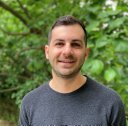
 Nicholas Tacca
· 3 previous affiliations
- BattelleSince 2021
- Researcher · Since 2021
- Path Robotics Inc.Current
- Current
- Technical University of Munich2018–2021
- MS student · 2018–2021
Research Overview
Nicholas Tacca focuses on the development of wearable neural interfaces and assistive technologies designed to restore motor function in individuals with neurological impairments. His work integrates high-density electromyography (HD-EMG), soft robotics, and real-time signal processing to bridge the gap between laboratory-based neurophysiology and practical, user-centric rehabilitation tools. By leveraging advanced control schemes and machine learning, Tacca’s research aims to decode human movement intention with high fidelity, enabling more intuitive control of prosthetics, exosuits, and functional electrical stimulation (FES) systems.
Research Trajectory
Tacca’s early research, beginning around 2021, centered on the hardware and feedback mechanisms necessary for wearable movement guidance. During this period, he contributed to the development of modular sensor networks that utilized inertial measurement units (IMUs) to track body posture. A key component of this work was the integration of distributed vibrotactile feedback, which provided real-time cues to users to correct or guide their movements. This phase of his work emphasized the importance of wearable form factors and closed-loop feedback in training and evaluating motor tasks.
By 2023, Tacca’s focus expanded into the domain of soft robotics and optimal control. Recognizing the limitations of traditional rigid exoskeletons, he investigated the use of soft materials in active exosuits to provide more comfortable and user-centric assistance. A significant challenge in this area is the nonlinear response of soft materials, which complicates the decoding of user intention and the minimization of interaction torque between the wearer and the device. Tacca addressed this by implementing model predictive control (MPC) strategies, demonstrating that sophisticated optimal control methods could be adapted to soft robotic systems to improve the seamlessness of human-device interaction.
From 2024 onward, Tacca’s work has increasingly focused on high-density EMG (HD-EMG) as a primary modality for both intention decoding and clinical assessment. This shift represents a move toward more granular neural interfacing, where the goal is not just to classify broad gestures but to estimate continuous joint angles and decompose muscle signals into individual motor unit activities. His recent contributions involve the development of "smart sleeves"—wearable arrays featuring up to 150 electrodes—that can function in real-world settings rather than being confined to controlled laboratory environments. This trajectory reflects a broader effort to create objective, data-driven biomarkers for stroke recovery and to enable high-precision control of neuroprosthetic devices.
Current Directions
Tacca’s current research is characterized by three primary pillars: real-time neural signal decomposition, the identification of clinical biomarkers for neurorehabilitation, and the optimization of intention-driven therapy.
A major current focus is the development of efficient algorithms for motor unit decomposition. Traditional methods for identifying individual motor neuron spikes from surface EMG are often computationally intensive and unsuitable for real-time applications. Tacca has worked on "find-and-filter" elimination strategies that significantly accelerate this process, aiming to provide the low-latency performance required for the real-time control of assistive neurotechnology. This work is particularly relevant for individuals with spinal cord injuries, where high-precision control of external devices is critical.
In the context of stroke rehabilitation, Tacca is investigating "neural control signatures" as a means of objectively measuring hand motor function. By analyzing the neural drive—the output of the spinal cord as captured by HD-EMG—his work seeks to correlate neurophysiological data with traditional clinical assessments. This approach aims to move beyond subjective scoring systems toward a more personalized, data-driven model of rehabilitation.
Furthermore, Tacca continues to explore the integration of HD-EMG with functional electrical stimulation (FES). By using decoded muscle signals to trigger stimulation in a task-oriented training environment, he is working toward systems that can facilitate clinically meaningful motor recovery in chronic stroke survivors. This research emphasizes the persistence of recovery, investigating how intention-driven therapy can lead to long-term functional improvements.
Representative Work
In Decomposing motor units through elimination for real-time intention driven assistive neurotechnology, Tacca serves as the lead author on a study introducing MUelim, an algorithm designed to decompose HD-EMG signals into individual motor unit activities. The research addresses a critical bottleneck in neuroprosthetics: the computational latency of signal decomposition. By combining joint diagonalization with an elimination strategy, the algorithm achieves a processing speed significantly faster than previous state-of-the-art methods, facilitating the real-time application of high-precision neural interfaces for individuals with spinal cord injuries.
Tacca’s work on control theory is exemplified in Model predictive control of a soft elbow exosuit reduces interaction torque. As the first author, he developed an MPC framework to manage the nonlinearities inherent in soft robotic exosuits. The study demonstrates that by predicting the interaction between the wearer and the suit, the controller can minimize resistive torques, thereby improving the comfort and efficiency of the assistive device. This work highlights Tacca’s ability to apply rigorous robotic control principles to the unique challenges of wearable, soft-material interfaces.
The development of hardware for high-fidelity human-computer interaction is detailed in Wearable high-density EMG sleeve for complex hand gesture classification and continuous joint angle estimation. In this research, Tacca contributed to the design and implementation of a wearable sleeve containing up to 150 electrodes. The system is capable of decoding 37 distinct hand gestures and continuously estimating 23 joint angles. The study also introduces methods for reducing the amount of user-specific calibration data required, a significant step toward making high-density EMG systems practical for daily use.
In the area of clinical assessment, Leveraging neural drive to assess hand motor function in individuals with chronic stroke presents a method for using HD-EMG to create objective biomarkers of motor impairment. By decomposing muscle signals into individual motor unit activities, the research establishes a "neural control signature" that correlates strongly with traditional clinical scores. This work suggests that high-density neural interfaces can provide a more nuanced and objective understanding of a patient’s functional state than is possible through visual observation alone.
Tacca’s contributions to therapeutic interventions are seen in Restoration of upper-extremity function after task-oriented, intention-driven functional electrical stimulation therapy using a wearable sleeve in adults with chronic stroke: a case series. As a second author, he participated in a study demonstrating that an HD-EMG-triggered FES sleeve can facilitate motor recovery in chronic stroke survivors. The research emphasizes the "intention-driven" aspect of the therapy, where the patient’s own neural signals are used to initiate the electrical stimulation, thereby reinforcing the neural pathways associated with movement.
Finally, Development of a wearable modular IMU sensor network suit with a distributed vibrotactile feedback for on-line movement guidance represents Tacca’s early work in wearable sensor networks. As a second author, he contributed to the fabrication of a wireless suit that uses IMUs for postural measurement and vibrotactile motors for feedback. This project established a foundation for his later work by exploring how wearable technology can be used to provide real-time guidance and evaluation for dynamic motor tasks.
Profile updated
Loading new papers…
Other researchers whose papers cluster into the same research directions — a proxy for overlapping technical interests and shared intellectual neighborhoods.
See something wrong? Report a mistake