

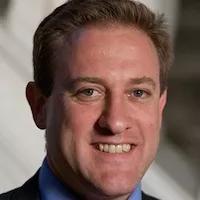
 Neil Burgess
· 1 previous affiliation
- University College LondonSince 2004
- Full Professor · Since 2004
Research Overview
Neil Burgess focuses on the neural mechanisms of spatial navigation and episodic memory, combining computational modeling with cognitive neuroscience. His long-standing work investigates how the hippocampus and related structures represent space and support relational memory. Recently, his research has expanded to explore how these biological principles can inform reinforcement learning and generative models of memory consolidation.
Research Trajectory
Beginning in the early 1990s, Burgess developed computational models that link the firing of individual hippocampal neurons to spatial navigation behavior. In Using Hippocampal 'Plane Cells' for Navigation, Exploiting Phase Coding (1992), he introduced a model demonstrating how phase-coded firing patterns synchronized with the theta rhythm could enable a simulated rat to navigate to goals and avoid obstacles after brief exploration. This approach was expanded in A model of hippocampal function (1994), which further formalized the computational role of these neural circuits in spatial memory.
Moving into the 2000s, his research increasingly examined how environmental features shape these spatial representations, contributing significantly to the research area of Geometric Anchoring of Neural Spatial Representations. With collaborators, he investigated how place cells adapt to changes in the physical environment in Long-term plasticity in hippocampal place-cell representation of environmental geometry (2002). This line of inquiry naturally led to questions about the stability and dynamics of these neural codes. In Attractor Dynamics in the Hippocampal Representation of the Local Environment (2005), the team provided evidence that spatial memories operate as attractor states; by exposing subjects to novel square and circular environments, they observed place cells abruptly and simultaneously switching between distinct representations as the environmental shape changed incrementally. He later participated in research tracking the ontogeny of these systems, showing in Development of the Hippocampal Cognitive Map in Preweanling Rats (2010) that directional and locational firing organization is present during a rat pup's initial exploration, while grid cell stability matures later in juvenility.
In the late 2010s, his work began to bridge biological spatial navigation with probabilistic modeling and reinforcement learning. In Probabilistic Successor Representations with Kalman Temporal Differences (2019), his group introduced a framework that tracks uncertainty in state predictions, allowing agents to flexibly update behavior when environmental transitions change without relying on costly memory replay. This synthesis of spatial and relational memory culminated in the proposal of the Tolman-Eichenbaum Machine. Detailed in The Tolman-Eichenbaum Machine: Unifying Space and Relational Memory through Generalization in the Hippocampal Formation (2020), this model posits that medial entorhinal cells form a structural basis for knowledge, which hippocampal cells link to sensory representations, thereby explaining how the brain generalizes across spatial and non-spatial tasks. Building on these transition structures, Prediction and generalisation over directed actions by grid cells (2021) extended the eigenbasis prediction model using Fourier analysis to show how grid codes can predict future state distributions over arbitrary translation-invariant directed actions.
Throughout 2022, his lab focused heavily on state representation and the exploration-exploitation dilemma in artificial agents. In Learning State Representations via Retracing in Reinforcement Learning, they proposed a self-supervised approach that enforces cycle-consistency between original and retraced states to improve sample efficiency and downstream task performance. Addressing the tension between exploiting known rewards and exploring novel states, his group developed new arbitration frameworks. SEREN: Knowing When to Explore and When to Exploit highlighted the limitations of traditional curiosity bonuses that force a single agent to juggle conflicting objectives. Concurrently, Impulse Control Arbitration for A Dual System of Exploitation and Exploration introduced SEREX, a plug-and-play framework that models this trade-off systematically as a game between an exploiter agent and an explorer agent.
Most recently, his work has explored the intersection of biological memory consolidation and modern generative artificial intelligence, contributing to the broader area of Generative Replay for Continual Learning. In A generative model of memory construction and consolidation (2024), he proposed a teacher-student computational framework where the hippocampus trains the neocortex via offline replay, balancing specific episodic details with general semantic knowledge. This concept was further linked to AI architectures in Hippocampo-neocortical interaction as compressive retrieval-augmented generation (2024), which framed the consolidation of sequential experience as analogous to retrieval-augmented generation and generative pre-training. Extending these insights into offline processing, Modelling the control of offline processing with reinforcement learning (2025) introduced a meta-controller that uses reinforcement learning to manage simulated sleep, allowing agents to adaptively choose between replaying real memories, building internal world models, or practicing on synthetic data. Finally, Cognitive Maps in Language Models: A Mechanistic Analysis of Spatial Planning (2025) investigated how large language models solve spatial navigation tasks, revealing that models trained on passive exploration develop robust, map-like representations of space distinct from those learned via goal-directed planning.
Current Directions
Recent work investigates the mechanistic parallels between biological memory systems and advanced artificial intelligence. The most recent papers in the evidence address how the hippocampus and neocortex interact to consolidate sequential experiences, framing these processes through the lens of generative pre-training and retrieval-augmented generation. This includes modeling offline processing—akin to biological sleep—where reinforcement learning meta-controllers dictate whether an agent should replay past experiences, build internal world models, or train on synthetic data to optimize future performance. Additionally, current research explores the emergence of cognitive maps within large language models, analyzing how different spatial learning paradigms, such as passive foraging versus goal-directed planning, fundamentally shape the underlying algorithms these models use to navigate and represent structured environments.
Profile updated
Loading new papers…
Other researchers whose papers cluster into the same research directions — a proxy for overlapping technical interests and shared intellectual neighborhoods.
See something wrong? Report a mistake