

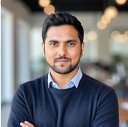
 Nazmul Karim
6 previous affiliations
- Robert Bosch (Germany)2024–2025
- Researcher · 2024–2025
- University of Central Florida2018–2023
- Graduate Research Assistant · 2018–2023
- Phd · 2018–2020
- Applied Scientist Intern · 2023
- Research Intern · 2022
- Bangladesh University of Business and Technology2016–2018
- Lecturer · 2016–2018
- Undergrad student · 2011–2016
Research Overview
Nazmul Karim focuses on the robustness, integrity, and generative capabilities of deep neural networks, with a particular emphasis on diffusion-based models for multi-dimensional content editing. His research trajectory has evolved from investigating adversarial vulnerabilities and label noise in supervised learning to developing efficient frameworks for text-driven editing of video, 3D, and 4D scenes. Karim’s work frequently addresses the challenges of consistency—whether in the context of class-wise selection in noisy datasets or spatial and temporal coherence in generative modeling.
Research Trajectory
Karim’s early research focused on the security and reliability of deep learning systems, specifically addressing the threat of Trojan (or backdoor) attacks. In this period, his work centered on the detection of malicious triggers inserted into training pipelines, which cause models to behave predictably only when specific, attacker-defined patterns are present. By shifting the focus from specific trigger types to the intrinsic properties of the neural networks themselves, this research sought to create more generalized detection mechanisms that do not rely on prior knowledge of the attack vector.
Following this work on model integrity, Karim transitioned into the domain of robust supervised learning, specifically addressing the problem of label noise. This phase of his research identified a critical flaw in existing sample selection mechanisms: the tendency of models to disproportionately select "easy" or fast-learnable classes while rejecting "harder" ones, leading to significant class imbalance and poor generalization. To mitigate this, he developed methods that combine uniform class selection with contrastive learning, ensuring that the model maintains a representative distribution of data even in the presence of high noise levels.
Since 2023, Karim has increasingly focused on generative AI and the adaptation of diffusion models. His work in this area is characterized by an interest in computational efficiency and the extension of 2D generative capabilities into higher dimensions. He has developed techniques for adapting Text-to-Image (T2I) models for video and 3D scene editing, moving away from expensive full-parameter retraining toward more efficient adaptation methods, such as fine-tuning spectral shifts in the parameter space. His most recent work extends these principles to 4D (spatio-temporal) editing, focusing on the mathematical initialization of noise to ensure that generated content remains consistent across both different camera viewpoints and over time.
Current Directions
Karim’s current research is primarily situated at the intersection of generative diffusion models and multi-dimensional scene reconstruction. A major theme in his recent work is the challenge of "zero-shot" or training-free editing, where the goal is to modify complex 3D or 4D environments using text prompts without requiring large-scale, task-specific datasets. This involves developing sophisticated noise-control mechanisms and latent space manipulations that can preserve the underlying geometry and texture of a scene while applying localized edits.
Another significant area of focus is the maintenance of consistency in generative tasks. In the context of 4D editing, this involves designing correlated noise structures that link frames over time and across different views. By ensuring that each frame depends meaningfully on its predecessors and its spatial neighbors, Karim’s frameworks attempt to solve the flickering and "drifting" artifacts common in naive video and 3D generation.
Representative Work
In the area of model security, Karim contributed to the development of Odyssey: Creation, Analysis and Detection of Trojan Models. This work addresses the challenge of detecting Trojaned networks where the attacker’s triggers are unknown. The research proposes a detector based on the analysis of intrinsic deep neural network (DNN) properties that are fundamentally altered during the Trojan insertion process. By moving away from the strong assumptions about trigger types that characterized previous detectors, this work provides a more robust framework for ensuring the integrity of models trained on potentially compromised pipelines.
Addressing the limitations of supervised learning under imperfect conditions, Karim led the development of UNICON: Combating Label Noise Through Uniform Selection and Contrastive Learning. The core contribution of this work is the observation that standard sample selection methods for noisy labels often fail by over-selecting easy-to-learn classes. UNICON introduces a uniform selection mechanism that balances the representation of classes, paired with contrastive learning to improve the feature representations of the selected clean subset. This approach significantly improves generalization performance when training on datasets with high levels of annotation error.
In the domain of video generation, Karim proposed SAVE: Spectral-Shift-Aware Adaptation of Image Diffusion Models for Text-guided Video Editing. Recognizing that full adaptation of T2I models for video is computationally prohibitive, SAVE introduces a framework that fine-tunes the spectral shift of the parameter space rather than the parameters themselves. By utilizing spectral decomposition, the method achieves efficient per-video adaptation, allowing for high-quality text-guided video editing with a fraction of the traditional computational overhead.
Karim’s work on 3D content is exemplified by Free-Editor: Zero-Shot Text-Driven 3D Scene Editing. This research tackles the scarcity of large-scale 3D editing datasets by enabling zero-shot editing of 3D scenes. The framework addresses the difficulty of achieving consistent editing effects across multiple synchronized images of the same scene. By leveraging existing T2I diffusion models without retraining, Free-Editor provides a versatile method for 3D scene manipulation that maintains multi-view consistency, a persistent challenge in the field of neural radiance fields and 3D reconstruction.
Expanding into temporal dimensions, Karim co-authored PSF-4D: A Progressive Sampling Framework for View Consistent 4D Editing. This work introduces a progressive sampling framework designed to ensure both temporal and multi-view consistency in 4D scene editing. The method utilizes a correlated Gaussian noise structure that links frames over time, ensuring that each frame is temporally coherent with its predecessors. Additionally, a cross-view noise model is implemented to maintain spatial consistency across different camera angles, representing a significant step forward in the intuitive control of 4D generative content.
Karim also participated in the development of LatentEditor: Text Driven Local Editing of 3D Scenes, which focuses on the precise and locally controlled editing of neural fields. This work utilizes denoising diffusion models to embed real-world scenes into a latent space, facilitating faster and more adaptable editing compared to traditional NeRF-based methods. The framework introduces a delta score to enhance editing precision, allowing for localized modifications that do not disrupt the global structure of the scene.
Profile updated
Loading new papers…
Other researchers whose papers cluster into the same research directions — a proxy for overlapping technical interests and shared intellectual neighborhoods.
See something wrong? Report a mistake