

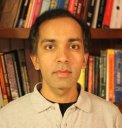
 Nayyar Zaidi
· 6 previous affiliations
- Deakin UniversitySince 2020
- Senior Lecturer · Since 2020
- DataSmelly Pty Ltd2018–2020
- Director and Founder · 2018–2020
- Monash University2011–2020
- Adjunct Research Fellow · 2018–2020
- Research Fellow · 2011–2018
- Lecturer · 2013–2014
- Postdoctoral Research Fellow · 2014–2011
- Trusting Social2018–2019
- Research Scientist · 2018–2019
- Palmchip2005–2007
- Design Engineer · 2005–2007
- University of Engineering and Technology Lahore2001–2005
- Bachelor of Science (BSc), Computer Science · 2001–2005
Research Overview
Nayyar Zaidi focuses on knowledge-guided machine learning, multimodal medical image analysis, and adversarial robustness in deep neural networks. His trajectory spans from early work in high-dimensional feature engineering and evolutionary optimization to recent advancements in certified defense mechanisms for computer vision. Currently, he investigates stochastic architectures that bridge the gap between empirical performance and provable security in medical and natural imaging domains.
Research Trajectory
Zaidi’s early research addressed the fundamental challenges of feature importance and similarity measurement in complex datasets. In Metric learning and scale estimation in high dimensional machine learning problems with an application to generic object recognition (2017), he explored how relevance determination can be used to tune metric learning for high-dimensional machine learning problems. By estimating the relative importance of features that are not trivially related, this work demonstrated how algorithms can more effectively discover patterns and predict labels, applying these techniques specifically to generic object recognition.
Moving into the early 2020s, his focus expanded to complex optimization problems, particularly resource-constrained scheduling under uncertainty. This work contributed significantly to the research area of Scheduling for Stochastic Environments and the broader field of Adaptive Parameter Control in Evolutionary Computation. He investigated swarm intelligence and evolutionary algorithms, detailing a surrogate-assisted ant colony optimization approach in Surrogate-assisted population based ACO for resource constrained job scheduling with uncertainty. He continued to refine these metaheuristic strategies in Adaptive population-based simulated annealing for resource constrained job scheduling with uncertainty, addressing the challenges inherent in the research direction of Escaping Local Optima in Metaheuristic Optimization and advancing the area of Adaptive Operator Selection for Evolutionary Optimization.
By 2024, Zaidi’s trajectory increasingly emphasized deep learning architectures and computer vision. With collaborators, he applied Neural Architecture Search (NAS) to agricultural domains in Fruit Classification System with Deep Learning and Neural Architecture Search. Utilizing the YOLO-NAS model, this research demonstrated how moving away from manually designed neural networks toward automated architecture discovery could achieve exceptionally high precision across multiple object categories.
This interest in advanced neural architectures naturally extended into the medical domain, where reliability and uncertainty quantification are critical. He led the development of DRIFA-Net, a multimodal fusion framework detailed in Multimodal Fusion Learning with Dual Attention for Medical Imaging. By employing a dual attention strategy that independently refines local features within single imaging modalities (such as MRI and CT) while learning shared global representations, this work provided crucial uncertainty scores alongside high classification accuracy. This research aligns with the broader direction of Generalist Foundation Models for Universal Medical Image Representation and the area of Backbone Agnostic Modular Enhancements. He further consolidated these themes in Towards building robust models for unimodal and multimodal medical imaging data, focusing on the structural integrity of predictive models in healthcare applications.
Concurrently, Zaidi has pursued knowledge-guided machine learning, integrating structured reasoning into deep learning pipelines. This is exemplified by Knowledge-guided object detection via Bayesian networks and knowledge graphs (KGBNCNet), which leverages probabilistic graphical models and explicit knowledge structures to enhance the contextual understanding and accuracy of object detection systems.
Most recently, his work has tackled the critical vulnerability of deep neural networks to adversarial attacks, focusing on bridging the gap between empirical performance and mathematically provable security. He participated in the development of the HySCAN framework in Does a Hybrid Space-Aware Randomized Defense Improve Empirical and Certified Adversarial Robustness?. This defense mechanism intelligently injects attention-gated randomness into both a model's weights and its internal features, boosting robustness across natural and medical imaging datasets without sacrificing accuracy on clean data. Building on these stochastic mechanisms, he directed research on the HyCAS architecture in CERTIFIED VS. EMPIRICAL ADVERSARIAL ROBUSTNESS VIA HYBRID CONVOLUTIONS WITH ATTENTION STOCHASTICITY. This approach introduces controlled randomness into a Lipschitz-constrained deterministic backbone, securing internal representations and achieving strong certified $\ell_2$ robustness alongside empirical $\ell_\infty$ robustness.
Current Directions
The most recent papers in the evidence indicate a strong focus on the security, reliability, and robustness of deep learning systems, particularly in sensitive domains like medical imaging. Recent work investigates hybrid stochastic architectures that provide certified adversarial robustness while maintaining high empirical accuracy on unperturbed data. By injecting controlled, attention-gated randomness into deterministic network backbones, this research seeks to resolve the traditional trade-off between provable mathematical guarantees and practical model performance.
Additionally, Zaidi continues to explore multimodal fusion techniques that integrate dual attention mechanisms and uncertainty quantification, ensuring that complex predictive models remain both highly accurate and clinically reliable. His ongoing research also addresses the integration of external knowledge structures, such as Bayesian networks and knowledge graphs, to guide and constrain deep learning models in complex object detection tasks.
Profile updated
Loading new papers…
Other researchers whose papers cluster into the same research directions — a proxy for overlapping technical interests and shared intellectual neighborhoods.
See something wrong? Report a mistake