

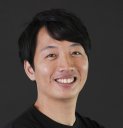
 Naoki Murata
· 3 previous affiliations
- Sony AISince 2017
- Researcher · Since 2017
- Researcher · 2023–2026
- University of Tsukuba2025–2026
- PhD student · 2025–2026
- The University of Tokyo2011–2017
- MS student · 2015–2017
- Undergrad student · 2011–2015
Research Overview
Naoki Murata focuses on generative modeling, inverse problem solving, and audio signal processing. His early work in spatial acoustics and noise control transitioned into extensive research on diffusion models for both continuous and discrete domains. Currently, his research addresses machine unlearning, training data attribution, and the mathematical foundations of score-based generative processes.
Research Trajectory
Murata's early research concentrated on acoustic signal processing and spatial sound control. He developed a method for Sparse Representation Using Multidimensional Mixed-Norm Penalty With Application to Sound Field Decomposition, which introduced a penalty framework to control sparsity across multiple dimensions in acoustic array processing. Building on this foundation in spatial acoustics, he subsequently proposed a Fast Convergent Method for Active Noise Control Over Spatial Region with Causal Constraint, addressing the challenge of maintaining control filter causality while achieving rapid convergence in time-domain adaptive methods.
By 2022, his focus expanded into deep generative modeling. He collaborated on SQ-VAE: Variational Bayes on Discrete Representation with Self-annealed Stochastic Quantization, a framework that replaces heuristic training in VQ-VAEs with a principled Variational Bayes approach to prevent codebook collapse. Concurrently, he led the application of diffusion models to audio processing, introducing a novel method for Unsupervised vocal dereverberation with diffusion-based generative models. This work demonstrated how unknown reverberation patterns could be estimated using only clean dry vocals for training, contributing to the broader research direction of Restoring Images with Unknown Complex Degradations and its audio equivalents.
In 2023, Murata significantly advanced the use of diffusion models for solving inverse problems. He introduced GibbsDDRM: A Partially Collapsed Gibbs Sampler for Solving Blind Inverse Problems with Denoising Diffusion Restoration, a framework that simultaneously estimates clean data and unknown degradation processes without task-specific fine-tuning. He also developed Manifold Preserving Guided Diffusion, a training-free approach that constrains guidance gradients to the data manifold's tangent space to accelerate conditional image generation. During this period, he participated in foundational work on score-based models, co-authoring FP-Diffusion: Improving Score-based Diffusion Models by Enforcing the Underlying Score Fokker-Planck Equation. This research improved density estimation and physical conservativity, aligning with research areas such as Fokker-Planck Regularization for Consistent Stochastic Dynamics, Conservative Vector Fields for Generative and Inverse Modeling, and The Likelihood Gap in Generative Modeling. Returning to audio applications, he proposed Diffiner: A Versatile Diffusion-based Generative Refiner for Speech Enhancement, a plug-and-play model that leverages clean speech priors to restore distorted audio.
Murata's work in 2024 explored generative editing and the mathematical properties of generative models. He contributed to MusicMagus: Zero-Shot Text-to-Music Editing via Diffusion Models, which enables the modification of specific musical attributes in the latent space while enforcing consistency. He also collaborated on Consistency Trajectory Models: Learning Probability Flow ODE Trajectory of Diffusion, advancing the understanding of probability flow in diffusion, and SAN: Inducing Metrizability of GAN with Discriminative Normalized Linear Layer, which investigated the metric properties of Generative Adversarial Networks.
In 2025, his research tackled the integration of discrete diffusion with continuous spaces and the emerging challenge of machine unlearning. He developed G2D2: Gradient-Guided Discrete Diffusion for Inverse Problem Solving, a method that approximates true posterior distributions to apply discrete diffusion priors to continuous linear inverse problems. Addressing model safety and copyright concerns, he introduced Distill, Forget, Repeat: A Framework for Continual Unlearning in Text-to-Image Diffusion Models. This approach utilizes generative distillation and context mapping to sequentially erase targeted concepts without degrading overall model performance.
Current Directions
The most recent papers in the evidence indicate a dual focus on the theoretical unification of generative processes and the practical challenges of model attribution and refinement. Recent work investigates the mathematical connections between different generative paradigms, as seen in A Unified View of Score-Based and Drifting Models, which bridges non-parametric drifting models with high-dimensional score-matching. Concurrently, Murata continues to advance audio processing, contributing to the Diffusion-based Signal Refiner for Speech Enhancement and Separation to improve the perceptual quality of separated speech signals.
A major current focus is the intersection of machine unlearning and data transparency. He recently developed GUDA: Counterfactual Group-wise Training Data Attribution for Diffusion Models via Unlearning, a framework that leverages unlearning techniques to efficiently identify how specific groups of training data influence a diffusion model's outputs. This aligns with his broader interest in subtractive mechanisms and robust model adaptation, providing scalable methods for understanding and editing the knowledge embedded within large generative models.
Profile updated
Loading new papers…
Other researchers whose papers cluster into the same research directions — a proxy for overlapping technical interests and shared intellectual neighborhoods.
See something wrong? Report a mistake