

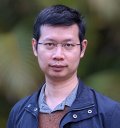
 Nan Ye
· 1 previous affiliation
- The University of QueenslandSince 2018
- Senior Lecturer · Since 2024
- Lectuer · 2018–2023
Research Overview
Nan Ye focuses on the development of computationally efficient algorithms for decision-making under uncertainty, structured prediction, and robust machine learning. Their work spans several key areas of artificial intelligence, including partially observable Markov decision processes (POMDPs), Bayesian active learning, and reinforcement learning. A central through-line in Ye’s research is the pursuit of theoretical guarantees and algorithmic efficiency in complex, high-dimensional environments, ranging from natural language processing to autonomous vehicle navigation.
Research Trajectory
The early stages of Ye’s research, beginning around 2009, were primarily concerned with structured prediction and sequence labeling. During this period, the focus was on addressing the computational bottlenecks associated with high-order dependencies in models like Conditional Random Fields (CRFs). This work addressed challenges in Adapting Language Models to Unseen Textual Domains by enabling the use of longer-distance label dependencies without the typical exponential increase in inference complexity.
By 2013, Ye’s interests shifted toward planning under uncertainty, specifically within the framework of POMDPs. This transition marked a move from static prediction tasks to dynamic decision-making environments. A significant contribution during this phase was the development of online lookahead search algorithms that could handle the "curse of dimensionality" and the "curse of history" inherent in POMDPs. This research was particularly relevant to Informed Search Space Restriction for Optimal Path Planning, providing methods to focus computational resources on the most promising regions of a belief tree. This work found practical application in autonomous systems, such as intention-aware driving in crowded environments.
In the mid-2010s, Ye expanded their focus to include the robustness and reliability of Bayesian methods. This involved investigating how active learning and decision-making systems behave when the underlying models or priors are incorrectly specified. This line of inquiry addressed Robustness to Prior Misspecification in Bayesian Learning, establishing theoretical conditions under which algorithms remain effective despite prior misspecification. During this time, Ye also contributed to approximate inference techniques, such as tensor-based belief propagation, to improve the scalability of graphical models.
In recent years, Ye’s work has evolved to address more nuanced challenges in supervised and reinforcement learning. This includes the development of discriminative particle filters for reinforcement learning in partially observable environments and new approaches to Positive-Unlabeled (PU) learning. Most recently, Ye has investigated the problem of spurious correlations in deep learning, contributing to methods for Mitigating Confirmation Bias in Unsupervised Domain Adaptation and ensuring model validation remains reliable even when group labels are unavailable.
While some thematic evidence suggests involvement in behavioral research and Uncovering Psychological Mechanisms through Bootstrapped Mediation, as well as Bridging the Knowledge Practice Gap in Health Interventions, the primary corpus of Ye’s technical work remains centered on the mathematical and algorithmic foundations of machine learning and robotics.
Representative Work
Conditional Random Fields with High-Order Features for Sequence Labeling In this first-author paper, Ye addresses the computational complexity of sequence labeling when long-distance dependencies are involved. While traditional CRFs typically only exploit dependencies between adjacent labels, Ye demonstrates that efficient inference is possible for high-order features if the number of distinct label sequences in the features is small. This work provided a path toward more expressive sequence models that remain computationally tractable for practical NLP tasks.
DESPOT: Online POMDP Planning with Regularization As a second author, Ye contributed to the development of the Determinized Sparse Partially Observable Tree (DESPOT), a breakthrough in online POMDP planning. The algorithm alleviates the computational burden of planning under uncertainty by limiting search to a set of sampled scenarios. The "Regularized DESPOT" (R-DESPOT) introduced in this work provides a principled way to balance the size of the policy against the accuracy of value estimates, significantly improving the scalability of POMDP solvers for real-time applications.
Robustness of Bayesian Pool-Based Active Learning Against Prior Misspecification In this second-author study, Ye explores the theoretical limits of active learning when the researcher's prior distribution is incorrect. The paper proves that approximate active learning algorithms can maintain performance guarantees if the utility function is Lipschitz continuous in the prior. This contribution is critical for the deployment of Bayesian systems in real-world scenarios where an exact prior is rarely known, providing a mathematical basis for choosing robust utility functions.
Tensor Belief Propagation Serving as the senior author, Ye proposed a new approximate inference algorithm for graphical models. By approximating the messages passed in the junction tree algorithm using tensor representations, this work sought to overcome the exponential complexity of exact inference in models with high treewidth. This research represents a significant effort to bring the efficiency of tensor methods to the domain of probabilistic graphical models.
Discriminative Particle Filter Reinforcement Learning for Complex Partial observations In this senior-author paper, Ye introduces Discriminative Particle Filter Reinforcement Learning (DPFRL). The framework integrates a differentiable particle filter directly into a neural network policy, allowing for explicit reasoning about partial observations over time. By training the discriminative update end-to-end, the model maintains a belief state that is optimized specifically for decision-making, rather than just state estimation, improving performance in complex visual environments.
Positive-Unlabeled Learning using Random Forests via Recursive Greedy Risk Minimization As the senior author, Ye developed new random forest algorithms for the Positive-Unlabeled (PU) learning setting, where only positive and unlabeled data are available. The work reinterprets decision tree algorithms as recursive greedy risk minimization processes and extends this logic to the PU setting. This research revitalized tree-based methods for PU learning, which had been largely overshadowed by deep learning approaches, by providing a direct optimization framework for PU risks.
Current Directions
Ye’s recent work continues to push the boundaries of model robustness and adaptability. A significant current focus is the challenge of spurious correlations in deep learning. In Group-Label-Free Validation for Spuriously Correlated Data, Ye and colleagues address the problem of model selection when group annotations (which identify examples without spurious correlations) are missing. This research introduces modules like SIEVE to enable hyperparameter tuning and validation without the need for costly manual annotations.
Additionally, Ye is involved in advancing the state of graph-based learning. Recent participation in research on Inductive Graph Few-shot Class Incremental Learning explores how Graph Neural Networks (GNNs) can learn novel classes from newly emerging nodes without suffering from catastrophic forgetting of previous data. This work is particularly relevant for dynamic, evolving networks where data arrives sporadically and historical data cannot be fully stored.
Ye also continues to refine ensemble methods for specialized learning tasks, such as the development of boosting algorithms for PU learning. These efforts aim to bring the strong empirical performance of traditional supervised learning techniques, like AdaBoost, to more constrained data environments, ensuring that machine learning models remain effective even when ground-truth negative labels are entirely absent.
Profile updated
Loading new papers…
Other researchers whose papers cluster into the same research directions — a proxy for overlapping technical interests and shared intellectual neighborhoods.
See something wrong? Report a mistake