

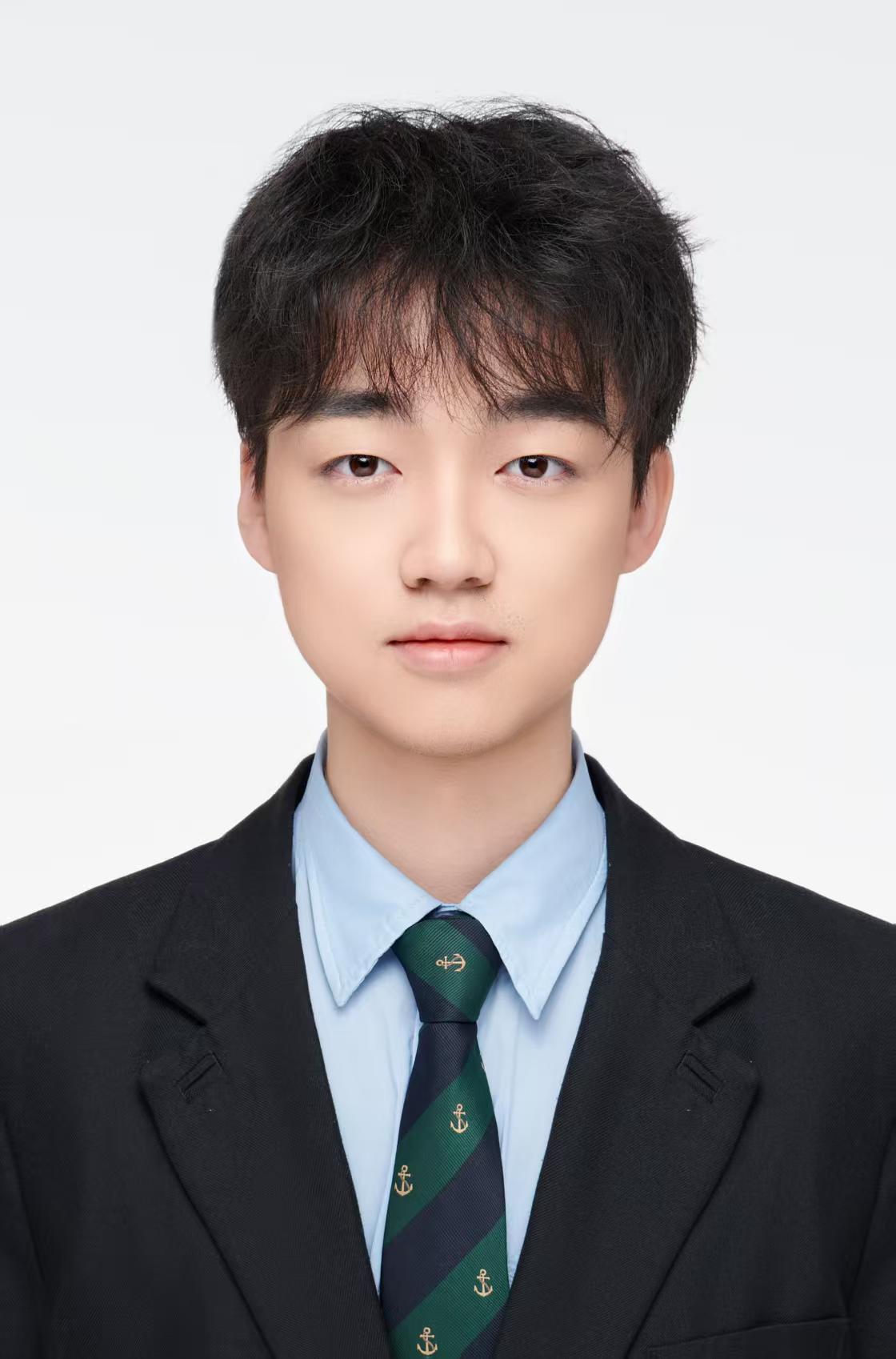
 Nan Chen
· 3 previous affiliations
- PhD student · 2026–2030
- Current
- MS student · 2023–2026
- Xi'an Jiaotong University2019–2023
- Undergrad student · 2019–2023
2 other authors named Nan Chen: Nan Chen (Johns Hopkins University · 7 papers), Nan Chen (Shanghai Jiao Tong University · 1 paper)
Research Overview
Nan Chen focuses on controllable image generation, video synthesis, and diffusion model personalization. His early work addresses the challenges of subject-driven customization and fine-grained visual control in generative networks. More recently, his research investigates temporal consistency and sparse attention mechanisms for long-form video and animation generation.
Research Trajectory
In 2024, Chen began investigating the area of Disentangling Subject Identity for Diffusion Model Personalization. A central challenge in this domain is ensuring that generative models capture a subject's intrinsic traits without overfitting to irrelevant background, view, or pose details—a common flaw in self-reconstructive approaches. To address this, he introduced CustomContrast: A Multilevel Contrastive Perspective For Subject-Driven Text-to-Image Customization. This work mitigates the trade-off between visual similarity and prompt editability, advancing the broader field of Balancing Fidelity and Editability in Text-to-Image Personalization and contributing to the domain of Hierarchical Semantic Control in Generative Networks.
Expanding on themes of precise visual control, Chen collaborated on several projects in 2025 aimed at refining generative outputs across different modalities. He participated in the development of Pro3D-Editor: A Progressive-Views Perspective for Consistent and Precise 3D Editing, which utilizes a progressive-views approach to maintain spatial consistency during text-guided 3D object modification. By automatically identifying the most relevant viewpoint for an edit and propagating those changes using a Mixture-of-View-Experts architecture, the method achieves highly precise 3D modifications. In the domain of text rendering, he contributed to HDGlyph: A Hierarchical Disentangled Glyph-Based Framework for Long-Tail Text Rendering in Diffusion Models. This framework separates text rendering from background synthesis across the pixel, noise, and latent levels to improve the generation of rare languages and fine-print text. Additionally, he co-authored Skin-Adapter: Fine-Grained Skin-Color Preservation for Text-to-Image Generation, further demonstrating a focus on preserving specific, sensitive visual attributes in diffusion models.
Concurrently, Chen's research extended into the temporal domain, specifically focusing on the research direction of Temporal Consistency for Video Colorization and Animation. He developed LongAnimation: Long Animation Generation with Dynamic Global-Local Memory, a framework designed to resolve color drift in automated animation colorization. By integrating a dynamic global-local memory mechanism and a specialized color consistency reward, this approach enables the generation of highly consistent, extended animation sequences, significantly increasing the average frame count over previous methods.
Building on the challenges of long-form temporal generation, Chen's subsequent work addresses the computational bottlenecks of scaling video models. He participated in the design of MoGA: Mixture-of-Groups Attention for End-to-End Long Video Generation. This 2026 research introduces a sparse attention mechanism with a lightweight, learnable token router for Diffusion Transformers. By replacing coarse block-based estimation, MoGA facilitates the end-to-end generation of minute-long, multi-shot videos while maintaining semantic and character consistency across hundreds of thousands of tokens.
Current Directions
The most recent papers in the evidence indicate a strong focus on scaling and refining controllable video generation. Current work investigates methods for maintaining long-term temporal consistency and semantic coherence in extended video sequences. This includes exploring sparse attention mechanisms and dynamic memory architectures to overcome the computational constraints of self-attention in Diffusion Transformers, enabling the efficient, end-to-end synthesis of high-fidelity, multi-shot videos. Additionally, ongoing research continues to refine fine-grained visual control, ensuring that generative models can accurately render specific attributes, identities, and text across both image and video modalities.
Profile updated
Loading new papers…
Other researchers whose papers cluster into the same research directions — a proxy for overlapping technical interests and shared intellectual neighborhoods.
See something wrong? Report a mistake