

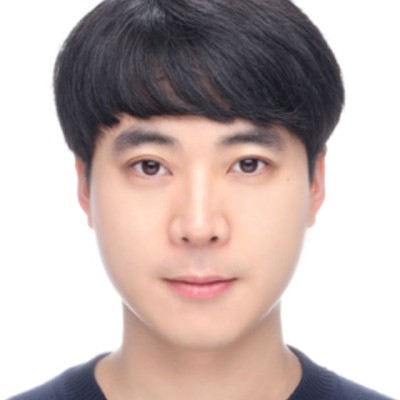
 Nakyeong Yang
· 6 previous affiliations
- Postdoctoral Research Scientist · Since 2026
- Seoul National University2021–2026
- PhD student · 2021–2026
- Research Internship · 2025
- 어도비2023–2025
- Research Collaborator · 2023–2025
- LG AI Research (South Korea)2023–2024
- Research Internship · 2023–2024
- Ajou University2015–2019
- Bachelor's degree, Electronic Business, Software Engineering, Business Administration · 2015–2019
Research Overview
Nakyeong Yang focuses on the internal mechanisms of large language models, emphasizing machine unlearning, surgical bias mitigation, and inference-time optimization. Yang's work investigates how models encode knowledge and biases, developing techniques to selectively prune or edit specific neural pathways. Recently, this research has concentrated on robust data erasure and the behavioral alignment of multi-turn agents.
Research Trajectory
Yang’s early research explored the interpretability and efficiency of neural networks. In 2022, they introduced a novel counterfactual explanation method in Deriving Explainable Discriminative Attributes Using Confusion About Counterfactual Class. This work proposed Discriminative Gradients (DiscGrad) to isolate key attributes by analyzing both predicted and counterfactual classes, ensuring that explanations highlight only the most relevant features for decision-making. Building on the theme of isolating specific neural functions, Yang subsequently addressed model efficiency in Task-specific Compression for Multi-task Language Models using Attribution-based Pruning. This training-free approach identified and pruned task-specific neurons, allowing for faster inference while preserving pre-trained knowledge.
In 2024, Yang expanded on the concept of neuron-level interventions to optimize large language models at inference time. This led to the development of the Decomposition of Experts (DoE) framework, detailed in Unplug and Play Language Models: Decomposing Experts in Language Models at Inference Time. By dynamically pruning task-irrelevant neurons during inference, the framework achieved significant speedups without sacrificing accuracy. This mechanism was further explored and validated in SKIP: Skill-Localized Prompt Tuning for Inference Speed Boost-Up.
Beyond efficiency, Yang applied surgical neuron interventions to address model fairness, contributing significantly to the research direction of Localizing and Eliminating Bias Neurons in Deep Models. In Mitigating Biases for Instruction-following Language Models via Bias Neurons Elimination, Yang and collaborators introduced CRISPR, a technique that reduces social bias and improves instruction-following consistency by pruning a minimal number of identified bias neurons. This work also advanced the broader area of Localizing and Editing Internal Bias in Language Models, demonstrating that fairness can be improved without resource-intensive retraining.
During this period, Yang also investigated the robustness and faithfulness of model reasoning across different modalities. In the domain of video retrieval, they proposed the MVMR task in A New Framework for Evaluating Faithfulness of Video Moment Retrieval against Multiple Distractors to test whether models exhibit overconfidence when presented with false video contexts. Returning to text-based reasoning, Yang examined the impact of role-playing prompts in Persona is a Double-edged Sword: Enhancing the Zero-shot Reasoning by Ensembling the Role-playing and Neutral Prompts. This research highlighted how persona assignments can sometimes degrade reasoning and proposed the Jekyll & Hyde framework to ensemble solutions from both persona-based and neutral prompts for more robust outputs.
Moving into 2025, Yang’s focus shifted heavily toward machine unlearning, specifically addressing the area of Preserving Model Utility During Machine Unlearning. A major challenge in this field is ensuring that unlearning methods genuinely remove information rather than merely masking it. In FaithUn: Toward Faithful Forgetting in Language Models by Investigating the Interconnectedness of Knowledge, Yang investigated "superficial unlearning," where models fail to erase interconnected knowledge or unintentionally degrade irrelevant capabilities, introducing a new benchmark for real-world question-answering settings.
This critical view of unlearning was extended to multimodal systems in Rethinking Post-Unlearning Behavior of Large Vision-Language Models. Observing that standard unlearning often leaves models producing hallucinations or stubborn refusals, Yang developed Post-Unlearning Behavior Guidance (PUBG) to actively replace erased private data with informative, visually grounded descriptions. Alongside unlearning, Yang continued to refine inference strategies for generative tasks. In Avoidance Decoding for Diverse Multi-Branch Story Generation, they addressed the problem of semantic mode collapse, introducing a training-free decoding strategy that dynamically penalizes similarity to prior outputs to foster narrative diversity.
Yang’s most recent work in 2026 deepens the investigation into the internal mechanisms of model behavior and data erasure. Building on prior unlearning research, Erase or Hide? Suppressing Spurious Unlearning Neurons for Robust Unlearning demonstrated that many unlearning techniques fail because they hide sensitive information behind inhibitor neurons. To counter this, Yang introduced SSIUU, an attribution-guided regularization approach that prevents the formation of these spurious neurons, ensuring robust deletion of underlying knowledge.
Applying surgical intervention techniques to agentic workflows, Yang explored multi-turn anchoring bias in Tool Selection Bias Amplifies in Multi-turn User–Agent Interactions. This research identified how LLM agents stubbornly reuse previously selected tools and proposed TBFAIR, a strategy that suppresses bias-inducing neurons to correct the behavior without impairing tool-use capabilities. Finally, in Personalized Privacy Control in LLMs via Attention Head Intervention, Yang contributed to the development of REPAIR, an inference-time method that steers specific privacy-aware attention heads, allowing models to adhere strictly to personalized privacy policies without retraining.
Current Directions
The most recent papers in the evidence point to a sustained focus on the internal mechanics of large language models, specifically concerning robust machine unlearning and behavioral alignment during inference. Yang is actively investigating how models store and suppress sensitive information, developing methods to ensure that data erasure is fundamental rather than superficial. Additionally, current work addresses the reliability of LLMs deployed as autonomous agents, focusing on mitigating tool selection biases and enforcing personalized privacy controls through targeted, training-free interventions at the neuron and attention-head levels.
Profile updated
Loading new papers…
Other researchers whose papers cluster into the same research directions — a proxy for overlapping technical interests and shared intellectual neighborhoods.
See something wrong? Report a mistake