

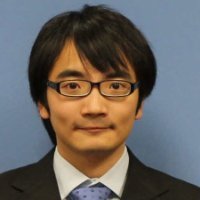
 Nai-Yuan Chiang
· 5 previous affiliations
- Lawrence Livermore National LaboratorySince 2020
- Computational Mathematician · Since 2020
- Staff Research Engineer · 2020
- United Technologies Research Center2015–2020
- Staff Research Engineer · 2019–2020
- Senior Research Engineer · 2015–2019
- Argonne National Laboratory2013–2015
- Postdoc · 2013–2015
- University of Edinburgh2007–2013
- Doctor of Philosophy (PhD), Operational Research and Optimization · 2008–2013
- Master of Science (MSc), Operations Research · 2007–2008
Research Overview
Nai-Yuan Chiang focuses on large-scale nonlinear programming, Bayesian optimization, and high-performance computing for complex energy systems. His trajectory spans the development of scalable optimization solvers for power grids to recent theoretical and applied advances in multi-fidelity modeling. Currently, he investigates constrained Bayesian optimization and regret bounds to accelerate scientific discovery in domains like inertial confinement fusion.
Research Trajectory
Chiang’s early research concentrated on structured nonconvex optimization and the deployment of nonlinear programming (NLP) strategies on high-performance computers. In 2014, he introduced Structured nonconvex optimization of large-scale energy systems using PIPS-NLP, presenting a software library designed to exploit specific model structures in electrical power and natural gas networks to achieve high computational efficiency. He subsequently collaborated on tutorials detailing Nonlinear programming strategies on high-performance computers, which explored how linear algebra parallelization influences algorithmic frameworks for global convergence.
To further adapt these solvers for modern computing architectures, Chiang proposed An inertia-free filter line-search algorithm for large-scale nonlinear programming. By eliminating the need for inertia information from the linear system, this approach enabled the use of a wider range of linear algebra libraries while maintaining global convergence. He later adapted these concepts for embedded systems with limited memory and processor speeds, developing An Augmented Lagrangian Filter Method for Real-Time Embedded Optimization, which utilized primal-dual regularization to lower computing overheads in applications such as building heating control.
Between 2019 and 2023, Chiang’s work expanded to include algorithmic refinements, hybrid solvers, and data-driven applications for power grids. He participated in the development of A Structured Quasi-Newton Algorithm for Optimizing with Incomplete Hessian Information, which introduced a modified Broyden–Fletcher–Goldfarb–Shanno (BFGS) secant update formula capable of achieving superlinear convergence when second-order derivatives are unavailable. Applying data-driven methods to grid security, he guided research on Data-Driven Probabilistic Anomaly Detection for Electricity Market under Cyber Attacks, proposing a framework to identify malicious anomalies in locational marginal prices. He also continued to advance grid optimization through distributed computing, contributing to An asynchronous distributed-memory optimization solver for two-stage stochastic programming problems, which addressed the computational bottlenecks of security-constrained optimal power flow models. This period also included collaborative work on HyKKT: a hybrid direct-iterative method for solving KKT linear systems.
In recent years, Chiang has increasingly focused on Bayesian optimization (BO) and multi-fidelity modeling to accelerate expensive scientific simulations. He developed A multifidelity Bayesian optimization method for inertial confinement fusion design, an algorithm that intelligently alternates between low- and high-fidelity simulations to find optimal experimental designs more efficiently. This work contributes to the broader research area of Multi-Fidelity Learning for Efficient Scientific Simulation.
Parallel to these applied methods, Chiang has worked to strengthen the theoretical foundations of Bayesian optimization. Directing the theoretical analysis in On Improved Regret Bounds In Bayesian Optimization with Gaussian Noise, he helped establish tighter pointwise prediction error bounds for Gaussian Processes, bridging a gap between Bayesian and frequentist theory. This analysis advances several key research directions, including Tightening Gaussian Process Bounds for Low-Noise Optimization, Optimal Regret Bounds for Gaussian Process Bandits, and Theoretical Foundations of Thompson Sampling and Posterior Sampling.
In 2025, Chiang continued to balance theoretical machine learning with power systems engineering. He released Exascale Julia Grid Optimization, providing accessible scripts for experimenting with AC optimal power flow formulations. Simultaneously, he collaborated on Convergence Rates of Constrained Expected Improvement, which provided rigorous mathematical proofs for simple regret upper bounds in constrained BO. He also guided the theoretical evaluation in On the convergence of noisy Bayesian Optimization with Expected Improvement. Concurrently, he co-authored A Constrained Multi-Fidelity Bayesian Optimization Method, introducing novel acquisition functions that bypass the need for a feasible starting point when optimizing complex, black-box engineering systems.
Current Directions
The most recent papers in the evidence address the intersection of constrained optimization, multi-fidelity modeling, and rigorous theoretical guarantees for Bayesian Optimization. Current work focuses on establishing convergence rates and regret bounds for Expected Improvement algorithms, particularly in noisy or constrained environments where theoretical proofs have historically lagged behind empirical success. This theoretical foundation is paired with applied research into multi-fidelity methods that can efficiently navigate black-box constraints without requiring feasible starting points. These techniques are explicitly designed to accelerate design discovery in fields reliant on computationally expensive simulations, such as structural mechanics and nuclear fusion, while maintaining robust mathematical guarantees.
Profile updated
Loading new papers…
Other researchers whose papers cluster into the same research directions — a proxy for overlapping technical interests and shared intellectual neighborhoods.
See something wrong? Report a mistake