

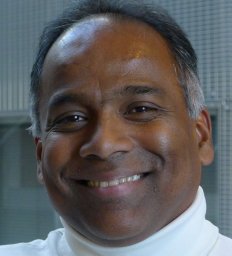
 N. Asokan
· 8 previous affiliations
- University of WaterlooSince 2019
- Full Professor · 2019–2029
- Executive Director · 2021–2025
- PhD, Computer Science · 1990–1998
- KTH Royal Institute of TechnologySince 2026
- Wallenberg Visiting Professor · 2026–2031
- Aalto University2013–2024
- Adjunct Professor · 2019–2024
- Professor of Computer Science · 2013–2019
- Full Professor · 2014–2019
- ETH Zurich2024
- Visiting Professor · 2024
- University of Helsinki2012–2017
- Full Professor · 2012–2017
- Nokia Technologies1999–2012
- Researcher · 1999–2012
- Researcher · 1995–1998
- Syracuse University1988–1989
- MS, Computer Science · 1988–1989
Research Overview
N. Asokan focuses on systems security, privacy-preserving protocols, and the protection of machine learning models. Early work explored secure social networking and trust establishment in mobile and Internet of Things environments. More recently, the focus has shifted toward securing artificial intelligence, specifically addressing model ownership verification and the vulnerabilities of machine learning assets.
Research Trajectory
The evolution of N. Asokan’s research demonstrates a consistent focus on establishing trust and privacy across increasingly complex distributed systems, moving from social networks and mobile devices to hardware-backed web security and, most recently, machine learning infrastructure.
In the early 2010s, Asokan participated in research addressing privacy within online social networks. A key challenge in this domain was enabling users to make trust decisions based on social relationships without exposing sensitive network graphs to strangers. As a collaborating author, Asokan contributed to the design of the Common Friends service, a framework that allowed users to securely determine if they shared mutual friends while protecting the privacy of non-mutual connections and ensuring the cryptographic authenticity of those friendships (Do I know you?: efficient and privacy-preserving common friend-finder protocols and applications).
As location-based services proliferated, the research expanded to address the security of mobile context data. Users had growing incentives to spoof their locations for personal gain, undermining the reliability of location-based applications. Asokan was a primary contributor to the development of context-based proofs-of-presence designed to resist malicious provers. This work introduced techniques such as surprisal filtering, which estimated the entropy of specific proofs to detect and mitigate context-guessing attacks (I Know Where You are: Proofs of Presence Resilient to Malicious Provers).
By 2016, the rapid deployment of the Internet of Things (IoT) introduced new challenges in verifying the integrity of remote, often resource-constrained devices. Asokan co-authored foundational survey work on remote attestation, mapping the landscape of techniques used to ascertain the state of potentially compromised IoT nodes. This research synthesized approaches ranging from heavy-weight secure hardware methods to light-weight software-based control-flow integrity, as well as hybrid designs utilizing Physical Unclonable Functions (PUFs) (Invited - Things, trouble, trust: on building trust in IoT systems).
Building on this expertise in hardware-assisted security, Asokan subsequently led research as a principal investigator into leveraging Trusted Execution Environments (TEEs) for consumer web security. Despite the prevalence of passwords, users remained vulnerable to both client-side phishing and server-side database breaches. To address this dual threat, Asokan’s lab developed SafeKeeper, a system that utilized TEEs to protect web passwords against sophisticated adversaries. A critical contribution of this work was providing end-users with verifiable cryptographic assurance that their credentials were being protected by the server, while simultaneously addressing the deployability and cost constraints faced by service providers (SafeKeeper: Protecting Web Passwords using Trusted Execution Environments).
In the 2020s, Asokan’s work broadened to include the performance and security of decentralized systems. Participating in research on blockchain scalability, Asokan contributed to novel paradigms for smart contract execution designed to overcome traditional throughput and latency bottlenecks. This architecture separated consensus nodes from execution nodes, allowing transactions to be processed in parallel without requiring complex coordination, thereby preventing livelocks in environments like Ethereum (Parallel and Asynchronous Smart Contract Execution).
Most recently, Asokan has directed significant attention toward the security and intellectual property protection of machine learning models. Training state-of-the-art models requires immense computational and data resources, making them high-value targets for extraction and theft. As senior author, Asokan investigated the robustness of ownership verification techniques, specifically analyzing the vulnerabilities of Dataset Inference—a fingerprinting method used to detect stolen models. This research demonstrated that many existing verification techniques fall short in their security guarantees, leaving them susceptible to evasion by well-equipped adversaries (On the Robustness of Dataset Inference).
Current Directions
The most recent papers and thematic evidence indicate a primary focus on the security, privacy, and intellectual property protection of machine learning models. Current work investigates how to reliably verify model ownership without requiring white-box access, contributing to themes such as Non-Invasive Ownership Verification for Machine Learning Models and the broader area of Securing Model Provenance Against Ambiguity Attacks.
Additionally, the research explores the fundamental tensions inherent in trustworthy AI, particularly the area of The Conflict Between Adversarial Robustness and Data Privacy and the related direction of The Privacy-Utility Trade-off in Differentially Private Learning. Emerging interests also encompass the verification of data removal, as seen in the research direction of Robust Verification of Data Erasure in Machine Unlearning, and the interpretability of large models within the area of Mechanistic Circuits and the Challenge of Model Scale.
Profile updated
Loading new papers…
Other researchers whose papers cluster into the same research directions — a proxy for overlapping technical interests and shared intellectual neighborhoods.
See something wrong? Report a mistake