

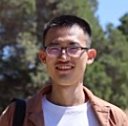
 Muzhi Han
· 3 previous affiliations
- HillbotCurrent
- Current
- Discover2019–2025
- PhD student · 2019–2025
- Tsinghua University2015–2019
- Undergrad student · 2015–2019
Research Overview
Muzhi Han focuses on embodied artificial intelligence, robotic task and motion planning, and interactive scene reconstruction. Early work emphasized building functionally actionable 3D environments from visual data to support simulated agent interactions. More recently, this trajectory has expanded into neuro-symbolic planning and the integration of large language models to enable long-horizon, open-vocabulary mobile manipulation.
Research Trajectory
Han's early research addressed the gap between static 3D computer vision and the functional requirements of embodied agents. In Reconstructing Interactive 3D Scenes by Panoptic Mapping and CAD Model Alignments, Han led the development of a framework that shifted the focus of scene reconstruction from pure geometric accuracy to actionable utility. By combining 3D volumetric panoptic mapping with part-based articulated CAD models, this work allowed robots to reason about object affordances and contextual relations. The system organized physical common sense among objects using graph-based structures, creating simulated environments that accurately reflect real-world interaction constraints and afford finer-grained robot interactions.
Building on this foundation of interactive environments, the research expanded to model complex, destructive physical interactions. As a key contributor to Learning a Causal Transition Model for Object Cutting, Han helped devise a probabilistic framework using an attributed stochastic grammar. This approach abstracted the spatially unstructured nature of object fragmentation into node variables and captured causal transitions through production rules, allowing robots to plan cutting actions by inferring optimal parse trees from human demonstrations.
By 2024, Han's work increasingly focused on the intersection of natural language processing and formal logic, specifically addressing the research direction of Automating the Symbolic Bottleneck in Robot Planning. A primary challenge in robotics is that while large language models (LLMs) possess broad semantic knowledge, they struggle with the rigorous, multi-step logic required for reliable execution. Han addressed this as the lead author of InterPreT: Interactive Predicate Learning from Language Feedback for Generalizable Task Planning. This framework enables robots to learn symbolic predicates through embodied interaction and language feedback from human non-experts. By compiling these learned predicates and operators into a Planning Domain Definition Language (PDDL) format on the fly, the system bridges informal human instruction with formal task planning, facilitating generalizable planning toward arbitrary in-domain goals.
This integration of foundation models into classical planning architectures continued with LLM3: Large Language Model-based Task and Motion Planning with Motion Failure Reasoning. As a second author, Han contributed to a domain-independent interface that leverages LLMs to propose symbolic action sequences and select continuous parameters, directly advancing the broader area of Neuro-Symbolic Planning with Large Language Models.
Concurrently, Han participated in collaborative efforts to scale these reasoning capabilities to more complex physical embodiments. In M2Diffuser: Diffusion-based Trajectory Optimization for Mobile Manipulation in 3D Scenes, Han contributed to scene-conditioned generative models that coordinate navigation and manipulation. This work aligns with the emerging theme of Integrating Kinematic Constraints into Neural Trajectory Predictors, ensuring that statistically generated trajectories remain physically viable in high-dimensional action spaces.
Current Directions
The most recent papers in the evidence indicate a strong focus on open-vocabulary mobile manipulation and the deployment of multimodal foundation models in closed-loop robotic systems. Han is actively investigating how vision-language models like GPT-4V can serve as central reasoning engines for autonomous agents, enabling them to explore, navigate, and manipulate objects in unstructured environments.
A significant component of this current work involves treating the robot as a programmable entity, aligning with the research direction of Executable Code as a Universal Interface for Embodied AI. By generating executable code policies rather than relying solely on raw low-level controllers, these systems can better verify task progress and adaptively replan based on environmental feedback. Furthermore, Han's recent collaborative projects address the broader area of Scaling Robotic Control to Long-Horizon Multi-Stage Tasks. This involves developing agent-agnostic visual and action representations that bridge the domain gap between different robotic embodiments. By obscuring the specifics of particular robot hardware, this line of research aims to overcome the sparsity of successful task executions and facilitate the learning of novel, complex manipulation skills directly from human demonstrations.
Profile updated
| Paper | Venue | Year |
|---|---|---|
| LLM3: Large Language Model-based Task and Motion Planning with Motion Failure ReasoningGitHubAssassinWS/ | MFM-EAI @ ICML | 2024 |
Loading new papers…
Other researchers whose papers cluster into the same research directions — a proxy for overlapping technical interests and shared intellectual neighborhoods.
See something wrong? Report a mistake