

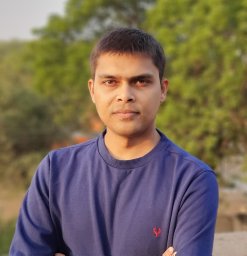
 Murari Mandal
· 7 previous affiliations
- KIIT UniversitySince 2022
- Assistant Professor · Since 2022
- Current
- BrainX AISince 2025
- AI Consultant · Since 2025
- Mavvex Labs Pvt. Ltd.2022–2024
- Founder and CEO · 2022–2024
- National University of Singapore2020–2022
- Postdoctoral Scientist · 2020–2022
- PhD student · 2016–2020
- MS student · 2013–2015
- Bachelor of Engineering - BE, Computer Science · 2007–2011
1 other author named Murari Mandal: Murari Mandal (0 papers)
Research Overview
Murari Mandal focuses on machine unlearning, large language model alignment, and the interpretability of deep neural networks. His research trajectory spans early work in computer vision and video analysis to extensive contributions in data erasure and privacy-compliant AI. Currently, he investigates agentic frameworks, inference-time control, and the mechanistic evaluation of foundation models across text, vision, and time-series domains.
Research Trajectory
Mandal’s early research concentrated on computer vision and video processing, particularly in challenging or unseen environments. He developed MOR-UAV: A Benchmark Dataset and Baselines for Moving Object Recognition in UAV Videos, establishing a dataset and baselines for localizing and classifying moving objects in aerial video streams. He also designed 3DCD: Scene Independent End-to-End Spatiotemporal Feature Learning Framework for Change Detection in Unseen Videos, proposing a scene-independent evaluation framework to improve change detection generalization. Concurrently, he guided research in the area of Hyperspectral Reconstruction as an Intermediate Representation, culminating in HIDeGan: A Hyperspectral-guided Image Dehazing GAN. This two-stage generative adversarial network enhances image dehazing by upgrading standard RGB inputs into hyperspectral representations to recover structural and color details.
Around 2023, his focus shifted significantly toward privacy-compliant AI, specifically addressing the computational challenges of data erasure. In the broader area of Machine Unlearning through Selective Knowledge Distillation, he collaborated on Can Bad Teaching Induce Forgetting? Unlearning in Deep Networks Using an Incompetent Teacher, which introduced a method for erasing specific data from neural networks without full retraining. This was followed by Zero-Shot Machine Unlearning, further exploring data erasure without requiring access to the original training set. He continued to advance the research direction of Instance-Level Machine Unlearning for Deep Neural Networks with Fast Yet Effective Machine Unlearning, detailing the UNSIR framework, which utilizes error-maximizing noise and weight manipulation to rapidly forget specific data classes.
As generative models grew in prominence, Mandal expanded his unlearning research to address their unique architectures. He developed A Unified Framework for Continual Learning and Machine Unlearning, proposing the UniCLUN architecture to balance the integration of new tasks with the selective erasure of specific data via multi-teacher distillation. Investigating the efficacy of these techniques, he authored Unlearning or Concealment? A Critical Analysis and Evaluation Metrics for Unlearning in Diffusion Models, exposing vulnerabilities in text-to-image diffusion models where targeted concepts are merely hidden rather than erased, and introduced new metrics to measure true concept removal. He later introduced SurgUn in Forgetting is Competition: Rethinking Unlearning as Representation Interference in Diffusion Models, framing unlearning as representation interference to achieve precise concept removal while preserving unrelated generative capabilities. Further scrutinizing unlearning evaluation methodologies, Mandal co-authored The BatchNorm Illusion: Diagnosing Normalization Artifacts in Machine Unlearning Evaluation, which demonstrated that apparent forgetting in BatchNorm architectures can be reversed simply by updating running statistics on retain data without altering model weights.
Most recently, Mandal has focused on the alignment, interpretability, and agentic capabilities of large language models (LLMs) and foundation models. Contributing to the area of Preserving Model Utility During Machine Unlearning, he introduced ALU: Agentic LLM Unlearning, a training-free framework that orchestrates specialized agents to audit and sanitize LLM outputs at inference time. His work on model alignment includes The Realignment Problem: When Right becomes Wrong in LLMs, which presents the TRACE framework for surgically updating an LLM's values and safety behaviors as policies evolve without requiring extensive human annotation. He has also investigated the internal mechanics of LLMs in Confidence is Not Competence, revealing a decoupled "two-system" architecture that explains the gap between a model's self-assessed confidence and its actual problem-solving ability.
Beyond text and vision, Mandal has applied foundation models to specialized domains. He led the development of Sara: Screening Agents for Rheumatoid Arthritis, an LLM-based agentic framework designed for the early screening and diagnosis of clinical conditions. In the time-series domain, he explored causal interventions in time2time: Causal Intervention in Hidden States to Simulate Rare Events in Time Series Foundation Models, demonstrating how the hidden states of time series foundation models can be manipulated to simulate rare market events. Additionally, he collaborated on TSQueryBench: LLM-as-a-Judge for Time-Series Explanations, establishing a benchmark to evaluate the capacity of LLMs to act as judges for natural language explanations of time-series data. In environmental applications, Mandal contributed to WasteAssistant: Regulation-Guided Visual Question Answering Framework for Intelligent Waste Segregation and Sustainable Managemen, developing a regulation-guided visual question answering system for intelligent waste sorting.
Current Directions
Mandal's most recent work investigates the alignment, interpretability, and post-generation control of large language models and foundation models. A major focus is the development of agentic frameworks that operate at inference time, enabling dynamic unlearning, safety auditing, and specialized clinical diagnostics without the need to retrain underlying model weights. Additionally, he is exploring the internal geometry and causal mechanisms of foundation models—ranging from text-based LLMs to time-series architectures—to better understand their confidence calibration, value alignment, and capacity to simulate complex, high-stakes events.
Profile updated
Loading new papers…
Other researchers whose papers cluster into the same research directions — a proxy for overlapping technical interests and shared intellectual neighborhoods.
See something wrong? Report a mistake